Quick answer
Match the needle type to the fabric weave and the needle size to the fabric weight. For most quilting cottons, a Schmetz Universal size 80/12 works well; switch to a Microtex or Sharp for precise piecing and a Topstitch needle for thick threads.
Why needle choice matters more than you think
Using the wrong needle can cause skipped stitches, fabric puckering, or even damage to the fabric weave. A needle that is too small may break under stress, while one that is too large leaves visible holes. The right needle glides through the fabric, creating even stitches without distortion.
Needle types differ in the shape of the point, the scarf (the groove above the eye), and the overall blade design. Schmetz needles are a trusted standard across brands, so learning their system helps you pick replacements confidently.
Needle size basics: the higher the number, the thicker the needle
European sizes (e.g., 70, 80, 90) indicate the needle diameter in hundredths of a millimeter. A size 70 is 0.70 mm thick; a size 90 is 0.90 mm. American sizes (e.g., 10, 12, 14) follow a different scale but correspond directly: 70 = 10, 80 = 12, 90 = 14.
For lightweight fabrics like voile or lawn, choose size 60/8 or 70/10. For medium-weight cottons and quilting fabrics, size 80/12 is the go-to. For denim, canvas, or upholstery, size 90/14 or 100/16 handles the thickness without bending.
Needle type: point shape determines fabric compatibility
Universal needles have a slightly rounded point that works on both woven and knit fabrics, but they are a compromise. For sharp, clean stitches on tightly woven cottons, a Microtex (Sharp) needle has an acute point that prevents fabric distortion. For knits, a Ballpoint or Jersey needle has a rounded tip that slides between fibers without cutting them.
Schmetz also makes specialized needles: Topstitch (with a larger eye for thick thread), Jeans (with a reinforced shaft for denim), and Embroidery (with a scarf designed for dense decorative stitching).
Quick needle decision rules
- Match needle type to fabric weave: Woven cotton, linen, silk → Universal or Microtex. Knits, jersey, stretch → Ballpoint or Jersey. Denim, canvas → Jeans or Heavy Duty. Leather → Leather needle. Keep a few basic types on hand: Universal for general use, Microtex for precision, and Ballpoint for knits.
- Match needle size to fabric weight: Lightweight (voile, chiffon) → 60/8 or 70/10. Medium (quilting cotton, poplin) → 80/12. Heavy (denim, canvas) → 90/14 or 100/16. When in doubt, start with 80/12 for medium-weight fabrics and adjust up or down based on stitch quality.
- Change needle after every project or 8 hours of sewing: A dull needle causes skipped stitches and can damage fabric. If you hear a thumping sound or see uneven stitches, replace the needle immediately. Keep a pack of fresh needles in your sewing kit so you never sew with a worn one.
Product reference
-
Schmetz ABC Machine Needles Pocket Guide: The Schmetz ABC Machine Needles Pocket Guide is a compact reference designed for sewists who want a quick, reliable resource on the go, whether in the studio, at a class, or shopping for supplies. This pocket guide helps you identify the correct Schmetz needle type and size at a glance, so you can make informed choices without guessing or carrying a bulky manual.
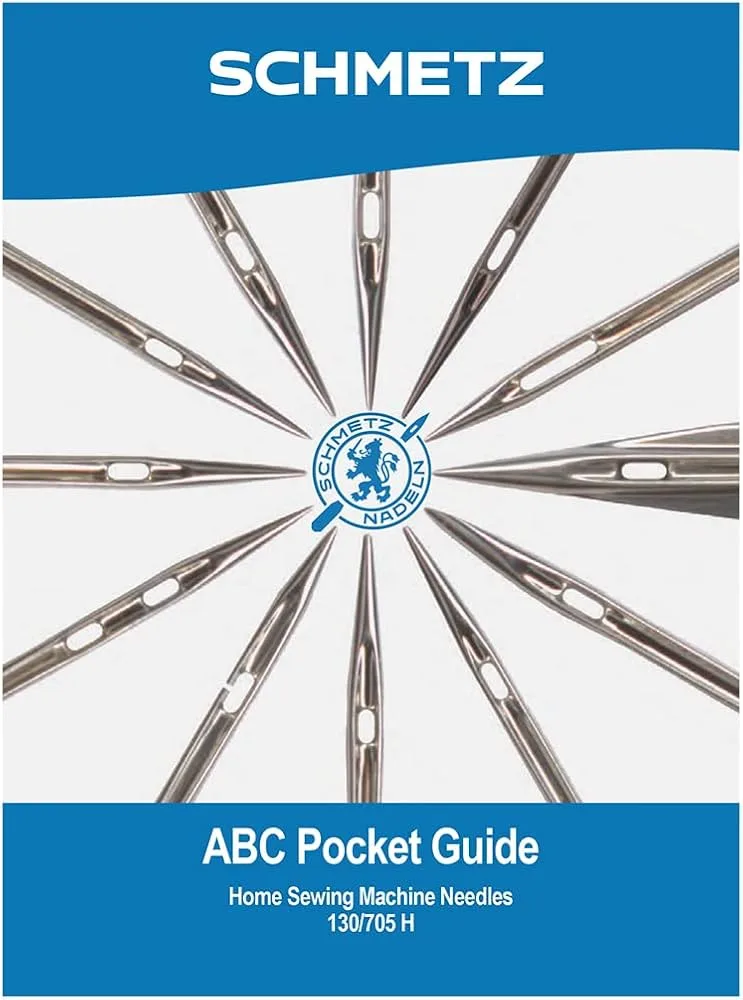
Schmetz ABC Machine Needles Pocket Guide
Who this guide helps most
Best for
- Quilters and garment sewists who work with a variety of woven fabrics
- Beginners learning to match needle to fabric for the first time
- Sewists who want a portable reference for needle selection
Not for
- Sewists who only use knit or stretch fabrics and need a dedicated ballpoint guide
- Industrial sewing environments where needle systems differ from home machines