Quick answer
Choose 1st cutting Timothy hay for high fiber and weight management, 2nd cutting for balanced daily feeding, and 3rd cutting for picky eaters or pets needing soft, calorie-dense hay.
Why cutting matters for your small pet's health
Timothy hay is harvested in three sequential cuttings each growing season. Each cutting has a distinct texture, fiber content, and calorie density because the plant changes as it matures and regrows. Choosing the wrong cutting can lead to uneaten hay, weight issues, or digestive problems.
1st cutting comes from the first growth of the season. It has the most fiber, fewer leaves, and more seed heads and stems. This makes it less calorie-dense and great for pets that need to lose weight or maintain healthy digestion. The trade-off is a coarser texture that some pets may ignore.
2nd cutting is harvested after the first regrowth. It balances soft stems, leafy material, and a moderate number of flowery heads. Most healthy adult rabbits and guinea pigs do well on this cutting because it provides enough fiber and nutrients without being too stemmy or too rich.
3rd cutting is the softest and leafiest, with very few stems. It has the highest calorie density and is ideal for underweight pets, seniors, or animals with dental pain. The downside is lower fiber content, so it should not be the only hay for pets prone to obesity or GI stasis.
When softness matters more than fiber
Picky eaters often reject hay that feels rough or stem-heavy. If your rabbit or guinea pig leaves most of the hay uneaten, try switching to a softer cutting. 3rd cutting Timothy hay is ultra-soft and leafy, which encourages reluctant eaters to consume more hay. This is especially useful for animals recovering from illness or dealing with mouth pain.
For pets that are not picky but need a consistent daily hay, 2nd cutting offers a middle ground. It is soft enough to be palatable but still provides the fibrous texture that supports dental wear and gut motility.
Weight management and dental health considerations
Overweight small pets benefit from the lower calorie density of 1st cutting. The extra fiber also promotes chewing, which helps wear down continuously growing teeth. However, if your pet has existing dental issues that make chewing painful, the coarser stems may be too difficult to eat.
For underweight animals or those needing to gain weight, 3rd cutting provides more calories per mouthful. Combine it with free-choice hay and monitor body condition to avoid excessive weight gain.
Your cutting decision rules
- Rule 1: Match fiber to body condition: If your pet is overweight or prone to obesity, choose 1st cutting Timothy hay. If your pet is underweight or needs to gain, choose 3rd cutting. For healthy weight maintenance, 2nd cutting is the go-to.
- Rule 2: Assess pickiness and dental health: If your pet leaves hay uneaten or has known dental pain, start with 3rd cutting. If your pet eats well but you want a daily staple, 2nd cutting works. If your pet is a hearty chewer and needs more fiber, 1st cutting is suitable.
- Rule 3: Mix cuttings for variety: You can blend cuttings to balance texture and nutrition. For example, mix 1st and 3rd cutting to increase fiber while keeping some soft leaves. Always introduce new hay gradually over 5–7 days to avoid digestive upset. Observe your pet's eating habits after switching; if they consistently leave one cutting, adjust the mix.
Hay cutting options at a glance
-
1st Cutting Timothy Hay: 1st cutting Timothy Hay is rich in fiber, less calorie-dense, and contains more flowery heads that small animals love. It is slightly less soft than later cuttings. Choose this for overweight pets or those needing extra dental exercise, but be prepared that some picky eaters may reject the coarser texture.
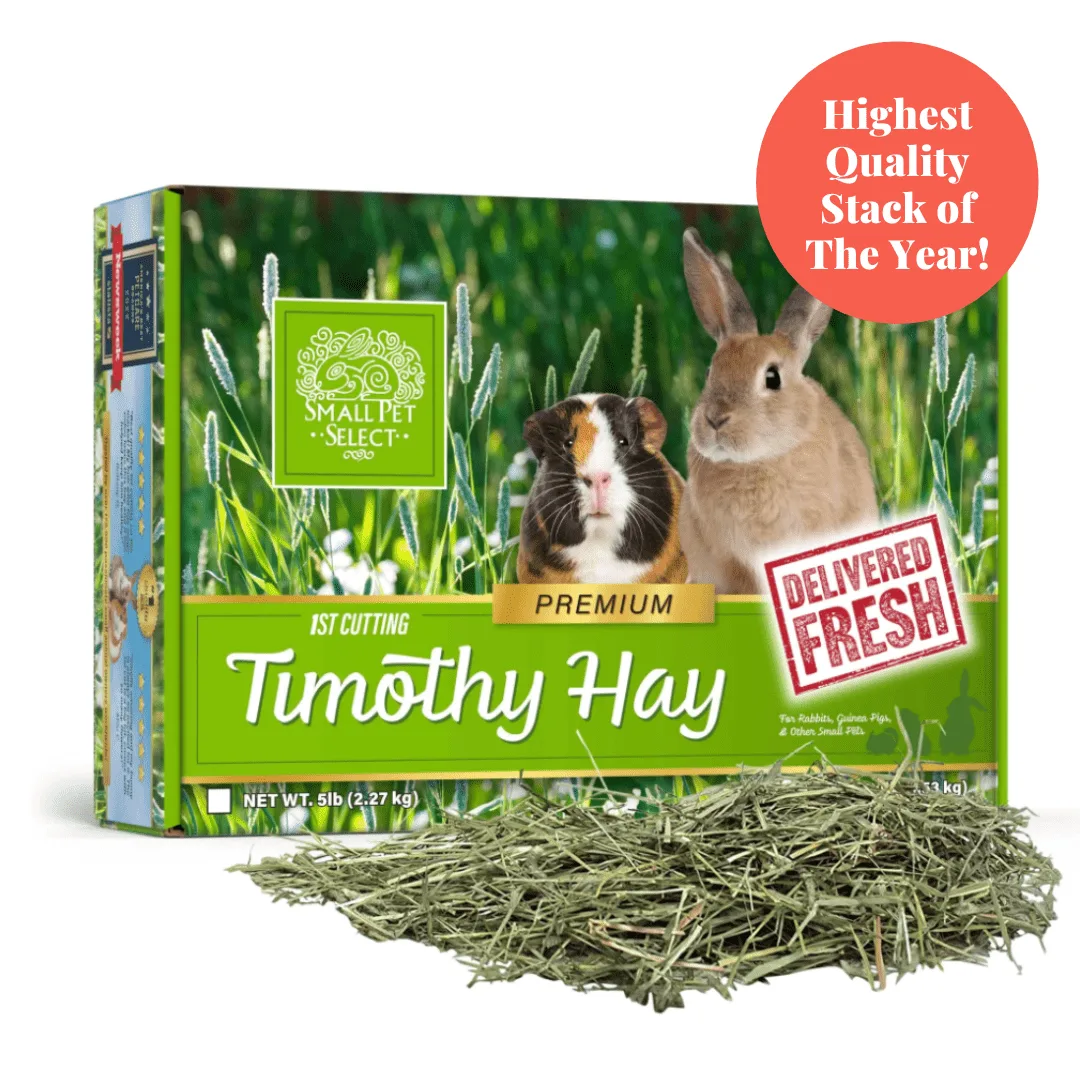
1st Cutting Timothy Hay
-
3rd Cutting Timothy Hay: 3rd cutting Timothy Hay is ultra-soft and very leafy with little stem, making it ideal for picky eaters or animals with mouth pain. Use this when your pet refuses other hays or needs to gain weight, but monitor fiber intake since it has less roughage than 1st or 2nd cutting.
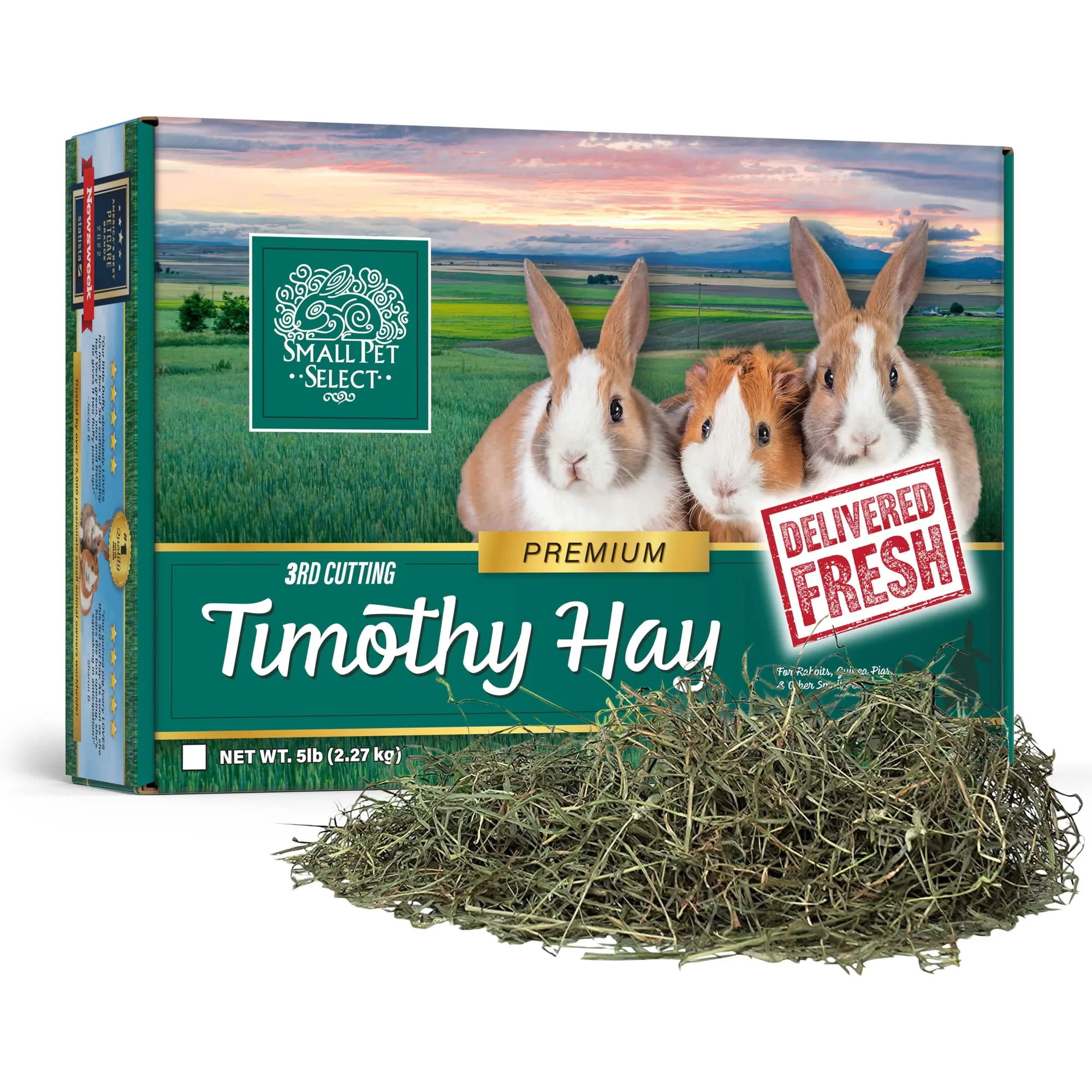
3rd Cutting Timothy Hay
Which cutting fits your pet?
Best for
- Overweight adult rabbits or guinea pigs that need high fiber and fewer calories
- Pets that are not picky and eat hay readily
- Owners who want a single, balanced daily hay for healthy adults
Not ideal for
- Picky eaters that reject stemmy hay
- Underweight or senior pets that need calorie-dense, soft hay
- Animals with active dental pain or mouth sores