Quick answer
For piecing, match your thread to the darker fabric in each seam so the stitches disappear. For machine quilting, choose a thread that either blends with the quilt top (for a subtle look) or contrasts intentionally (to showcase the quilting design). Use 50-weight cotton for piecing and a 40- or 50-weight thread for quilting, depending on the effect you want. Always test on a scrap quilt sandwich before committing.
Start with the quilt's purpose and design
Before you pick a thread color, decide what you want the quilting to do. Is it a utility quilt that will be washed often, or a show quilt where the stitching is a design feature? A busy patchwork top with many colors often benefits from a neutral blending thread, while a quilt with large open areas can handle a contrasting thread that adds texture and interest. If the quilt is a gift for a baby or child, consider how the thread will look after repeated washing—matching or blending colors hide wear better than high-contrast threads.
Choose thread weight for piecing vs. quilting
Thread weight affects both strength and visibility. For piecing, a 50-weight cotton thread is standard because it is strong yet fine enough to press flat and reduce bulk in seams. For quilting, you can use the same 50-weight for a subtle look, or move to a 40-weight for more definition and faster coverage. A 40-weight thread is thicker and will show more, so it is a good choice when you want the quilting pattern to stand out. If you are quilting with a domestic machine, check that your machine handles the thread size you choose—some machines prefer finer threads. Always match the thread fiber to the fabric: cotton thread for cotton fabric, polyester for polyester blends if you want consistent shrinkage.
Decide between matching and invisible thread
Matching thread blends with the fabric and hides mistakes, making it ideal for beginners or for quilts where the piecing is the star. Invisible thread (monofilament) is clear and can be used when you want the quilting to disappear entirely, but it can feel stiff and is more challenging to work with—it may require tension adjustments and can melt under a hot iron. For most patchwork quilts, a matching or blending thread is more forgiving and easier to maintain. If you do use invisible thread, test it on a scrap first and use it only in the needle, not the bobbin, to avoid tension problems.
Test on a sample quilt sandwich
Never assume a thread will look the same on the quilt as it does on the spool. Make a small quilt sandwich using the same fabrics, batting, and backing as your project. Stitch a few lines with each thread candidate. Look at the sample in different lighting—daylight, incandescent, and fluorescent—because colors shift. Check for pokies (where the bobbin thread pulls to the top) and adjust tension as needed. This step takes minutes but saves hours of unpicking.
Your step-by-step thread color plan
- Step 1: Match piecing thread to the darker fabric: For each seam, choose a thread that matches the darker of the two fabrics being joined. This makes stitches less visible and prevents dark threads from showing through light fabric. Checkpoint: If you can see the thread on the lighter fabric, switch to a shade closer to the darker fabric or use a finer thread.
- Step 2: Pick a quilting thread that supports your goal: For a subtle look, choose a thread that blends with the overall color of the quilt top. For a dramatic effect, choose a contrasting color that highlights the quilting design. Use 50-weight for blending, 40-weight for definition. Checkpoint: Squint at your quilt top—if you want the quilting to be a feature, contrast; if not, blend.
- Step 3: Test on a scrap sandwich and adjust: Stitch samples with your top thread and bobbin thread choices. Examine under different lighting. Adjust tension until stitches are balanced and there are no pokies. Checkpoint: If the bobbin thread shows on top, increase top tension slightly or decrease bobbin tension; if top thread shows on back, do the opposite.
Product facts
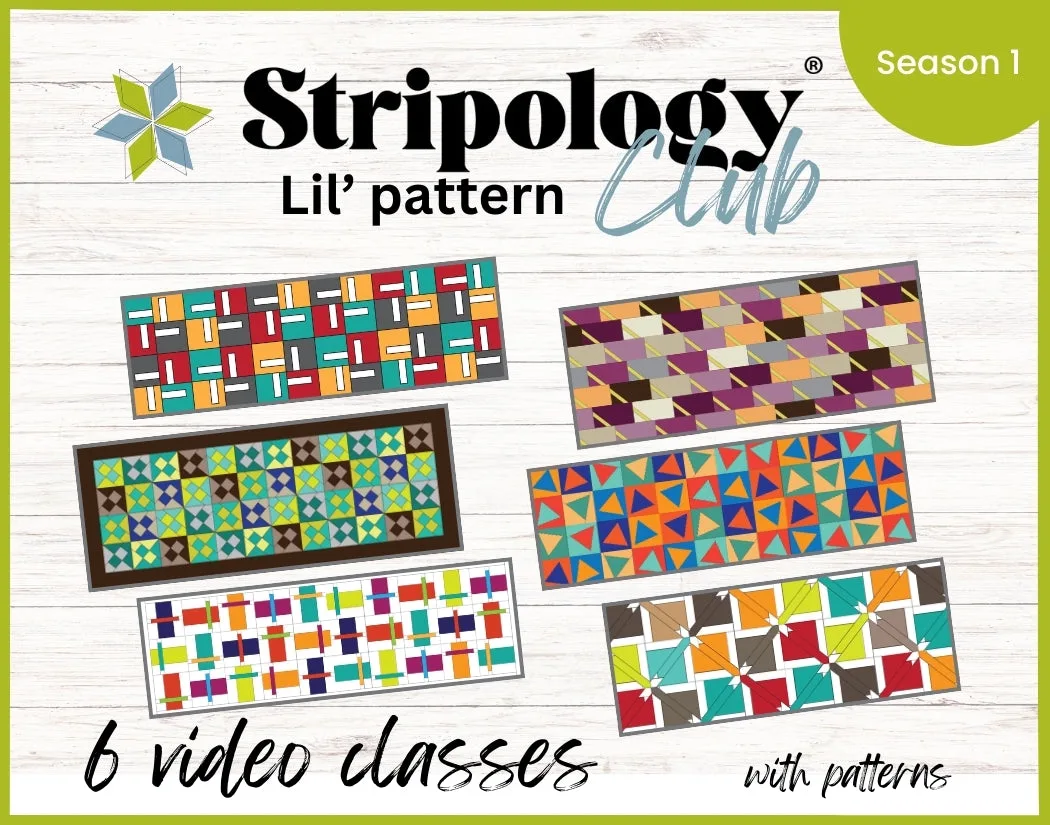
- Stripology Lil' Pattern Club - Season 1 : 6 patterns and video classes: Stripology Lil' Pattern Club - Season 1 includes 6 exclusive PDF patterns and full-length video classes with Gudrun Erla, using Stripology Mini rulers. If you are new to machine quilting, the video classes provide step-by-step guidance on piecing and quilting, which can help you practice thread color choices on small projects before tackling a large quilt.