Quick answer
For most runners, the right waistpack is a low-profile belt that sits above the hip bones, carries only phone, keys, and a gel, and does not bounce. If you carry a water bottle, a light layer, or a 14-inch laptop on the same outing, a waistpack is the wrong tool and a compact backpack such as the DAY PAK'R is the better call.
A waistpack for running only works when it disappears on your body. The moment it rides up, twists, or thumps against your lower back, you will stop wearing it. So the buying decision is not about brand or color first; it is about matching capacity and closure to the distance you actually run.
This guide gives you concrete rules for fit, capacity, and material, plus honest trade-offs. It also flags the point where a running waist pack stops being the right answer and a backpack or luggage piece makes more sense.
Start with what you carry, not the pack
Lay out everything you take on a typical run: phone, keys, card, one gel, maybe a small soft flask. That pile decides your capacity. A phone-only runner needs a slim belt with a flat pocket. A trail runner carrying two gels, a wind shell, and water needs a larger waist pack with compression so the load does not shift.
Write down the two heaviest items. If the heaviest is a phone, a minimal running belt bag is enough. If the heaviest is a filled bottle, look for a pack with a bottle holder and a wider belt, because a narrow strap will dig in once the bottle is full.
- Rule: if your load fits in two flat pockets, stay under a slim belt profile.
- Rule: if you carry water, choose a pack with a dedicated bottle holder rather than stuffing a flask into the main pocket.
Fit rules that stop bouncing
A waistpack should sit on the top of your hip bones, not on your waist and not on your lower back. Measure your hip circumference at that point, then choose a belt with enough adjustment range to sit slightly tighter than your measurement, because loaded belts stretch and settle during a run.
Test the fit with your full load in the pack. Jump in place, then run ten steps. If the pack slides down, the belt is too loose or the load is too heavy for the belt width. If it digs into your stomach, the belt is sitting too high. Adjust before you decide the model is wrong.
- Wear the belt over a single thin layer, not over a jacket, so the fit you test is the fit you run in.
- If you are between sizes, size up and tighten rather than sizing down and straining the strap.
Closure, pockets, and weather choices
Zippered closures are the safer choice for running because they stay shut when you move. A zip-fastening back security pocket, like the one on the DAY PAK'R, is a useful pattern to look for: valuables sit against your body, away from the main opening. For outdoor use, a coated or water-repellent fabric matters more than a bulky rain cover you will never carry.
Pockets should be reachable without stopping. Put your phone in the pocket you can open one-handed, and keep keys in a separate small pocket so they do not scratch the screen. If a pack has only one compartment, expect to choose between phone and keys, not carry both comfortably.
- Prefer a pack with a separate small pocket for keys and cards.
- For wet climates, choose a coated fabric over an uncoated one and accept that no waistpack is fully waterproof.
When a waistpack is the wrong choice
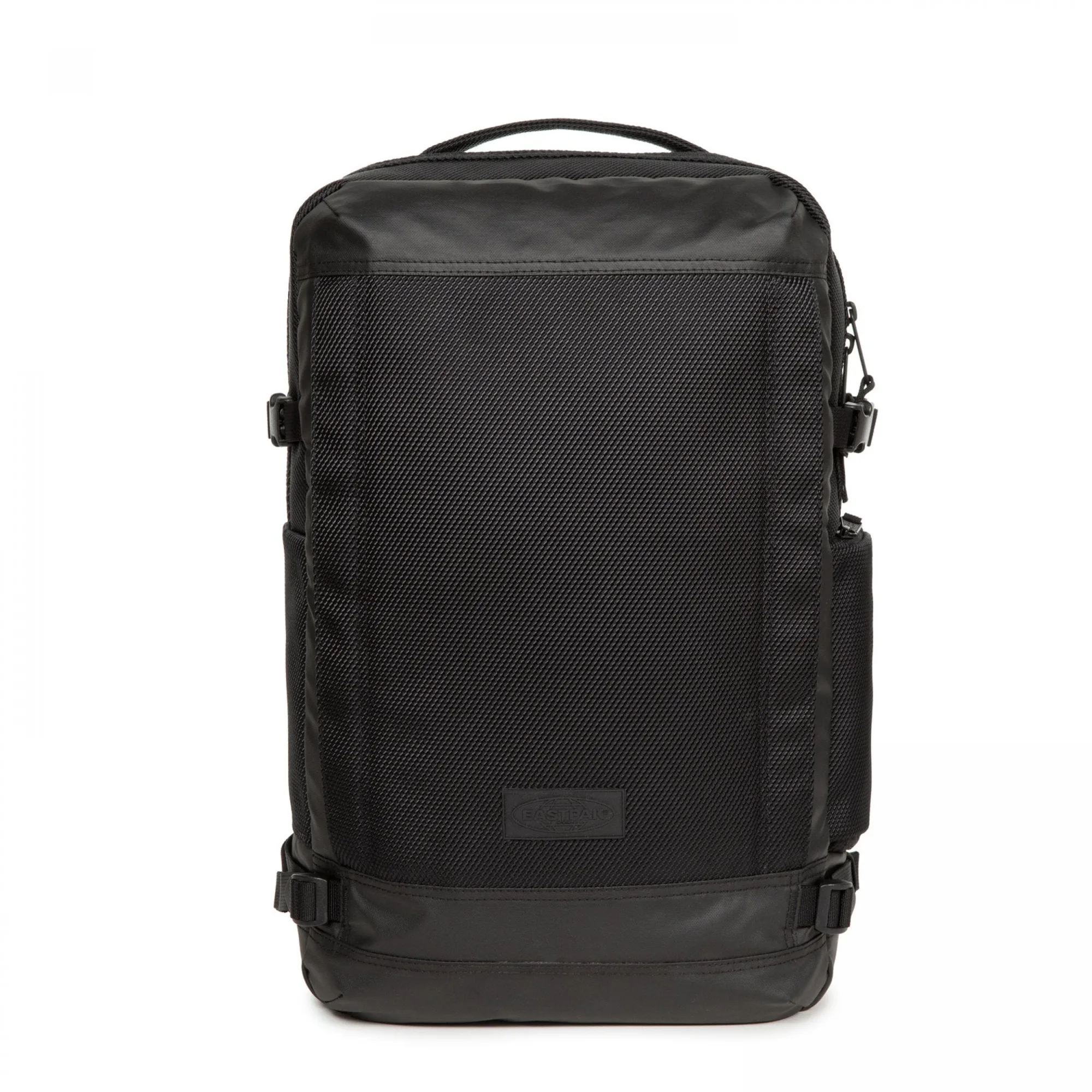
Waistpacks are poor at carrying weight. Once you add a 14-inch laptop, a change of clothes, or a full day of supplies, the load pulls the belt down and the pack swings. That is the point to switch to a backpack. The DAY PAK'R MONOTONE BEIGE, for example, has an internal laptop sleeve for 14-inch devices and a padded back, so it carries a laptop and daily gear far more comfortably than any belt.
For travel days that mix running and commuting, a backpack plus a small waistpack for the run itself is usually better than one oversized belt. And for trips where you check a bag, a wheeled case such as the TRANSIT'R PLUS M MONOTONE BLUE keeps the heavy load off your body entirely.
- Rule: if the load exceeds about the size of a phone plus a bottle, move to a backpack.
- Rule: do not buy a waistpack to replace a daypack; buy it to supplement one.
Decision rules for a running waistpack
- Distance under 10K, phone and keys only: Choose a slim running belt bag with one zippered main pocket and a separate key pocket. Keep the profile flat so it sits above the hip bones without bouncing. If it bounces with your phone inside, the belt is too loose or the pack is too deep.
- Trail or long run with water: Choose a waist pack with a dedicated bottle holder and a wider belt. Load the bottle first, then adjust the belt, because a full bottle changes the fit. A narrow belt plus a full bottle is the most common cause of digging and chafing.
- Run plus commute with a laptop: Do not force a laptop into a waistpack. Use a backpack with a dedicated laptop sleeve, such as the DAY PAK'R MONOTONE BEIGE, and keep the waistpack for the run itself. Match the bag to the heaviest item, not to the activity label.
- Wet-weather outdoor use: Choose a coated or water-repellent fabric and accept that zippers and seams are the weak points. Keep a dry bag or plastic sleeve for your phone. Water repellent is not waterproof; plan for the difference.
Product facts that help you decide
- DAY PAK'R MONOTONE BEIGE: Internal laptop sleeve fits devices up to 14 inches, with dual multifunctional side pockets, a padded back, and a zip-fastening back security pocket. This is the backpack to choose when your run is part of a commute or a day out and you need to carry a laptop plus a bottle; the back security pocket keeps valuables against your body.
- DAY PAK'R TARP BLACK2: Top-coated weatherproof design with a main compartment, zippered front pocket, and zippered security pocket on the back panel; 24L, 15.7 x 11.8 x 7.1 inches. The coated fabric and 24L size suit wet-weather outdoor days where a waistpack would be too small; the front and back zip pockets separate wet gear from valuables.
- TECUM M CNNCT COAT: Streamlined backpack with a dedicated laptop sleeve, separate tablet slot, bottle holder, inside organizer, security pocket, and a padded back with raised back panel. Choose this over a waistpack when you need to organize a laptop, tablet, and bottle for an urban commute, and the raised back panel helps with airflow on warmer days.
- TRANSIT'R PLUS M MONOTONE BLUE: Wheeled travel trolley with an integrated TSA lock, two zippered front pockets, double zippered compartments, quick grab handles, a telescopic stow-away handle, and two smooth silent wheels. For travel where you also run, this carries the heavy load so your waistpack stays a light running belt; the TSA lock and front pockets keep travel documents secure.
Who should choose which
Best for
- Runners who carry only a phone, keys, and a gel and want a bounce-free belt
- Outdoor athletes doing short hikes or fast sessions who need hands-free carry
- Commuters who want a small running belt bag for the run and a backpack for the laptop
Not for
- Anyone carrying a 14-inch laptop or a full day of gear, who should choose a backpack such as the DAY PAK'R or TECUM M CNNCT COAT
- Travelers moving heavy loads, who should use wheeled luggage such as the TRANSIT'R PLUS M MONOTONE BLUE
- Runners who need to carry more than one bottle or a bulky layer
Choose the waistpack that matches your lightest realistic load, test the fit with that load on your hip bones, and switch to a backpack the moment the weight grows. A running waist pack is a specialist tool, not a smaller daypack.