Quick answer
Choose washi tape width by the space you are filling, not by the design you like most. For most A5 and bullet journal layouts, keep a core set of 5 mm, 10 mm, and 15 mm rolls, then add one 20–30 mm roll for headers and full-width borders. Thin tape handles tabs, dividers, and narrow columns; wide tape handles titles, cover pages, and edge-to-edge bands.
Measure the space before you buy
Open your planner to a typical weekly or daily spread and measure three things: your narrowest column, your standard writing line height, and the full width of the page. Those three numbers decide almost every width choice you will make. A tape that is wider than your narrowest column will either overlap the next column or force you to trim it, and trimming removes the clean factory edge that makes washi look intentional.
If you use a dot grid journal, count the dots across one column. A 5 mm tape usually covers one to two dot squares, a 10 mm tape covers two to three, and a 15 mm tape covers three to four. This lets you plan a header or divider that lines up with the grid instead of floating slightly off it.
What each common width actually does
Widths are not interchangeable. Each size has a job it does better than the others, and buying three rolls that all do the same job wastes money and drawer space.
5–6 mm: page flags, habit tracker columns, thin dividers, and washi swatches. It is the width that fits inside a single dot grid column without spilling over.
10 mm: the workhorse. Use it for date headers, list dividers, and narrow borders. It is wide enough to read as a design element but narrow enough to leave writing room.
15 mm: section titles, monthly cover bands, and layering under a wider tape. It covers roughly three dot grid squares, which makes it easy to align with a spread.
20–30 mm: full-width header bands, cover pages, and large decorative blocks. These are statement widths, so one or two rolls go a long way.
Thin vs wide: the real trade-off
Thin tape gives you precision and flexibility. You can outline a box, mark a column, or add a small accent without covering your writing space. The trade-off is that thin tape takes more strips to fill a wide area, and too many overlapping strips can look busy or create bumps under your pen.
Wide tape gives you fast coverage and a strong visual anchor. One strip can define a whole header or separate two sections. The trade-off is commitment: wide tape covers more of the page, so it is harder to reposition without leaving a visible edge, and it can overwhelm a small planner if you use it on every spread.
A practical rule: if you are decorating a small planner, lean thin and use wide tape only for monthly covers. If you are decorating a large planner or a journal with big blank pages, lean wide and use thin tape for accents.
Match width to the job, not the collection
It is easy to buy a coordinated set because the colors match, then discover every roll is the same width. Before checkout, check whether the set gives you at least two different widths. A set with one width is a decoration purchase, not a layout purchase.
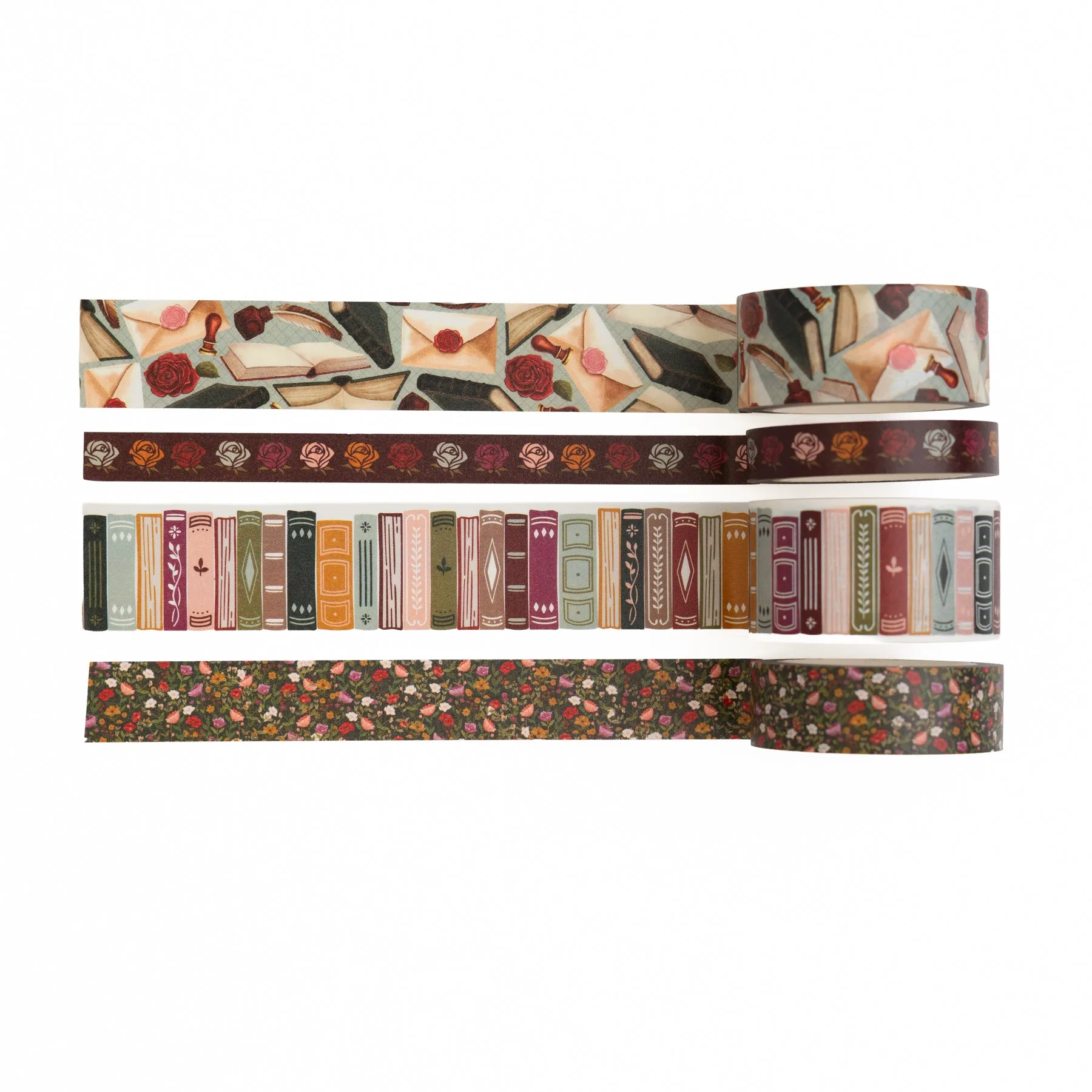
If you journal with a story or theme, a coordinated set can still be the right call, because the designs are meant to layer. The Treasure Map Washi Tape Set is built as a coordinated set of nautical and map-inspired designs with a moody, vintage-style palette, which means the rolls are designed to work together rather than compete. That is useful for storytelling spreads where you want borders, textures, and details from the same visual family.
For everyday planning, a mixed-width core set beats a themed single-width set. You can always add a themed set later for specific spreads.
Test a new roll before you commit to a spread
Stick one strip of a new tape on a scrap page or the inside cover and write over it with your usual pen. This tells you two things: whether the surface takes ink cleanly, and whether the adhesive releases without tearing your page. Washi adhesive varies, and a tape that is perfect for a cover page may lift at the corner of a frequently flipped tab.
If you use printable tabs alongside tape, print them on sticker paper first and test how the tape layers over the printed edge. Tabs and tape meet at the same corner of the page, so this is where peeling usually starts.
Build a width set that covers real layouts
A workable starter set is one roll each of 5 mm, 10 mm, and 15 mm, plus one 20–30 mm roll. That covers tabs, headers, dividers, and full-width bands without duplicates. Add a second 10 mm roll in a neutral color if you plan weekly spreads, because that is the width you will run out of first.
If you also use stamps or printable elements, keep one width reserved for functional marking and the rest for decoration. Functional tape should be plain or low-contrast so it does not compete with your writing.
Decision rules for choosing washi tape widths
- If the space is narrower than 10 mm: Use 5–6 mm tape. It fits a single dot grid column, works as a page flag, and will not overlap the next column. Checkpoint: if the tape covers writing space, it is too wide.
- If you are making a header or divider: Use 10–15 mm tape. It is wide enough to read as a design element and narrow enough to leave room for entries below. Checkpoint: align the tape edge with a dot grid line for a cleaner result.
- If you are covering a full page width or a cover: Use 20–30 mm tape. One strip covers more area with fewer overlaps and a stronger visual anchor. Checkpoint: reserve wide tape for monthly covers or section breaks so it does not overwhelm daily pages.
- If you are buying a set: Confirm the set includes at least two different widths. A single-width set is for decoration; a mixed-width set is for layouts. Checkpoint: a core set of 5 mm, 10 mm, 15 mm, and one wide roll covers most planner layouts.
- If you attach printable tabs: Use thin tape at the folded corner so the tab stays flat and the decorative print remains visible. Checkpoint: test one tab on a scrap page before committing to a monthly spread.
Products that support these width decisions
- Washi: Treasure Map: The Treasure Map Washi Tape Set is a coordinated set of nautical and map-inspired designs with a rich, moody color palette and vintage-style details. Coordinated designs are easiest to layer when you want borders, textures, and details from one visual family, which suits storytelling spreads more than single-width decoration.
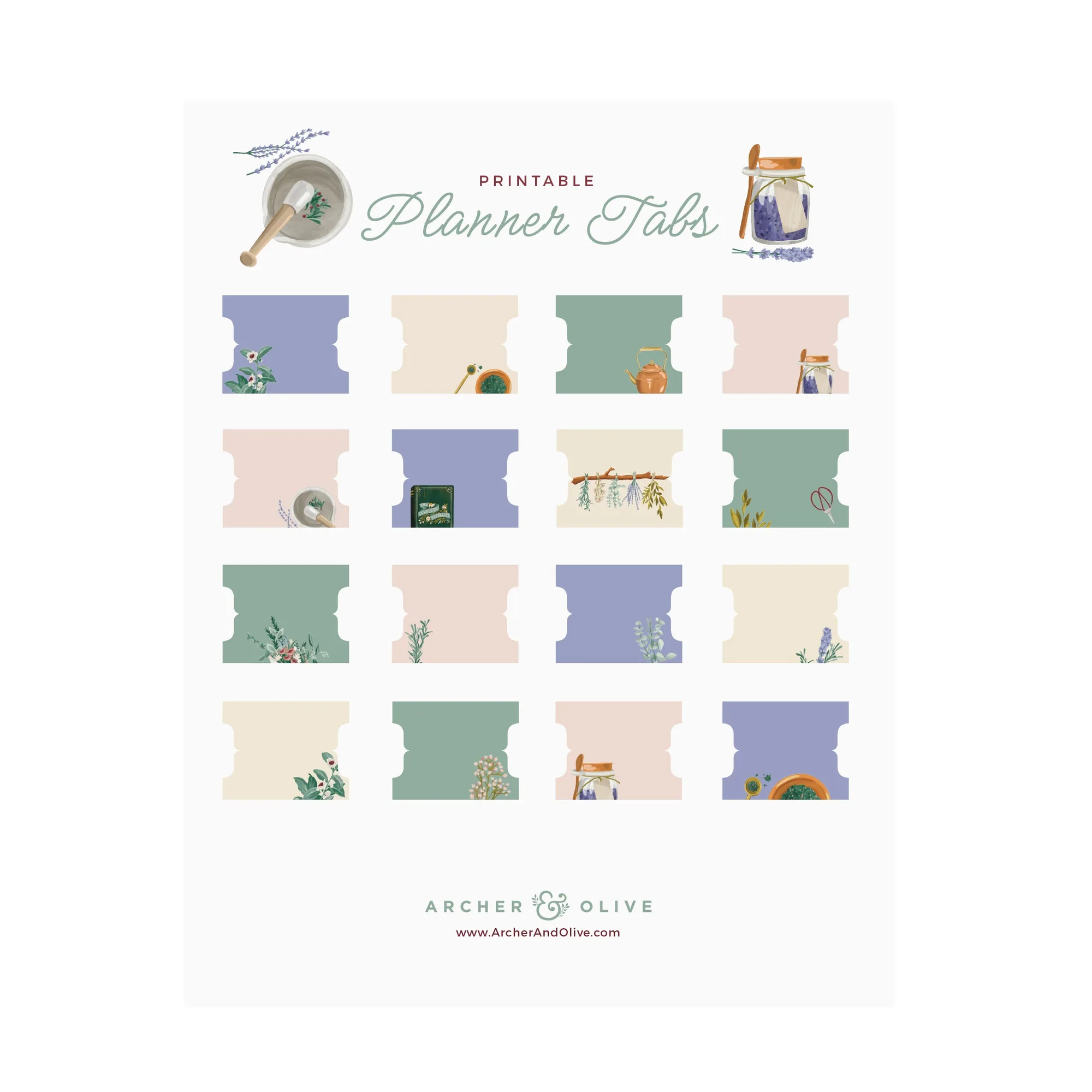
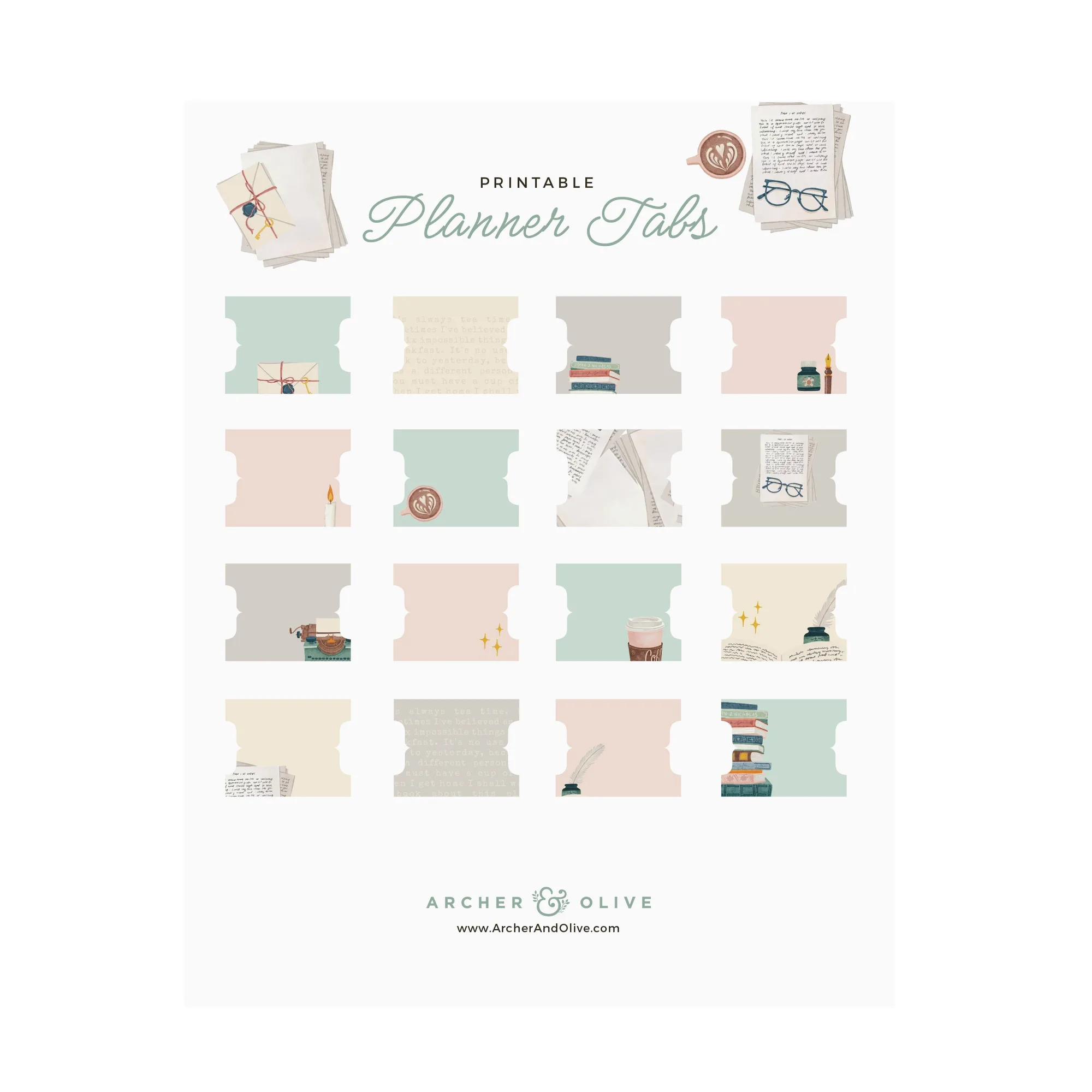
- Books & Flowers Printable Planner Tabs: The Books & Flowers Printable Planner Tabs set includes 16 printable tabs designed to print on sticker paper or adhere with tape or glue, then fold and stick to the corner of monthly cover pages. Because these tabs are printed and attached by you, you can choose a thin tape to secure them without adding bulk at the page corner, which reduces peeling on frequently flipped pages.
- Printable Planner Tabs: Fairy House: The Printable Planner Tabs: Fairy House set is a whimsical tab divider set inspired by magical cottages, woodland creatures, and storybook gardens, intended for planners, journals, and binders. Themed tabs pair well with a narrow tape width for attachment, keeping the decorative scene visible instead of covering it with a wide strip.
- Fave Icons | Acrylic Stamps: The Fave Icons Stamp Set is a clear stamp collection with botanical, whimsical, and everyday illustrations for planners, journals, and cards, and the stamp block is sold separately. Stamped motifs can replace wide decorative tape in headers, letting you keep your tape widths thin and functional while still filling the page visually.
Who this width approach fits
Best for
- Planner users who want a small, flexible tape set that works across weekly and monthly spreads
- Bullet journal users who align tape with dot grid columns and need predictable widths
- Anyone attaching printable tabs or layering tape with stamps and printed elements
Not for
- Buyers who only want decorative tape and do not care about layout fit
- Planners who prefer one wide tape for every page and do not want to switch widths
- Users who need a single roll to cover both tiny tabs and full page headers