Quick answer
Start your ceramic wedding registry by counting the largest number of people you will realistically seat at once, then add two settings for breakage and guests. Register for one everyday plate, one bowl, and one small shared bowl per setting, then add two or three serving pieces sized to what you actually cook. Skip open-stock duplicates you cannot stack, and choose pieces that can move from oven-adjacent prep to the table so nothing sits unused.
Decide your real guest count before you pick a plate
Registry dinnerware picks go wrong when the count is aspirational. Count the chairs you own, then the largest holiday or dinner party you host in a normal year. That number, plus two, is your setting count. If you host eight at Thanksgiving but seat four weekly, register for ten settings rather than sixteen: you can always add open stock later, and you will not store a tower of plates you use twice a year.
Write the number down and keep it visible while you scan the registry. Every plate, bowl, and mug multiplies by that number, so a small change in count changes the total cost and cabinet space far more than a change in glaze.
Split the registry between place settings and serving pieces
A common registry mistake is registering for twenty place settings and one platter. Guests eat off plates, but they remember the platter. Aim for roughly 70 percent of your ceramic budget on place settings and 30 percent on serving pieces, then adjust for how you cook. If you roast, grill, or host potlucks, push the serving share higher. If you mostly assemble bowls and salads, keep the serving pieces shallow and wide.
Register for serving shapes you will use in more than one way. A large oval platter can hold a whole fish or roast chicken, and the same shape works for a cheese spread or a pile of sliced tomatoes. That versatility is what keeps a serving piece off the top shelf.
Register for the small pieces guests forget to buy
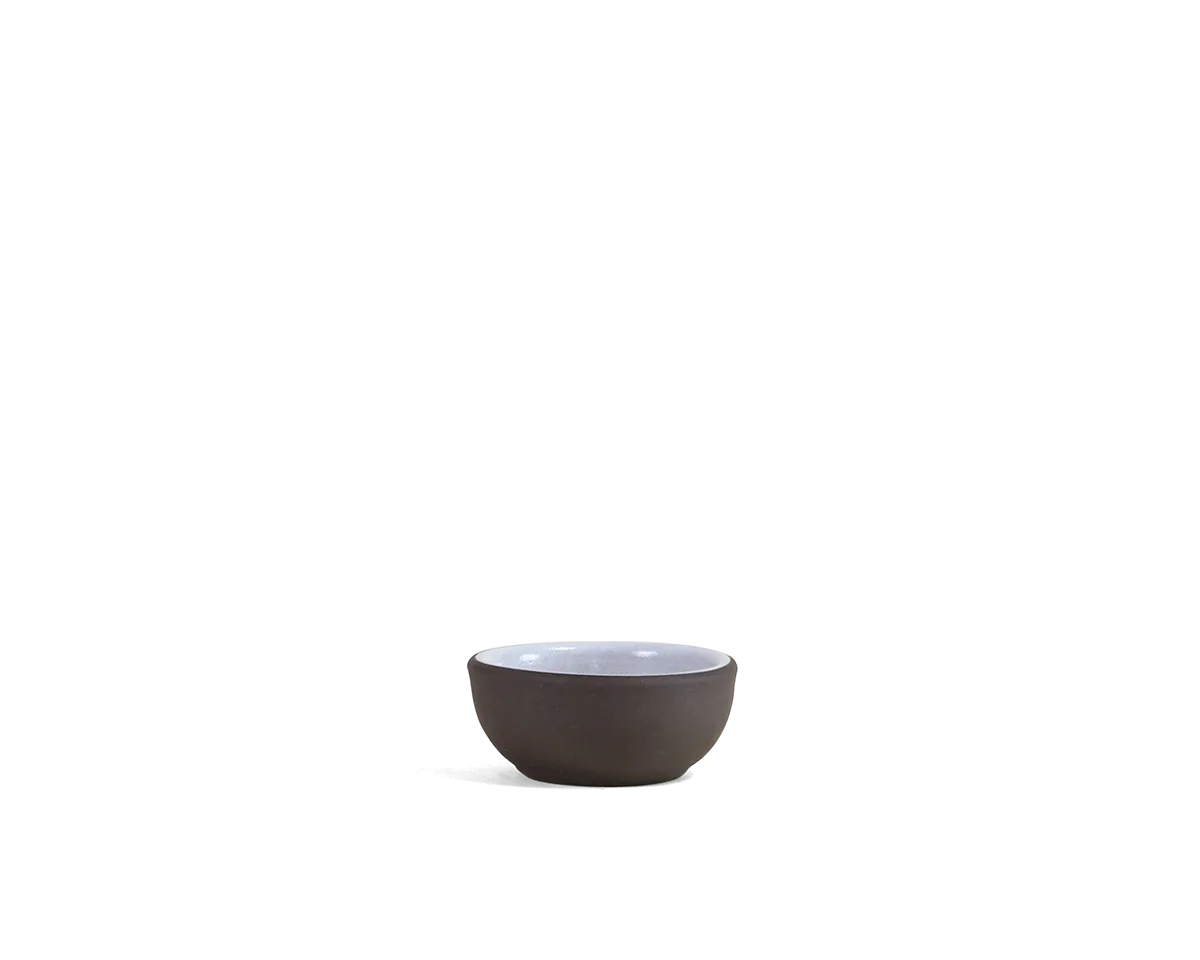
Wedding guests gravitate toward the visible, photogenic pieces, so the small functional items often go unpurchased. Add a set of mini bowls to your registry and you cover flaky salt at either end of the table, olive pits during a cocktail hour, or a ring holder next to the sink while you cook. These are the pieces you will reach for daily, and they cost little enough that a guest can buy two without thinking.
Pair them with a larger bowl for olives or nuts so the pits have a destination, and you have solved a host problem before it happens.
Match clay and glaze choices to how you live
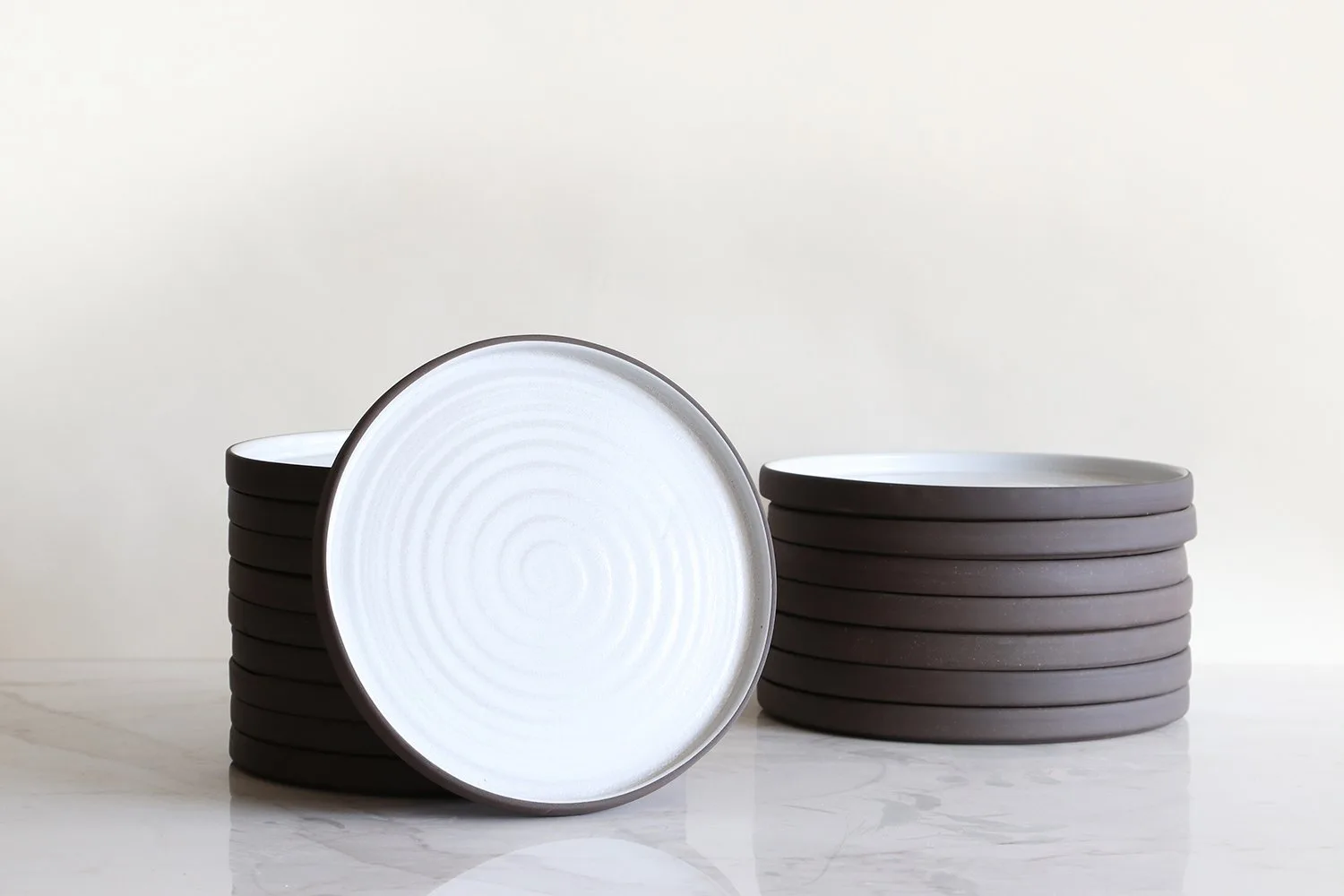
Clay and glaze options change the look and the feel of a piece, but they do not change the size or the function. Choose one glaze family for your place settings so the table reads as a set, then let serving pieces vary slightly if you want visual interest. If you are registering for a restaurant-style look, note that Pro Shop pieces are often made or glazed to order, have a 24-piece order minimum, and increase in lots of six, so they suit a household that wants a matched, larger set rather than a few trial pieces.
If you are unsure between two glazes, register for one setting in each and live with them for a week before committing. Registries can be edited, and a returned plate is easier than a returned set of twelve.
Check storage and stacking before you commit
Measure your cabinet shelf height and depth, then compare it to the pieces you are considering. Wide platters and tall bowls consume more space than their footprint suggests, and a platter that does not fit upright will lie flat and block a whole shelf. Stack a plate, a bowl, and a small bowl in your mind: if the stack wobbles, it will wobble every day.
If storage is tight, choose fewer settings and one multi-use platter rather than a full set of specialized shapes. You can add open stock for anniversaries, which also spreads the cost past the wedding.
Make gifting easy for your guests
Guests want to give something that feels complete. Group your registry so a single purchase makes sense: a set of four mini bowls, a platter plus two small bowls, or a pair of place settings. When you register for wedding gift ceramic bowls, note the intended use in the registry comment so a guest knows whether they are buying salt cellars or cereal bowls.
Add a note about lead times if you include made-to-order pieces. Pro Shop orders are often made or glazed to order, and you can email [email protected] for lead time information, so tell guests early if a piece will arrive after the wedding.
Decision rules for your ceramic registry
- Set your setting count: Count your chairs, then your largest realistic dinner party, and add two. Register for that many place settings and no more. If the number feels too high to store, cut it and plan to add open stock later.
- Cap serving pieces at three shapes: Choose a large platter, a medium bowl, and a small shared bowl. Add more only if you cook a specific dish that needs it. Three versatile serving pieces beat eight single-purpose ones.
- Buy small bowls in sets: Register for four to eight mini bowls so guests can purchase a complete set rather than one orphan piece. Small bowls are the most-used and least-gifted category.
- Check lead time before the shower: For made-to-order Pro Shop pieces, email [email protected] for lead time and note the 24-piece minimum with six-piece increments. If the wedding is soon, keep made-to-order pieces off the main registry or flag them clearly.
- Measure before you commit: Compare shelf height and depth to the platter and bowl dimensions you are considering, and test whether the stack sits flat. A platter that will not stand upright costs you a shelf.
Registry pieces worth considering
- 2.5" Coupe Condiment Bowl: 2.5"W x 1"H Coupe condiment bowl; catalog facts describe using two for flaky salt at either end of the table, pairing one with a Fry bowl for olive pits, and keeping one by the sink for rings while cooking. A low-cost, high-use registry add-on that guests can buy in multiples, covering salt, pits, and prep clutter without taking cabinet space.
- Large Oval Platter: Large Oval Platter; catalog facts state the oval shape was refined with chef feedback and that the large size can fit a whole fish or roast chicken, while the medium works as a crudités or cheese platter. One platter covers roasting, cheese, and crudités duty, so it earns its shelf space instead of sitting unused between holidays.
- Pro Shop 10.5" Square Sided Entree Plates: Pro Shop 10.5" Square Sided Entree Plates; catalog facts note Pro Shop orders are often made or glazed to order, have a 24-piece minimum that increases in lots of 6, and offer custom back-stamping. Best for a household that wants a matched, larger set with a personalized back-stamp, not for a registry that only needs four or six settings.
Is a ceramic registry right for you?
Best for
- Couples who host seated dinners and want plates, bowls, and serving pieces that work together
- Households that cook and serve from the same pieces and prefer a small, versatile collection
- Registries that want gift-friendly small bowls and one platter that covers roasting and cheese duty
Not for
- Couples who need only two or three place settings and no serving pieces
- Households with very limited cabinet space who cannot store a large platter upright
- Buyers who need a fully matched, made-to-order set immediately, since Pro Shop pieces are often made or glazed to order and have a 24-piece minimum