Quick answer
Rinse your denture brush under warm water after each use, then deep clean it weekly with a denture cleaner or mild soap to remove debris and bacteria.
Why cleaning your denture brush matters
Denture brushes collect food particles, plaque, and bacteria just like toothbrushes. If you skip cleaning, you can reintroduce germs to your dentures the next time you brush, which can lead to bad breath or oral infections.
A clean brush also lasts longer. The McKesson Denture Brush, with its two-sided head and contoured bristles, is designed for thorough cleaning, but only if you maintain it properly. Neglect can cause bristles to wear out faster or harbor buildup that reduces effectiveness.
When to replace your denture brush
Replace your denture brush every 3 to 4 months, or sooner if the bristles become frayed or bent. A worn brush won't clean denture surfaces effectively, especially the narrow spaces that the McKesson brush's staggered bristles are meant to reach.
How to clean your denture brush in 5 steps
- Rinse after every use: Hold the brush under warm (not hot) running water for 15–20 seconds. Use your thumb to gently rub the bristles to dislodge food particles and paste residue. Pay extra attention to the base of the bristles where buildup hides. Common mistake: using hot water can soften and damage bristles over time.
- Deep clean weekly: Once a week, soak the brush head in a denture cleaning solution or a mixture of equal parts white vinegar and water for 15 minutes. This dissolves mineral deposits and kills bacteria that rinsing alone misses. Checkpoint: do not use bleach or harsh chemicals—they can degrade the bristles and handle.
- Disinfect after illness: If you or the denture wearer has had a cold, mouth infection, or thrush, soak the brush in an antibacterial mouthwash or a diluted hydrogen peroxide solution (1 part peroxide to 3 parts water) for 10 minutes, then rinse thoroughly. Replace the brush after a contagious illness to prevent reinfection.
- Dry completely before storing: Shake off excess water and place the brush upright in a holder with the bristles facing up. Ensure the brush is not touching other brushes. Let it air-dry completely before the next use. Common mistake: storing a wet brush in a closed container encourages mold and bacterial growth.
- Sanitize the handle too: Wipe the handle with a cloth dampened with rubbing alcohol or a disinfectant wipe once a week. The handle can collect germs from your hands and countertops, especially if you set it down during use. Checkpoint: avoid getting alcohol on the bristles—it can dry them out.
Product spotlight
-
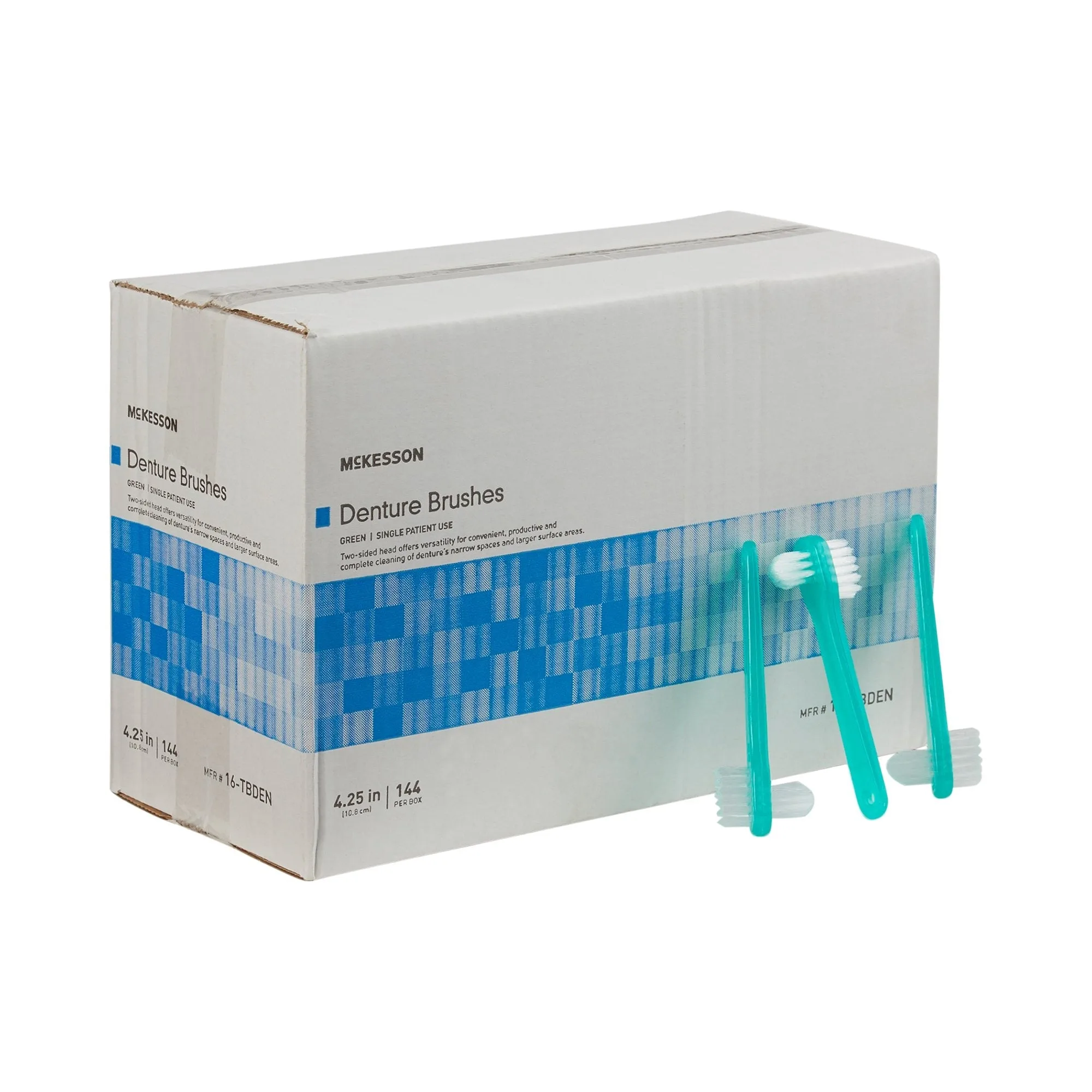
Denture Brush McKesson 2-Sided Bristle Green 12/PK: The McKesson Denture Brush has a two-sided head with staggering bristles on one side for larger areas and contoured longer bristles on the opposite side for narrow spaces. This design makes it easier to clean all denture surfaces, but only if the brush itself is kept clean—debris trapped between bristles can scratch acrylic or transfer bacteria.
Denture Brush McKesson 2-Sided Bristle Green 12/PK