Quick answer
To clean your sleeping bag, use a front-loading washer with a gentle detergent, dry it on low heat with dryer balls, and store it loosely in a large cotton sack. Avoid dry cleaning and fabric softener.
Why regular cleaning matters
Dirt, oils, and sweat can clog the insulation of your sleeping bag, reducing its ability to trap warm air. A clean bag not only feels fresher but also performs better on cold nights. The good news is that with the right technique, you can wash most bags at home without damaging the fill.
Synthetic vs. down care
Synthetic bags like the Wild Aspen 20 are more forgiving than down bags when it comes to washing. They dry faster and resist clumping. Down bags require extra care to keep the feathers from shifting, but both types benefit from the same basic approach: gentle wash, low heat dry, and proper storage.
Step-by-step sleeping bag cleaning process
- 1. Check the care label: Look for the manufacturer’s instructions on the tag inside your bag. Some bags have specific temperature or detergent restrictions. Ignoring the label can void the warranty or damage the fabric. Always follow the care label before washing.
- 2. Spot clean stains first: Use a mild soap and a soft brush to gently work on dirty spots before the full wash. This prevents stains from setting in and reduces the amount of overall washing needed.
- 3. Wash in a front-loading machine: Place the bag in a large front-loading washer (top-loaders with agitators can tear the baffles). Use a gentle cycle with cold or warm water and a small amount of a specialized down or synthetic detergent. Avoid regular laundry soap and fabric softener—they strip oils and ruin insulation. Run an extra rinse cycle to remove all detergent residue.
- 4. Dry on low heat with dryer balls: Transfer the bag to a large dryer and set it to low heat. Add two or three clean tennis balls or dryer balls to break up clumps of insulation. Check every 30 minutes; drying can take 2–4 hours. Stop when the bag is completely dry—any moisture left inside can lead to mildew. If the bag is not fully dry after 4 hours, let it air dry in a warm room.
- 5. Store loosely, not compressed: Once clean and dry, store your sleeping bag in a large cotton or mesh storage sack—never in the compression stuff sack. Compression crushes the insulation over time. Hang it in a closet or lay it flat in a dry place away from direct sunlight. Use the compression sack only for transport, not for long-term storage.
Products mentioned in this guide
-
Wild Aspen 20™ Degree Sleeping Bags: The Wild Aspen 20 features synthetic insulation with a water-resistant micro polyester shell. Synthetic insulation is easier to wash and dries faster than down, making it a low-maintenance choice for regular campers.
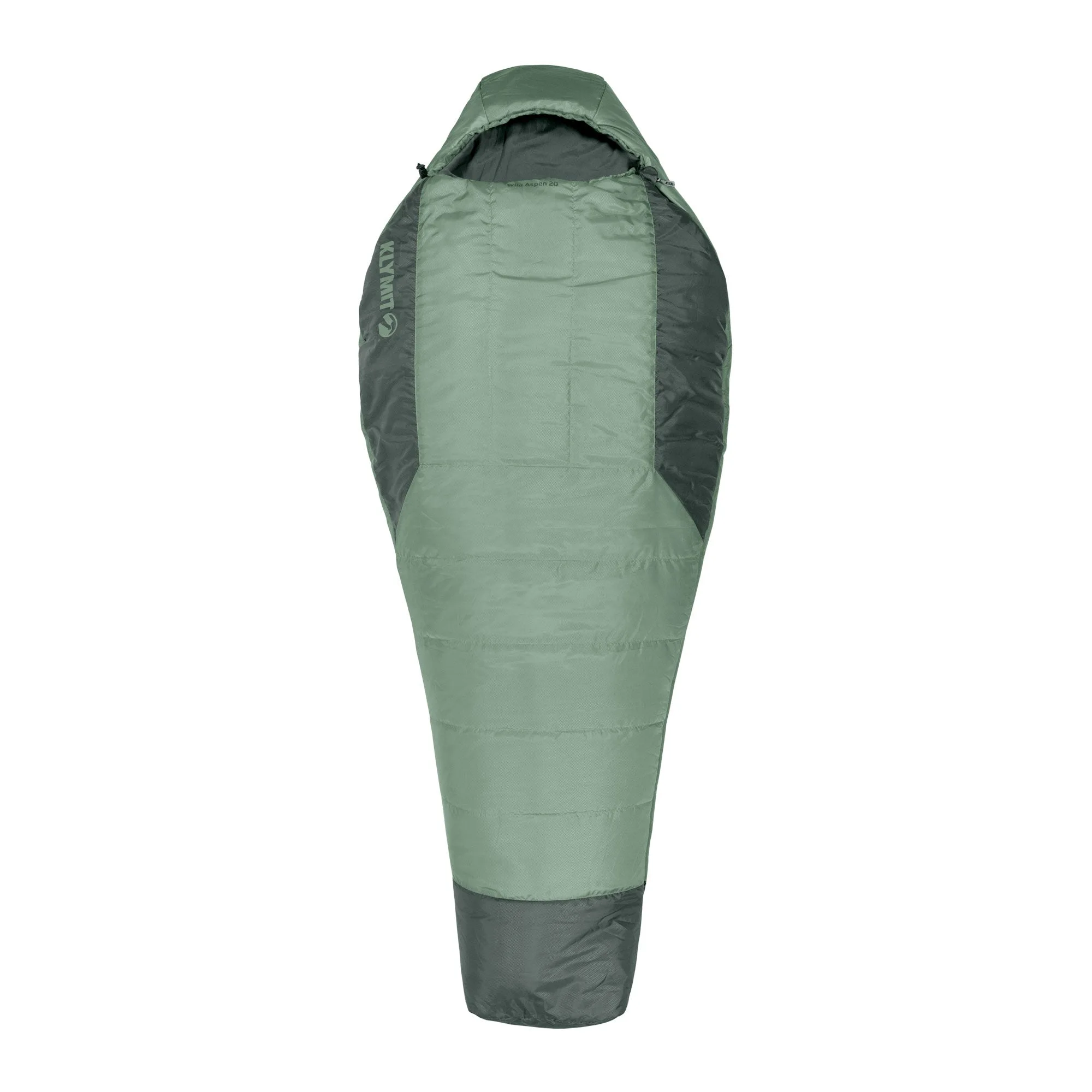
Wild Aspen 20™ Degree Sleeping Bags