Quick answer
To clean bathroom tiles and grout effectively, start by removing loose debris, then apply a diluted bathroom cleaner concentrate and let it dwell for a few minutes. Agitate grout lines with a soft brush, rinse or wipe, and dry the surface to prevent water spots. For ongoing protection, use a refillable bathroom spray as part of a weekly routine.
Why bathroom tiles and grout need a consistent routine
Bathroom tiles are built to handle moisture, but grout is porous and collects soap scum, body oils, and minerals from hard water. Without regular attention, these deposits harden and become difficult to remove. A simple grout cleaning routine every one to two weeks keeps surfaces looking fresh and reduces the need for aggressive scrubbing later.
Choosing the right cleaner for tile and grout care
Not all bathroom cleaners are safe for every surface. Abrasive powders can scratch glazed tiles, and harsh acids may damage grout over time. A concentrate like The Bathroom Cleaner Refill is designed to prevent limescale, which helps extend the life of your bathroom surfaces. It is safe for all bathroom materials and made with clean ingredients that are 100% biodegradable. One cleaning concentrate results in 500 ML of cleaner, so you can mix only what you need.
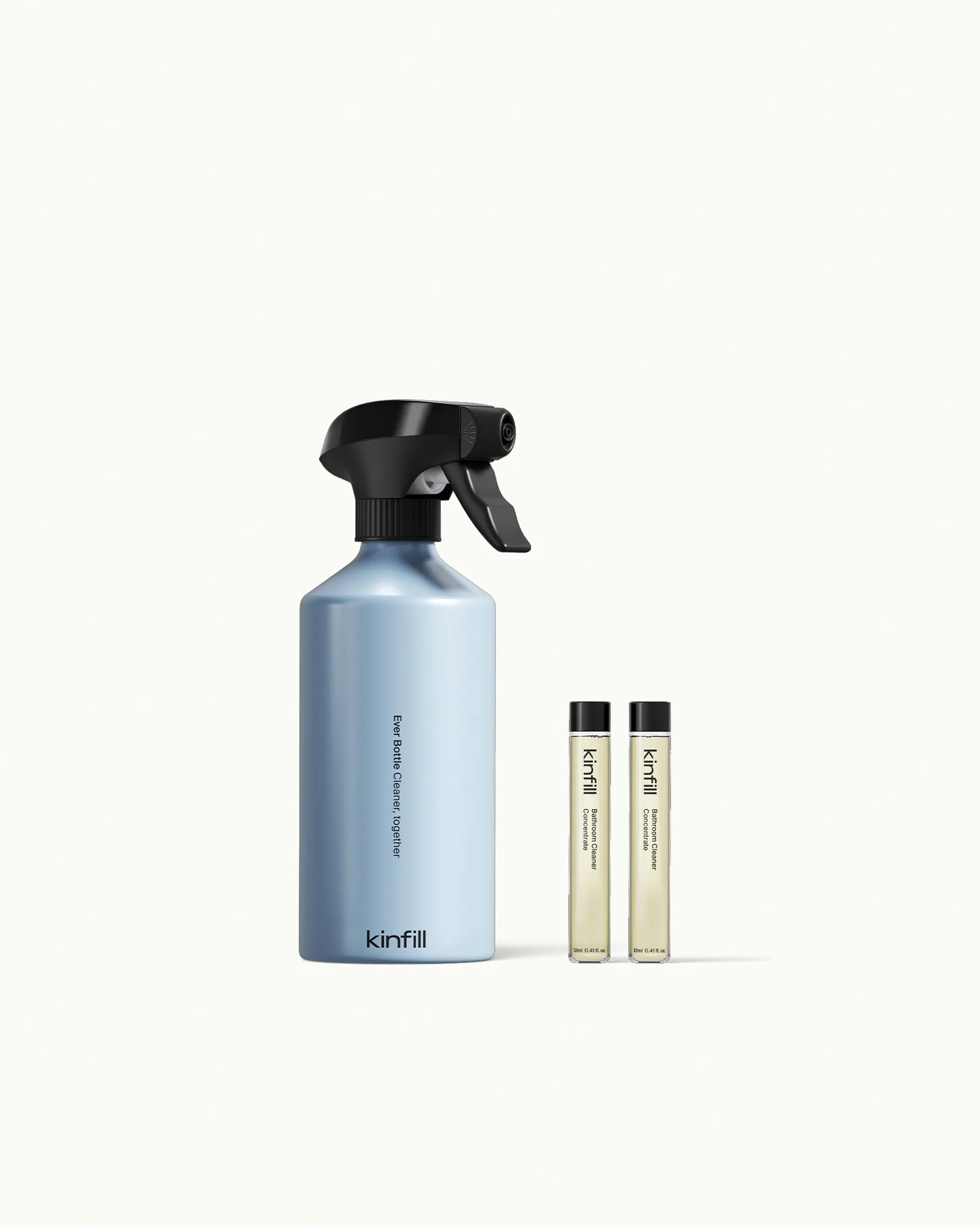
The Bathroom Cleaner
Tools that make the job easier
Gather a spray bottle, a soft-bristled grout brush or an old toothbrush, a microfiber cloth, and a squeegee. Avoid stiff wire brushes that can erode grout. If you opt for a year’s supply of 12 refills, you’ll receive a custom tin for storage, which keeps your refills organized and within reach.
Your step-by-step grout cleaning routine
- Prepare the surface: Remove loose dirt, hair, and soap residue with a dry cloth or vacuum brush. Mist the tiles and grout with water to pre-rinse. Common mistake: skipping this step and scrubbing dry, which can scratch tiles.
- Mix and apply the cleaner: Dilute The Bathroom Cleaner concentrate according to the instructions. Spray evenly over a 3x3 foot section, focusing on grout lines and corners. Checkpoint: do not let the cleaner dry on the surface; work in sections.
- Let it dwell: Allow the cleaner to sit for 3–5 minutes to break down soap scum and limescale. For heavy buildup, reapply and wait another 2 minutes. Common mistake: rushing the dwell time, which leads to more scrubbing later.
- Agitate grout lines: Scrub grout with a soft-bristled brush in small circular motions. For tiles, use a microfiber cloth or a non-abrasive sponge. Checkpoint: if grout still looks dark, repeat steps 2–3 before moving on.
- Rinse and dry: Wipe away loosened grime with a clean, damp cloth, then rinse the area with water. Dry with a squeegee or dry towel to prevent water spots. Common mistake: leaving surfaces wet, which encourages new mineral deposits.
- Maintain weekly: Use a diluted mix in a refillable bathroom spray for quick touch-ups between deep cleans. Focus on high-traffic areas like shower walls and behind the toilet. Next step: set a recurring reminder to keep your tile and grout care consistent.
Product facts
- The Bathroom Cleaner Refill: Designed to prevent limescale, the Bathroom Cleaner prevents damage and extends the life of your bathroom surfaces. Regular use helps avoid mineral buildup that dulls tiles and stains grout.
- The Bathroom Cleaner Refill: Safe for all bathroom materials. You can use it on ceramic, porcelain, glass, and most grout without worrying about damage.
- The Bathroom Cleaner Refill: One cleaning concentrate results in 500 ML of cleaner. You control the strength and amount, reducing waste from pre-mixed bottles.