Quick answer
Clean CZ rings with lukewarm water, a drop of mild dish soap, and a soft-bristle brush, then rinse and pat dry with a lint-free cloth. Do this every one to two weeks if you wear the ring daily. Skip ultrasonic cleaners and harsh chemicals unless the manufacturer confirms they are safe for your specific setting.
Cubic zirconia does not lose its sparkle on its own. What dulls a CZ ring is the film that builds up on the stone and in the setting: skin oils, lotion, soap residue, and dust. Remove that film regularly and the stone looks as bright as the day you bought it.
The routine below takes about five minutes and uses things you already have in a kitchen drawer. It works for everyday rings like the Silver Dot V Ring and for statement pieces, and it applies whether your CZ is set in sterling silver or gold.
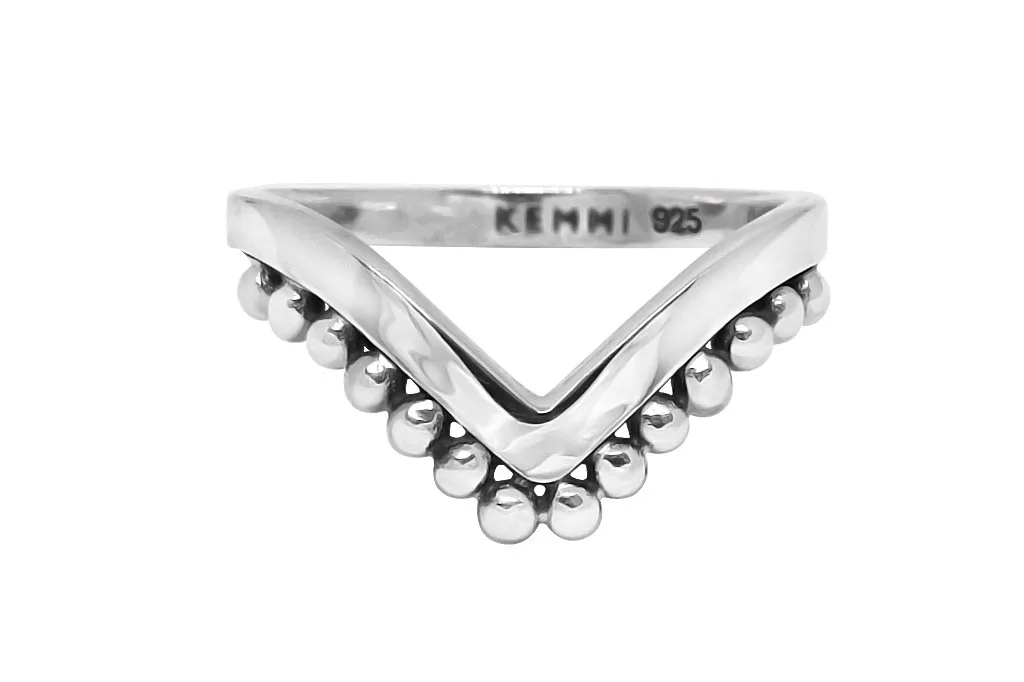
Silver Dot V Ring
Why CZ Rings Go Dull
Cubic zirconia is a hard, durable stone, but it is not diamond, and its brilliance depends on light entering and leaving the stone cleanly. A thin layer of hand cream or natural skin oil scatters that light, so the ring looks cloudy even though the stone is undamaged. The same film collects in the gaps around prongs and under the stone, where a quick wipe with a cloth cannot reach.
That is why a rinse under the tap is not enough on its own. You need a cleaner that breaks down oil and a brush fine enough to reach the setting without scratching metal. Once you understand that the problem is surface film rather than the stone itself, the whole routine becomes simple and low-risk.
- Put rings on after applying lotion, perfume, or hairspray, not before.
- Take rings off before washing dishes, showering, or swimming.
- Expect buildup to return within days if you skip these habits.
What You Need (and What to Avoid)
For most CZ rings you need four things: lukewarm water, a mild grease-cutting dish soap, a soft-bristle brush such as a baby toothbrush, and a lint-free cloth. A small bowl helps so you do not lose a stone down the drain. That is the entire kit, and it is safe for sterling silver, gold vermeil, and solid gold settings when used gently.
Avoid toothpaste, baking soda, bleach, ammonia, and abrasive polishes. They can scratch metal, strip plating, or loosen settings over time. Ultrasonic and steam cleaners are effective on some jewelry, but they can shake a stone loose in a delicate setting, so only use them if the maker explicitly says the piece is safe for that method.
- Never use a brush with stiff or worn-out bristles.
- Do not soak a ring with glued-in stones or porous materials.
- Close the drain or work over a bowl every single time.
A Five-Minute Cleaning Routine
Fill a small bowl with lukewarm water and add one drop of mild dish soap. Let the ring soak for five to ten minutes to soften dried lotion and oil. Then brush gently around the stone, under the setting, and along the inside of the band, where residue hides and rubs against your skin. Rinse under lukewarm running water while holding the ring over the bowl.
Pat dry with a lint-free cloth rather than air-drying, which leaves water spots. If the stone still looks cloudy after one pass, repeat the soak and brush once. Persistent cloudiness usually means buildup underneath the stone, which is a job for a jeweler rather than a longer soak at home.
- Use lukewarm water only; hot water can loosen some settings.
- Brush the underside of the stone, not just the top.
- Dry immediately to avoid mineral spots.
How Often to Clean, by Wear Pattern
Daily-wear rings collect film fastest, so clean them every one to two weeks and give them a quick wipe after any heavy lotion or sunscreen use. Rings you wear a few times a month need cleaning every one to two months, plus a rinse before an event. Rings stored away only need a check and a wipe when you take them out.
If you wear several rings on one hand, clean them together so none is left dull next to a freshly polished piece. Stacking rings, such as a thin band worn with a statement ring, trap more residue between the bands, so separate them during cleaning rather than scrubbing them as a stack.
- Clean before events, not after, so the sparkle shows when it matters.
- Add a cleaning session whenever you notice a cloudy film.
- Store clean rings in a dry pouch or lined box, not loose in a drawer.
Habits That Keep CZ Sparkling Longer
The easiest maintenance is prevention. Make jewelry the last thing you put on and the first thing you take off. Keep a small pouch or travel case by the sink for dishwashing and hand washing, and remove rings before the gym, the pool, and the shower. Chlorine and salt water are hard on metal finishes even when the stone itself is fine.
Check your prongs monthly by running a fingertip around the setting. If a stone moves or a prong feels sharp or lifted, stop wearing the ring and have it checked before you clean it again. A loose stone is the one problem a home cleaning routine cannot fix, and catching it early is far cheaper than replacing the stone.
- Keep a dedicated pouch for rings near the kitchen and bathroom sinks.
- Inspect prongs monthly with a light touch, never a tug.
- Have loose stones tightened by a jeweler before resuming wear.
Your CZ Ring Cleaning Steps
- Step 1: Prep the area: Close the drain and set a small bowl of lukewarm water on a folded towel. Add one drop of mild dish soap and swirl it in. Checkpoint: if you are working over an open drain, stop and set up the bowl first.
- Step 2: Soak for five to ten minutes: Drop the ring in and let it sit. This softens dried lotion and oil so the brush does not have to work hard. Mistake to avoid: using hot water, which can loosen some settings.
- Step 3: Brush the stone and setting: With a soft-bristle brush, scrub the top of the stone, underneath it, and around the prongs in small circles. Then brush the inside of the band. Checkpoint: the underside of the stone is where most cloudiness hides.
- Step 4: Rinse and inspect: Rinse under lukewarm running water while holding the ring over the bowl, then look at the stone under a lamp. Mistake to avoid: rinsing over an open drain, the most common way rings are lost.
- Step 5: Dry and check the prongs: Pat dry with a lint-free cloth and run a fingertip around the setting to feel for sharp or lifted prongs. If a stone moves, stop wearing the ring and see a jeweler before cleaning again.
- Step 6: Store it dry: Return the ring to a dry pouch or lined box, separate from harder pieces that could scratch the metal. Next step: repeat every one to two weeks for daily-wear rings.
Kemmi Pieces and What They Mean for Care
- Silver Dot V Ring: Solid sterling silver, handmade by master silversmiths, with tiny dots in a pointy V shape; differences may appear due to the handmade process. The dotted texture and sterling silver finish both hold residue, so brush along the dots gently and dry fully to slow tarnish between cleanings.
- Men's Silver Wheel Ring: Handmade in sterling silver with a wheel carved into the front of the ring. Carved recesses collect lotion and dust in the grooves, so work the soft brush into the wheel detail rather than only polishing the flat surface.
- Uma Hoops 60mm: Handmade in gold and solid sterling silver, designed to be worn alone or as a secondary earring. The same soap-and-soft-brush method works for mixed-metal pieces, but keep the routine gentle so the gold and silver surfaces stay evenly finished.
CZ ring care comes down to one habit: remove the film before it hardens, and keep the ring dry when you are not wearing it. A five-minute soak and brush every couple of weeks, plus a monthly prong check, keeps cubic zirconia looking bright for years without harsh chemicals or risky shortcuts.