Quick Answer
Yes, you can use a concentrated all purpose cleaner or degreaser on wheels and tires. Dilute it correctly and follow a safe process to lift brake dust, road grime, and grease without harming painted or coated surfaces.
Why Use a Degreaser Instead of a Dedicated Wheel Cleaner?
A dedicated wheel cleaner is formulated to tackle brake dust specifically, often with pH-balanced or acid-based chemistry. A heavy duty degreaser, like an all purpose cleaner, is more versatile—it cuts through thick grease, oil, and caked-on grime on both wheels and tires. The tradeoff is that degreasers can be too aggressive for sensitive wheel finishes (clear-coated, painted, or polished) if used at full strength. Dilution is key.
When to Choose a Degreaser Over a Wheel Cleaner
Reach for a degreaser when your wheels and tires have heavy buildup from road tar, oil leaks, or neglected cleaning. For routine washes with light brake dust, a dedicated wheel cleaner is safer and faster. If you only want one product for multiple surfaces, a concentrated all purpose cleaner that you can dilute for different jobs is the practical choice.
How to Clean Wheels and Tires with an All Purpose Cleaner or Degreaser
- 1. Rinse Wheels and Tires First: Use a pressure washer or garden hose to spray off loose dirt, dust, and debris. This prevents grinding grit into the finish when you apply cleaner. Skipping the rinse can scratch clear coats or painted wheels.
- 2. Dilute the Degreaser Correctly: For a concentrated all purpose cleaner, mix with water in a spray bottle. A 1:10 ratio (cleaner to water) works for moderate grime; use 1:5 for heavy grease and baked-on brake dust. Always follow the label instructions. Using full-strength degreaser on clear-coated wheels can dull or etch the finish. Test on a small area first.
- 3. Apply to Tires First, Then Wheels: Spray the diluted cleaner onto the tire sidewall and let it dwell for 30–60 seconds. Then spray the wheel face and barrel. This order lets the tire grime soften while you work on the wheel. Do not let the cleaner dry on the surface—work in the shade and keep the wheel wet.
- 4. Agitate with a Brush: Use a dedicated tire brush for the sidewalls and a soft-bristle wheel brush for the face and inner barrel. Scrub in a circular motion to lift embedded brake dust and grease. Use separate brushes for tires and paint to avoid cross-contamination of grit and rubber residue.
- 5. Rinse Thoroughly: Blast off all cleaner and loosened grime with a pressure washer or strong hose stream. Pay extra attention to lug nut recesses and spoke gaps where residue can hide. Leftover degreaser can dry into white spots or streaks on the wheel finish. Rinse until water runs clear.
- 6. Dry and Inspect: Dry the wheels with a clean microfiber towel to prevent water spots. Inspect for any missed spots or stubborn residue. Repeat the process on problem areas if needed. If you see etching or discoloration after drying, reduce the cleaner concentration next time.
Product Used in This Guide
-
All Clean+ All Purpose Cleaner & Degreaser: All Clean+ Citrus Based All Purpose Super Cleaner has a concentrated formula that tackles sticky grease and oil stains. Dilute to clean various surfaces, including plastic, vinyl, carpets, and more. You can adjust the dilution ratio for wheels and tires—stronger for heavy grime, weaker for lighter cleaning—so one bottle replaces several specialized cleaners.
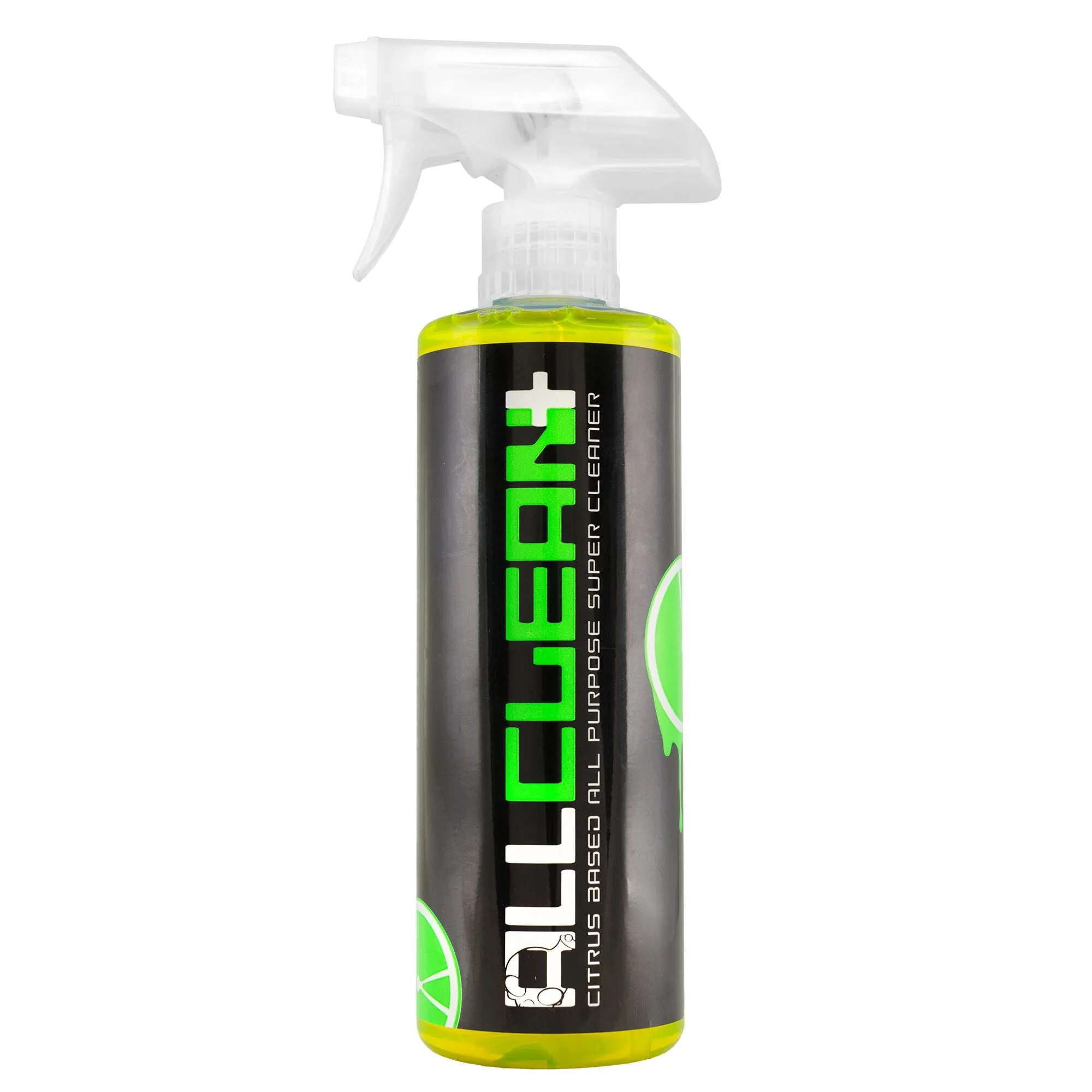
All Clean+ All Purpose Cleaner & Degreaser