Quick answer
Clean your espresso machine daily by rinsing the portafilter and group head, and wipe down the steam wand after each use. For deeper maintenance, backflush weekly (if your machine supports it) and descale every 1–3 months depending on water hardness. This routine prevents oil buildup, mineral scale, and off flavors.
Why regular cleaning matters
Coffee oils and mineral deposits accumulate inside your espresso machine even if you only use it once a day. Left unchecked, these residues can clog the group head, slow down brewing, and make your espresso taste bitter or sour. A consistent cleaning schedule also protects internal components, reducing the need for repairs down the line.
The exact frequency depends on how often you pull shots and the hardness of your water. If you notice slower flow, uneven extraction, or a metallic aftertaste, it is a sign that descaling or backflushing is overdue.
What you will need
For basic cleaning you need a soft cloth, a blind basket (if your machine supports backflushing), espresso machine cleaning detergent (cafiza or similar), and a descaling solution approved for your machine. A small brush helps clean the group head screen and gasket. Avoid abrasive pads or harsh chemicals that can damage chrome or plastic parts.
Step-by-step espresso machine cleaning routine
- Step 1: Daily rinse and wipe: After your last shot, remove the portafilter and rinse it under hot water. Run a blank shot (no coffee) through the group head to flush out loose grounds. Wipe the steam wand with a damp cloth immediately after steaming milk, then purge steam for a second to clear the tip. Checkpoint: If you see old coffee residue on the group head gasket, wipe it gently with a damp cloth. This prevents seal damage.
- Step 2: Backflush (weekly or as needed): Insert the blind basket into the portafilter and add a small scoop of espresso machine detergent. Lock it in and run the brew cycle for 10 seconds, then pause for 10 seconds. Repeat 3–5 times. Remove the portafilter, rinse it, and run a few blank shots to clear any detergent residue. Common mistake: Using too much detergent can leave a soapy aftertaste. A pea-sized amount is enough. Check your machine manual to confirm it supports backflushing.
- Step 3: Descaling (every 1–3 months): Fill the water tank with descaling solution mixed according to the manufacturer's instructions. Run a brew cycle without coffee until the tank is nearly empty. Let the solution sit in the boiler for 15–20 minutes, then finish the cycle. Rinse thoroughly by running two full tanks of fresh water through the machine. Checkpoint: If your machine has a descaling alert, follow its schedule. Hard water may require descaling every month; soft water can stretch to three months. Always use a descaling product that is safe for your machine's materials.
- Step 4: Clean the group head and gasket: Once a month, remove the shower screen (if possible) and soak it in warm water with a drop of detergent. Use a small brush to clean the group head gasket and the area behind the screen. Rinse and reassemble. Common mistake: Forgetting to reinstall the shower screen properly can cause water to spray unevenly. Make sure it is seated flat before locking in the portafilter.
Tools that make the job easier
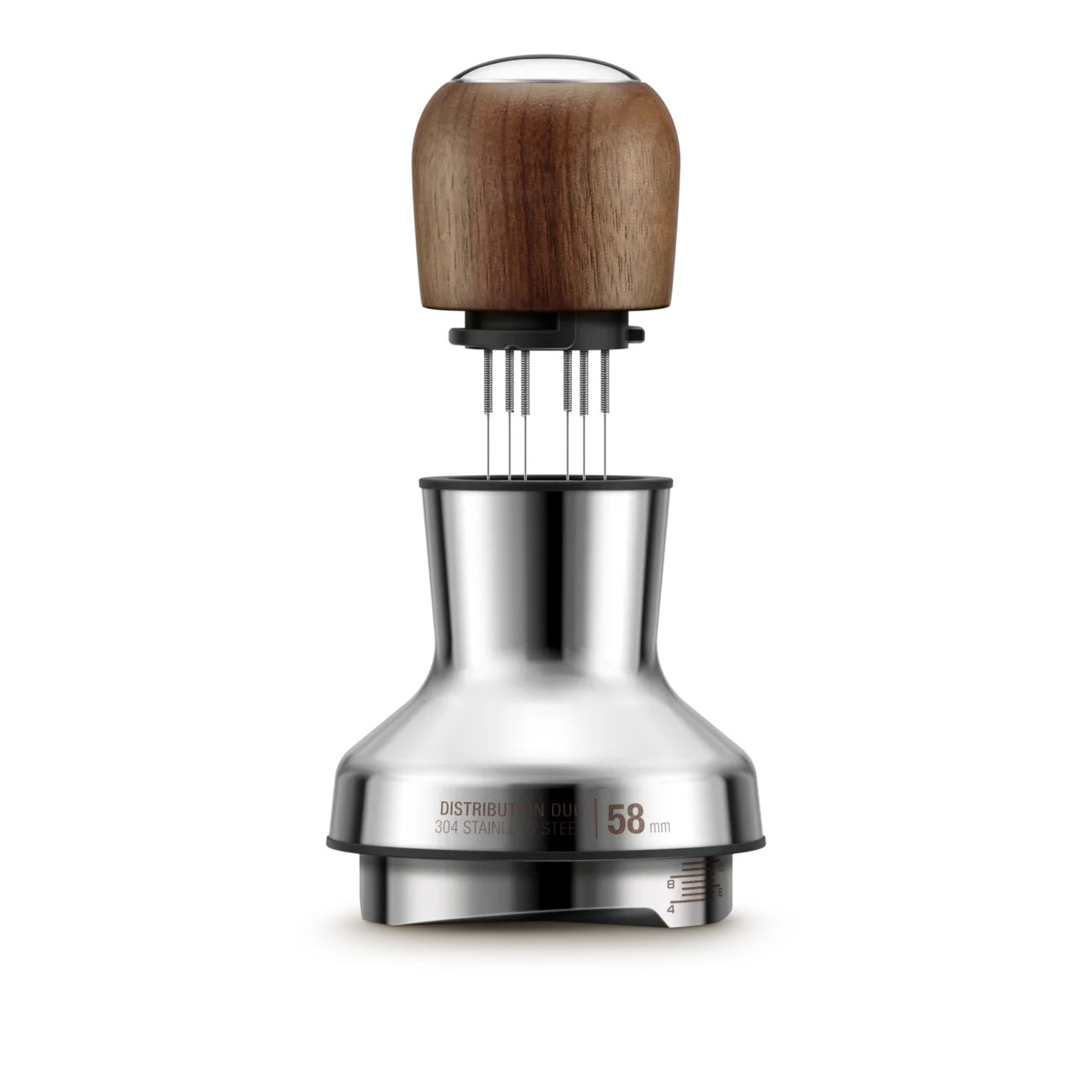
- the Distribution Duo™ 58mm: the Distribution Duo™ 58mm is a 2-in-1 distribution tool with three angled blades that break up clumps and evenly distribute coffee grinds, ensuring a level top surface for consistent tamping. Made from stainless steel and walnut, it is compatible with 58mm Breville portafilters. A level coffee bed reduces channeling and gives you more even extraction, which means fewer messy puck disruptions and a cleaner portafilter to rinse afterward.