Quick answer
Set up a calm corner at home by placing the Playroom Comfort Corner Essentials Set in a quiet spot, arranging the 15 plush kins by emotional theme, and using the affirmation cards and posters during calm-down moments.
Why a dedicated calm corner works
A calm corner gives children a consistent, safe place to process big feelings. Unlike using a random spot in the room, a designated area signals that it is okay to pause and self-regulate. The Playroom Comfort Corner Set includes all 15 core Slumberkins creatures, each tied to a specific emotion, so you can match the creature to the feeling your child is experiencing.
One trade-off: a full set of 15 plush kins takes up more space than a single toy. If your playroom is small, consider rotating a few creatures at a time rather than displaying all at once.
How the affirmation cards and posters add structure
The set includes affirmation cards and posters that reinforce the emotional lessons of each kin. Cards can be placed in a small basket or mounted on the wall near the calm corner. Posters work best at eye level so children can read or point to the affirmation that matches how they feel.
A common mistake is treating the cards as decorations rather than tools. Use them during calm-down moments: ask your child to pick a card that matches their feeling, then read the affirmation together.
Steps to set up your calm corner
- Choose a quiet, low-traffic spot: Pick a corner of the playroom or bedroom away from noisy toys and foot traffic. A floor cushion or small rug defines the space. Avoid placing it near a TV or busy hallway. If the spot is too stimulating, children will not use it to calm down.
- Arrange the 15 plush kins by emotional theme: Group creatures that address similar feelings—for example, place the comfort-themed kin (like Snuggle Sloth) near the confidence-building kin (like Determined Deer). Keep them within arm's reach so a child can pick one independently. Let your child help arrange them. Ownership increases the chance they will use the corner.
- Display affirmation cards and posters at eye level: Mount the posters on the wall inside the corner and place the cards in a small basket or on a low shelf. Rotate cards weekly to keep the corner fresh. Do not overcrowd the wall—two or three posters are enough. Too many visuals can overwhelm a child who is already upset.
- Introduce the corner during a calm moment: Show your child the corner when they are happy and relaxed. Explain that this is a place to go when they feel big emotions. Practice picking a kin and reading a card together. Never send a child to the corner as a punishment. It should feel like a safe choice, not a time-out.
- Use the corner consistently during emotional moments: When your child is upset, guide them to the corner and ask which kin they want to hold. Read the corresponding affirmation card together. Over time, they will learn to self-regulate without prompting. If your child refuses to use the corner, model the behavior yourself. Sit with a kin and a card to show that everyone needs a moment to pause.
What comes in the set
-
Playroom Comfort Corner Essentials Set – 15 Plush Kins + Affirmation Cards & Posters: Promotes: Emotional Awareness, Self-Regulation, Confidence, Connection Each of the 15 plush kins targets a different emotional skill, so you can address specific feelings like anxiety, anger, or sadness with the right creature.
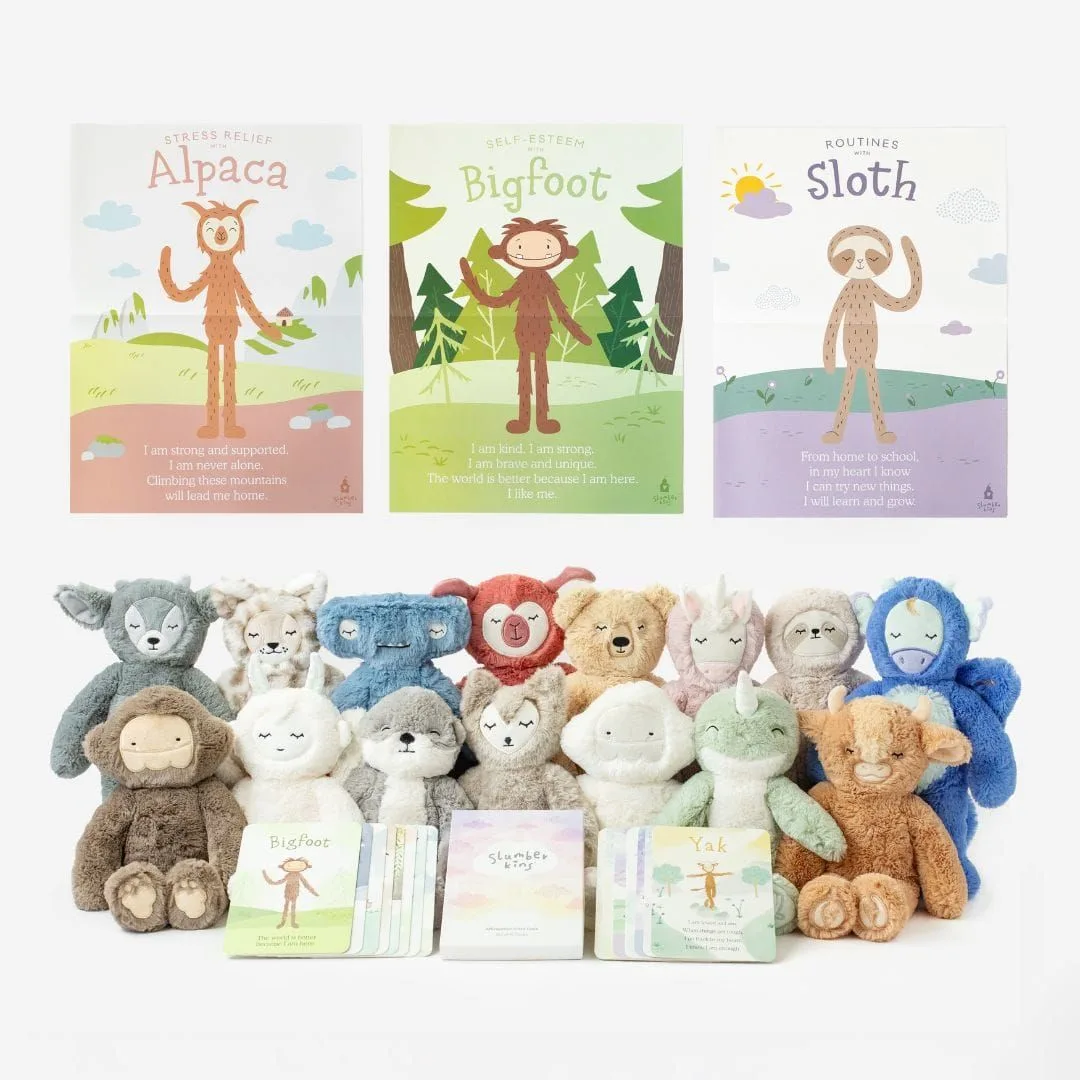
Playroom Comfort Corner Essentials Set – 15 Plush Kins + Affirmation Cards & Posters