Quick answer
Pick a corner with a nearby outlet and about 15 minutes of setup time. Attach an AirFort to a standard box fan, add a light source, a soft mat, and a small book basket, then leave it up for a few days so it becomes a habit rather than a novelty.
A reading nook works best when it feels like a small, separate place. An AirFort gives you that separation without tools, brackets, or a trip to the hardware store, and it comes down just as fast when you need the floor space back. The trick is treating it like a reading room first and a play fort second.
This guide walks through the setup in order, from choosing the corner to keeping the nook interesting after the first week. Along the way, you'll see which AirFort designs fit a calmer reading mood and which details parents tend to overlook.
Choose the corner before you choose the fort
Walk your home and look for a spot with three things: a wall or two to define the edge, a standard box fan's worth of floor space, and an outlet within reach of the fan cord. Bedroom corners and the space beside a couch usually work better than the middle of a playroom, because the walls do half the work of making the nook feel enclosed.
Avoid spots directly under a ceiling vent or in front of a heating register. Moving air from above can make the fort feel drafty, and kids notice that faster than adults do. If the only open corner is a high-traffic hallway, keep looking. A reading fort for kids needs a little quiet to do its job.
- Checkpoint: stand in the corner yourself. If you can see a TV or a busy walkway from seated height, the nook will compete for attention.
Match the AirFort theme to the reading mood
Every AirFort in the lineup inflates the same way and works with any standard box fan, so the theme is really about the feeling you want inside. A Cottage or Royal Castle reads calmer and more storybook-like, which suits quiet reading. A Space Shuttle or Big Yellow Dump Truck leans toward adventure, which works well if your child prefers nonfiction, comics, or read-aloud action stories.
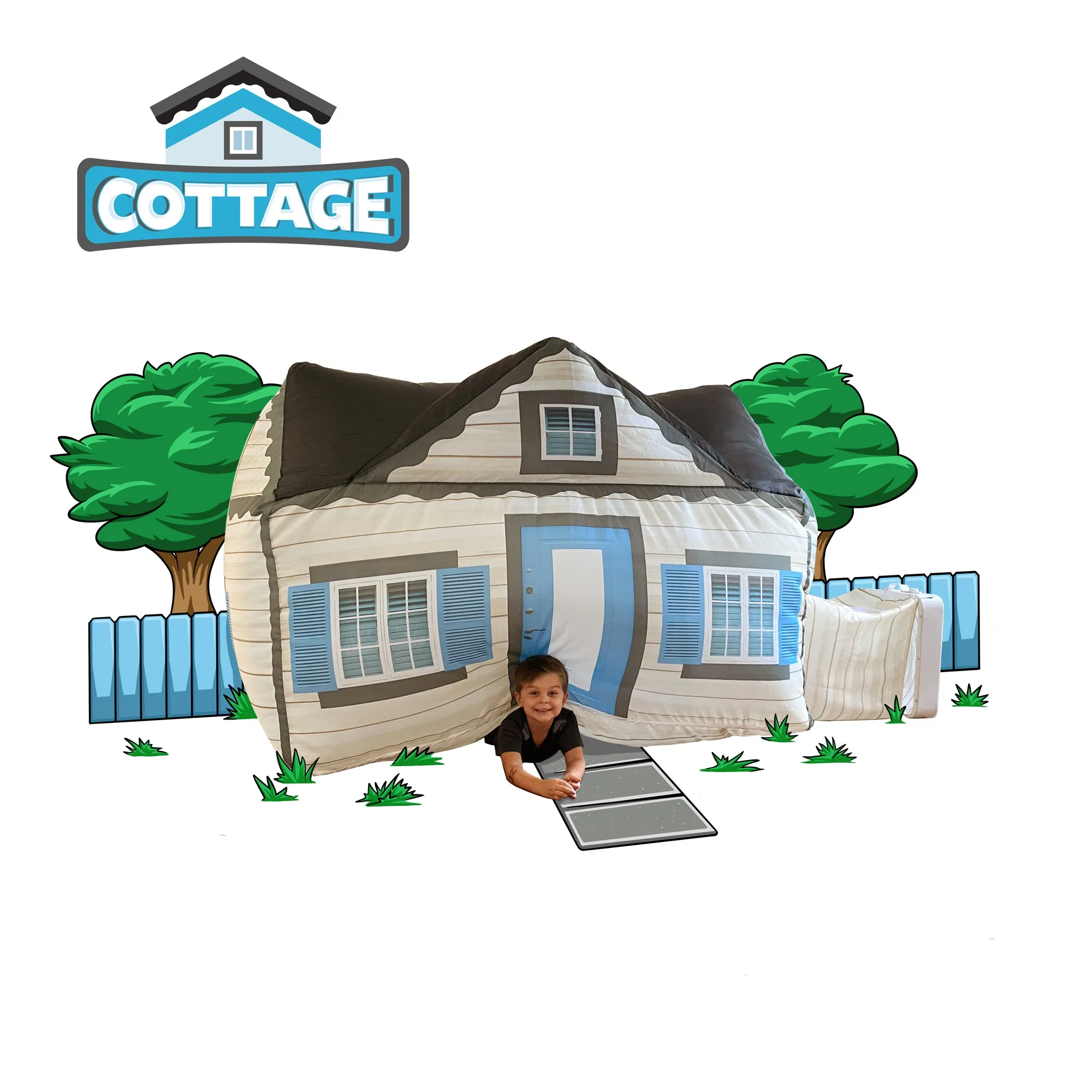
If you are setting up a shared reading space for more than one child, pick a design with room for everyone to sit without crowding the walls. The Cottage listing describes playing house with all your favorite friends, and the Royal Castle notes it is sized to fit you and your favorite royal friends and family, so both are reasonable starting points for a sibling nook.
- Common mistake: buying the loudest theme in the catalog when the goal is a calm reading corner. The theme sets the tone every time your child walks in.
Set up the fort in the right order
Attach the AirFort to the fan first, then position the fan so the cord reaches the outlet without stretching across a walking path. Inflate the fort, then step back and check that the opening faces into the room rather than into a wall. A fort that faces a wall feels like a dead end; one that faces the room feels like a doorway.
Once it is up, give it a few minutes to settle. The fabric is designed to be durable and breathable, and the airflow keeps it inflated, so you do not need to fuss with it after the initial setup. If the fort sags, check that the fan is seated correctly before assuming anything is wrong with the fort itself.
- Checkpoint: the fan should sit flat and stable. A wobbly fan is the most common reason a fort looks deflated an hour later.
Add light, a soft base, and one book basket
Reading light should come from outside the fort or from a battery-powered clip light, not from a corded lamp that could be pulled over. A small mat or a folded blanket on the floor makes sitting comfortable for more than a few minutes, which matters more than most parents expect. Kids read longer when their legs are not falling asleep.
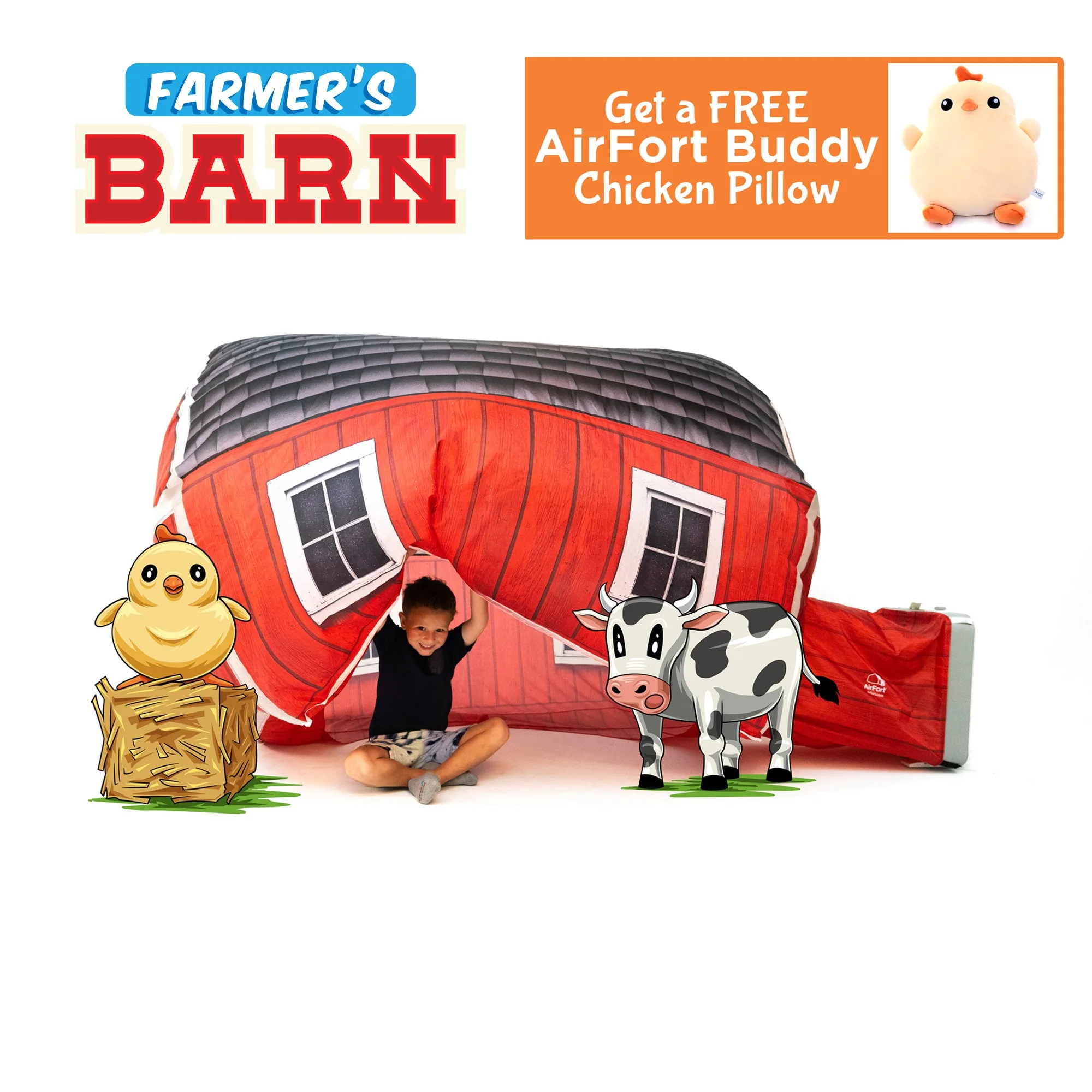
Keep the book supply small and rotating. One shallow basket of five to eight books is easier to browse than a full shelf, and it gives you a natural reason to swap titles every week or two. If you want a themed touch, the Farmers Barn bundle includes a free AirFort Buddy Chicken Pillow while supplies last, which doubles as a backrest or a reading buddy.

AirFort Buddy Chicken Pillow
- Common mistake: filling the fort with toys. Every toy that comes in competes with the books.
Make the nook part of the daily routine
A reading nook only works if it gets used, and the easiest way to make that happen is to attach it to something you already do. Ten minutes after dinner, right after teeth brushing, or during the after-school wind-down are all natural slots. Keep the sessions short at first so the nook stays associated with calm rather than with a chore.
Leave the fort up for several days in a row instead of inflating and deflating it around each session. The setup is quick, but the ritual of walking into a fort that is already waiting is what turns a kids reading space into a habit. When it is time to reclaim the floor, deflate it, fold it, and store it somewhere your child can help retrieve it next time.
- Checkpoint: if your child stops going in after a week, change the books before you change the setup.
Reading nook setup steps
- Step 1: Pick the corner: Choose a spot with wall support, floor space for a standard box fan, and an outlet within cord reach. Avoid ceiling vents, heating registers, and busy walkways. Checkpoint: sit in the corner yourself before you commit.
- Step 2: Choose the theme: Pick a calmer design such as the Cottage or Royal Castle for quiet reading, or an adventure theme such as the Space Shuttle or Big Yellow Dump Truck for action-heavy readers. Common mistake: choosing the theme your child likes best for play instead of the mood you want for reading.
- Step 3: Attach the fan and inflate: Connect the AirFort to the fan, position the fan so the cord stays out of walking paths, and inflate with the opening facing into the room. Checkpoint: a flat, stable fan is what keeps the fort standing.
- Step 4: Add light and a soft base: Use a battery-powered clip light or existing room light, and place a mat or folded blanket on the floor. Keep cords out of the fort. Common mistake: corded lamps inside a fort kids climb in and out of.
- Step 5: Stock one small book basket: Keep five to eight books in a shallow basket and rotate them every week or two. Add a pillow for back support if you have one. Checkpoint: if the basket is overflowing, it is too full to browse.
- Step 6: Anchor it to a daily routine: Tie the nook to a fixed moment such as after dinner or before bed, and leave the fort up for several days at a time. Next step: if interest drops, swap the books before you change anything else.
AirFort details that matter for a reading nook
- The Original AirFort - Cottage: The Cottage is designed for playing house with friends, and the listing describes it as a home away from home. The house-like theme and group-friendly framing make it a natural fit for a shared sibling reading corner.
- The Original AirFort - Royal Castle: The Castle is described as fitting you and all your favorite royal friends and family, with child safety testing and approval noted. A castle theme supports storybook reading and gives you a stated safety detail to check off before buying.
- The Original AirFort - Creamsicle Orange: The Creamsicle AirFort is described as bringing a summertime feel year-round and is child safety tested and approved. A bright, simple color scheme keeps the nook feeling light and open, which helps in smaller rooms.
- Farmers Barn + FREE AirFort Buddy Chicken Pillow (While Supplies Last!): The Farmers Barn is described as durable and breathable, safe for kids of all ages, and it ships with a free Buddy Chicken Pillow while supplies last. The included pillow gives you an instant backrest or reading buddy, and the breathable construction matters for longer sit-down sessions.
A good AirFort reading nook comes down to three choices: a quiet corner, a theme that matches the reading mood, and a small, rotating stack of books. Get those right and the fort does the rest of the work. Start with the corner this week, and let the routine build from there.