Quick Answer
Use a rake brush to gently work through your dog's undercoat in the direction of hair growth, focusing on one section at a time. This method safely removes loose fur without irritating the skin.
Why a Rake Brush Works Best for Shedding
A rake brush is designed with stainless steel teeth that reach deep into the undercoat to lift and remove loose and dead hair before it falls on your floor. Unlike slicker brushes or combs, the rake's teeth are spaced to grab clumps without pulling healthy fur. This makes it especially effective for dogs with double coats or thick fur that sheds heavily during seasonal changes.
When Not to Use a Rake Brush
Rake brushes are not suitable for dogs with very short, single-layer coats or those with sensitive skin conditions. The teeth can scratch or irritate if pressed too hard. Always check your dog's coat type before starting, and stop immediately if you see redness or signs of discomfort.
Step-by-Step Guide to Deshedding Your Dog with a Rake Brush
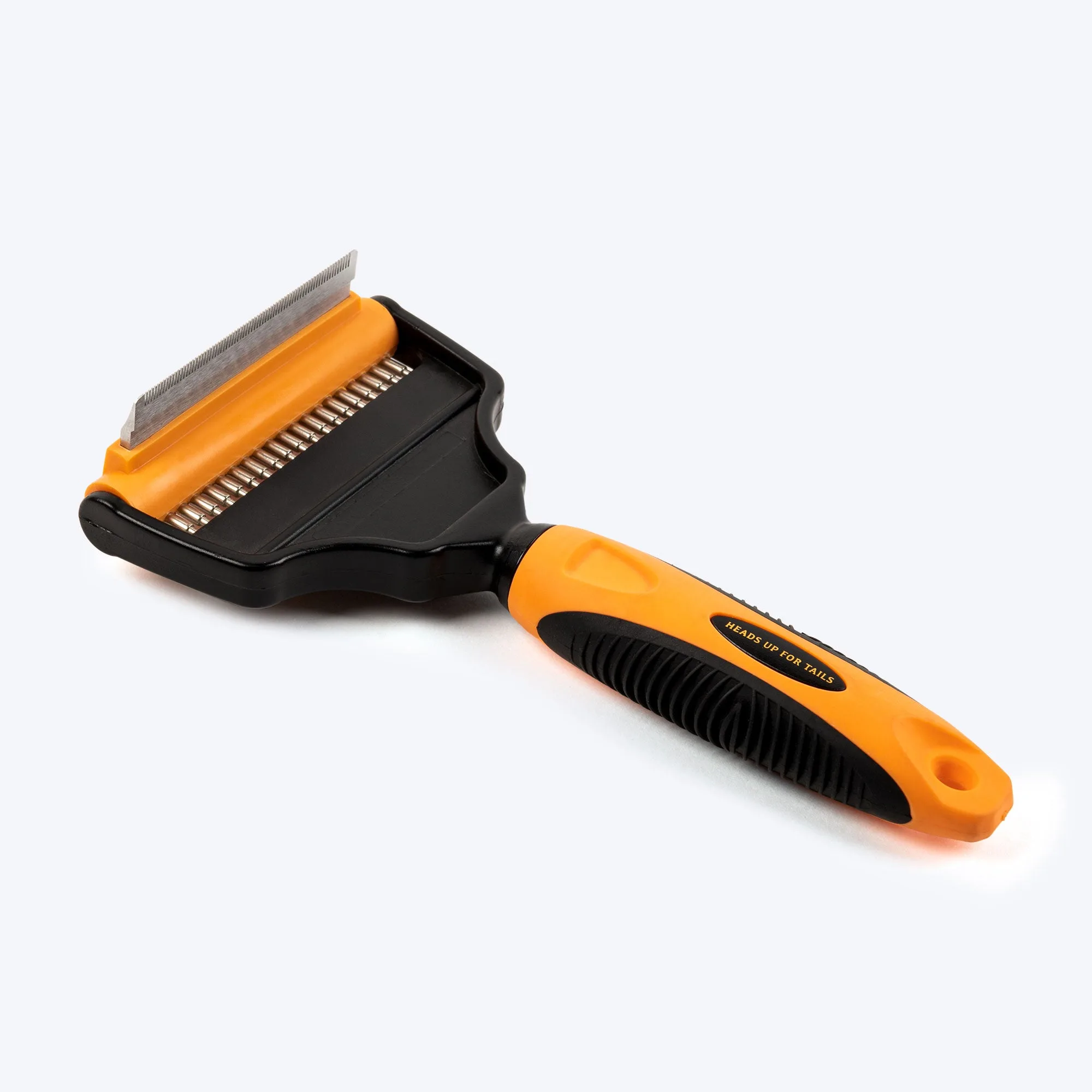
- Choose the Right Size and Side: Select the rake brush size that matches your dog's body size. For the HUFT Deshedder with Rake, start with the deshedder side to loosen the undercoat. Flip the top to switch to the rake side when you need to collect clumps. Common mistake: using the rake side first on matted fur can pull and hurt. Always loosen with the deshedder side first.
- Brush in the Direction of Hair Growth: Work in small sections, brushing from the head toward the tail. Use gentle, even strokes. Do not press hard — let the teeth do the work. Focus on the back, sides, and neck where shedding is heaviest. Checkpoint: if the brush snags or your dog flinches, you are pressing too hard or the fur is tangled. Stop and gently detangle with your fingers.
- Clean the Brush Frequently: After every few strokes, remove the collected fur from the teeth with your fingers or a comb. A clogged brush cannot reach the undercoat and may cause discomfort. Common mistake: letting fur build up reduces effectiveness and can scratch the skin. Clean as you go.
- Finish with a Final Rake Pass: Once you have covered the whole body, switch back to the rake side and make one final pass over each section. This catches any remaining loose clumps and leaves the coat smooth. Checkpoint: if you still see loose fur after the final pass, your dog may be in a heavy shed cycle. Repeat the process every few days until shedding slows.
Product Used in This Guide
-
HUFT Deshedder with Rake for Dogs - Orange: This tool combines a deshedder side and a rake side in one head. You flip the top to switch between the two. The stainless steel teeth are available in two sizes (large: 20 x 10 cm, small: 21 x 8 cm). The dual-side design lets you remove loose undercoat with the deshedder and then capture clumps with the rake, saving time and reducing the number of tools you need.
HUFT Deshedder with Rake for Dogs - Orange