Quick Answer
To detangle kids' hair without tears, work in small sections with a wide-tooth comb or soft brush on damp, conditioned hair, starting from the ends and moving upward. Using a gentle, silicone-free detangling product makes the process smoother and helps prevent breakage.
Why Detangling Hurts (and How to Avoid It)
Tangles happen when hair strands twist around each other and the cuticle gets roughed up. For kids, the pain often comes from pulling on the scalp or trying to yank through a knot with a fine-tooth comb or brush with stiff bristles.
The key is to add slip—something that makes strands glide past each other—and to work patiently from the bottom up. This reduces tension on the roots and prevents the dreaded 'tug-of-war' that leads to tears.
The Right Tools Make a Difference
A wide-tooth comb or a detangling brush with flexible bristles is gentler on knots than a fine-tooth comb or a paddle brush. For very curly or coily hair, a wide-tooth comb used on damp, conditioned hair is often the safest choice.
Avoid metal combs with sharp teeth and brushes with hard plastic bristles, as they can catch and snap strands. If your child has very fine hair, a soft-bristle brush can help reduce static.
When to Detangle: Timing Matters
The best time to detangle is right after washing, while the hair is still damp and has some slip from conditioner. If you're not washing that day, lightly mist the hair with water or a detangling spray to add moisture.
Avoid detangling completely dry hair, as it's more prone to breakage and tangles are harder to release. Also, never brush wet hair with a fine-tooth comb—wet hair is weaker and more elastic, so it stretches and snaps more easily.
Step-by-Step Tear-Free Detangling Routine
- Prep the hair: Start with damp hair—either after washing or by misting with water or a detangling spray. Apply a small amount of conditioner or detangler to add slip. Check that the hair is evenly damp, not dripping wet, to avoid over-saturation.
- Divide into sections: Use clips or hair ties to separate the hair into 4-6 sections, depending on thickness. Work with one section at a time to keep tangles manageable. If a section is too large, split it further—smaller sections reduce pulling.
- Start at the ends: Hold the hair just above the tangle to protect the scalp. Using a wide-tooth comb or detangling brush, gently comb the last few inches first, then gradually work upward toward the roots. Never yank or pull through a knot—if you hit a snag, hold the hair and work it out slowly.
- Use a detangling product: Apply a pea-sized amount of a kids detangler or leave-in conditioner to each section as you go. This adds extra slip and helps prevent breakage, especially for curly or coily hair. Too much product can weigh hair down—start with a small amount and add more only if needed.
- Finish with a soft brush: Once tangles are out, use a soft-bristle brush to smooth the hair and distribute natural oils. This helps reduce frizz and keeps hair looking neat. If hair is very fine, skip the brush to avoid static.
- Prevent future tangles: Encourage gentle brushing twice a day, and consider braiding or tying hair back for sleep. Use a silk or satin pillowcase to reduce friction overnight. A quick morning detangle before brushing can prevent painful knots from forming during the day.
Product Spotlight: Pipette Kids Detangler
-
Kids Detangler: This weightless, silicone-free detangler uses plant-derived squalane to nourish sensitive scalps and is clinically tested for all hair types and textures. It adds slip without coating the hair in heavy silicones, so knots release easily and hair stays soft—not sticky—which helps prevent tears and tangles from returning.
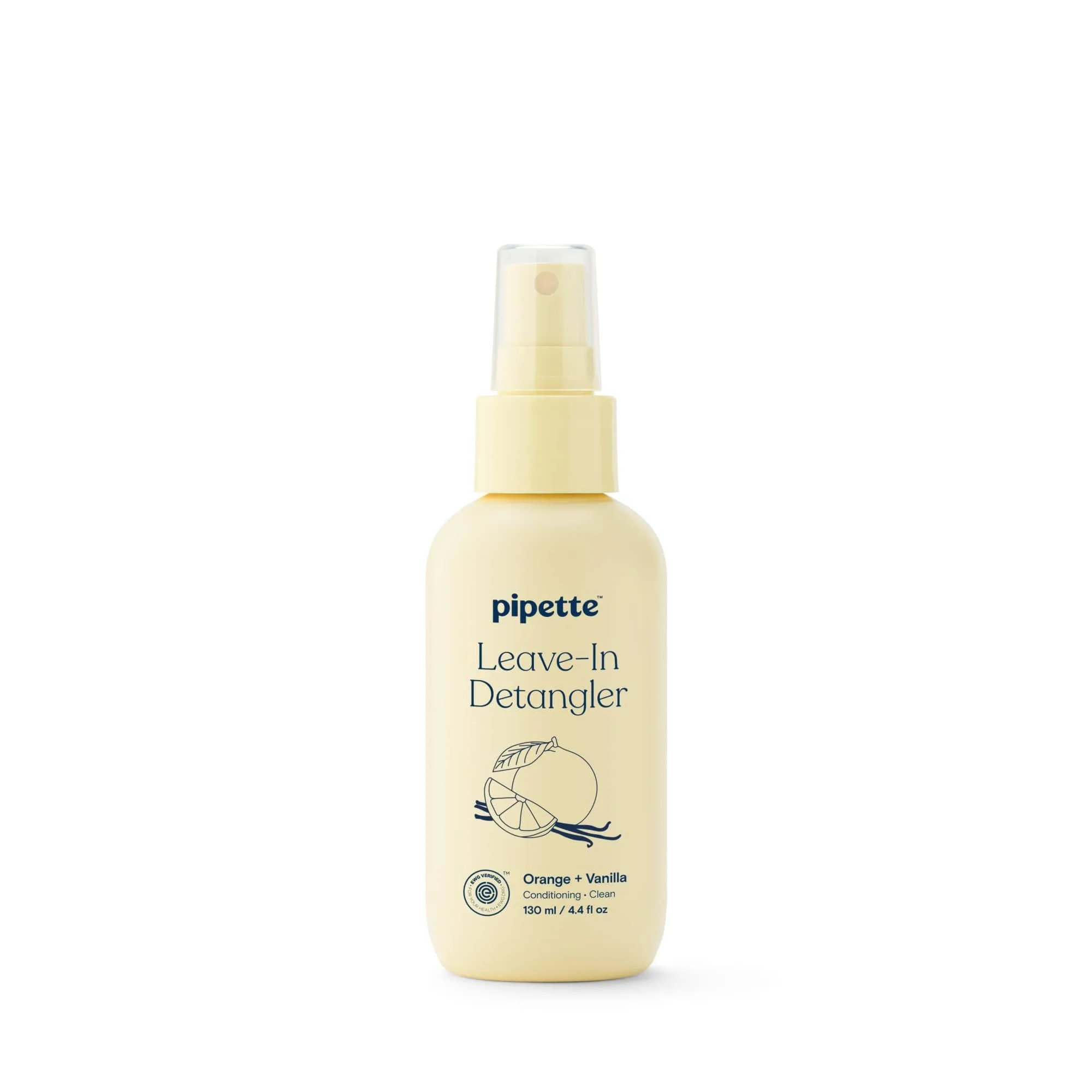
Kids Detangler