Quick answer
Display a horse figurine collection by grouping three to five pieces of similar scale, leaving at least one empty horse-width between groups, and rotating a few pieces out of storage every season. Use risers or small blocks to vary height, and keep the shelf surface mostly clear so each model reads as a deliberate choice rather than part of a crowd.
A horse collection can look like a museum or a jumble sale, and the difference is rarely the number of models. It is almost always spacing, scale, and how often you change what is on view. Most collectors who feel their shelf looks cluttered are actually dealing with too many pieces at one eye level and no visual resting points.
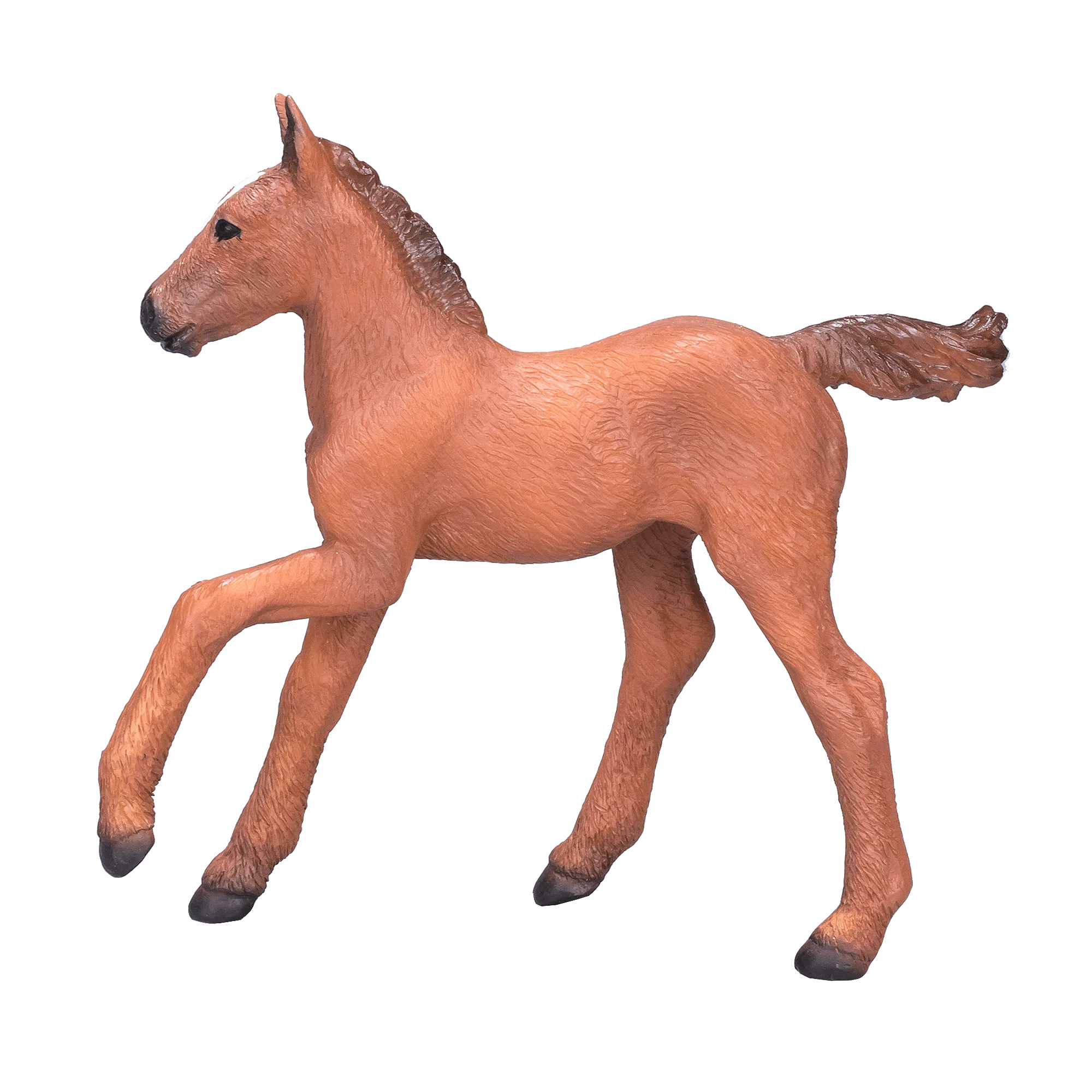
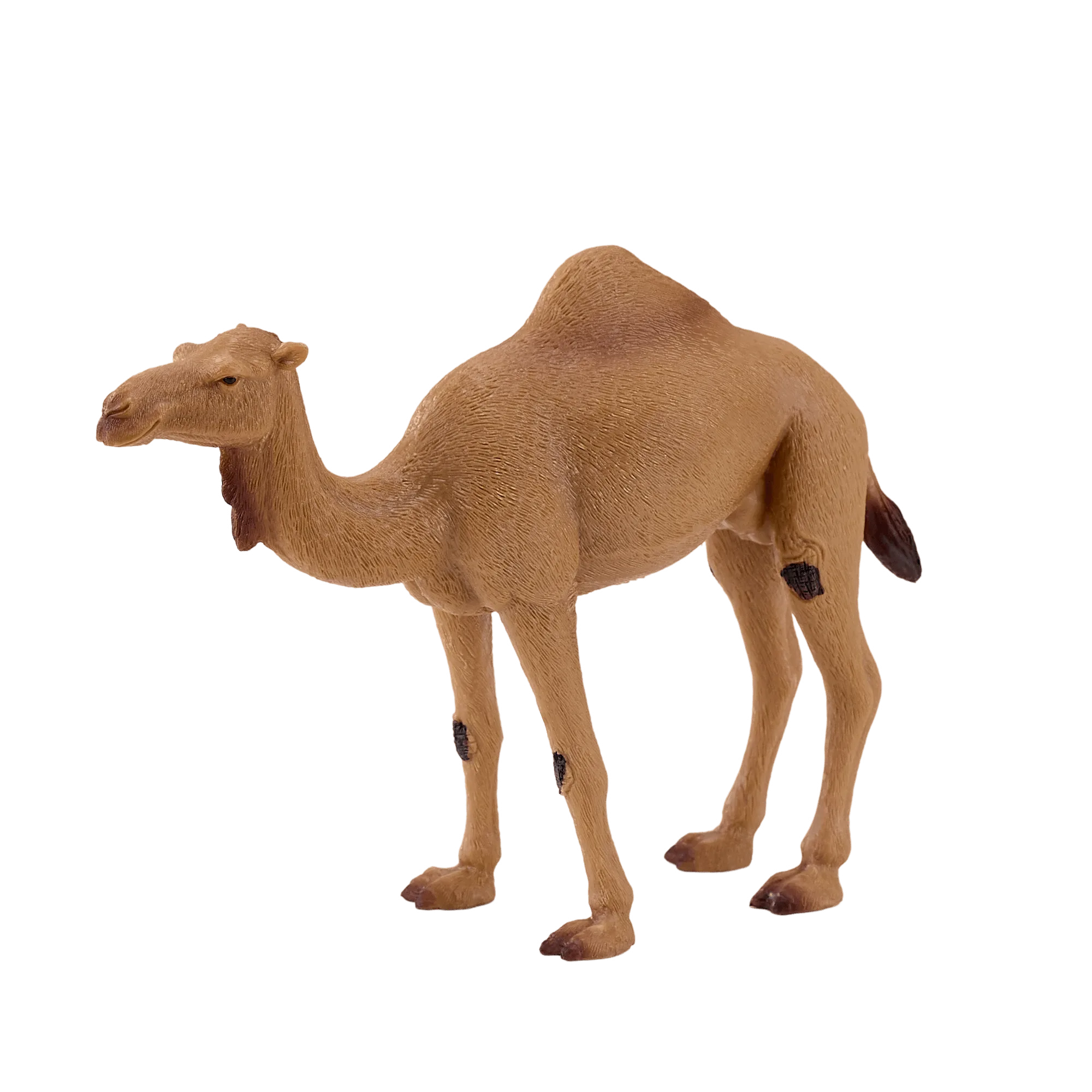
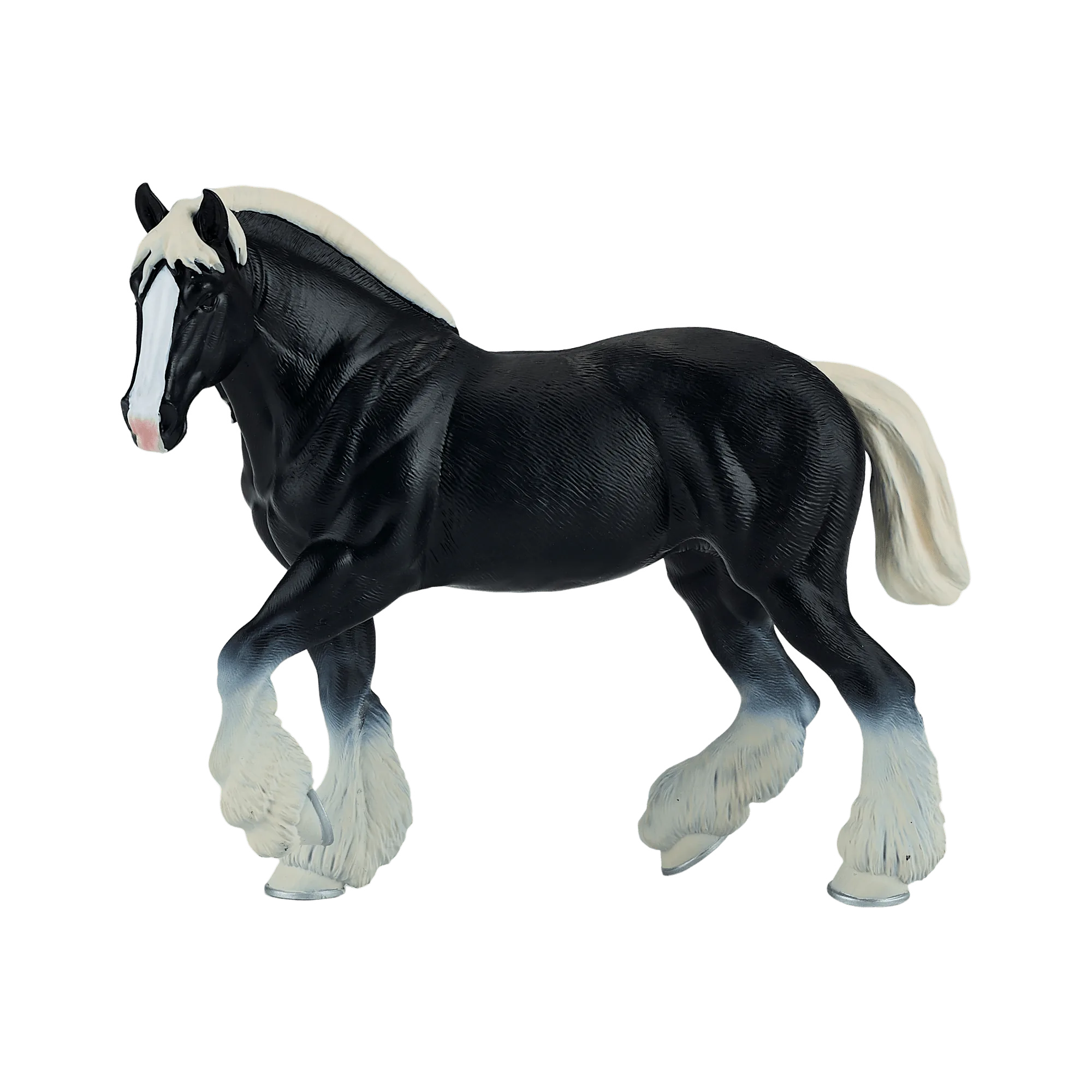
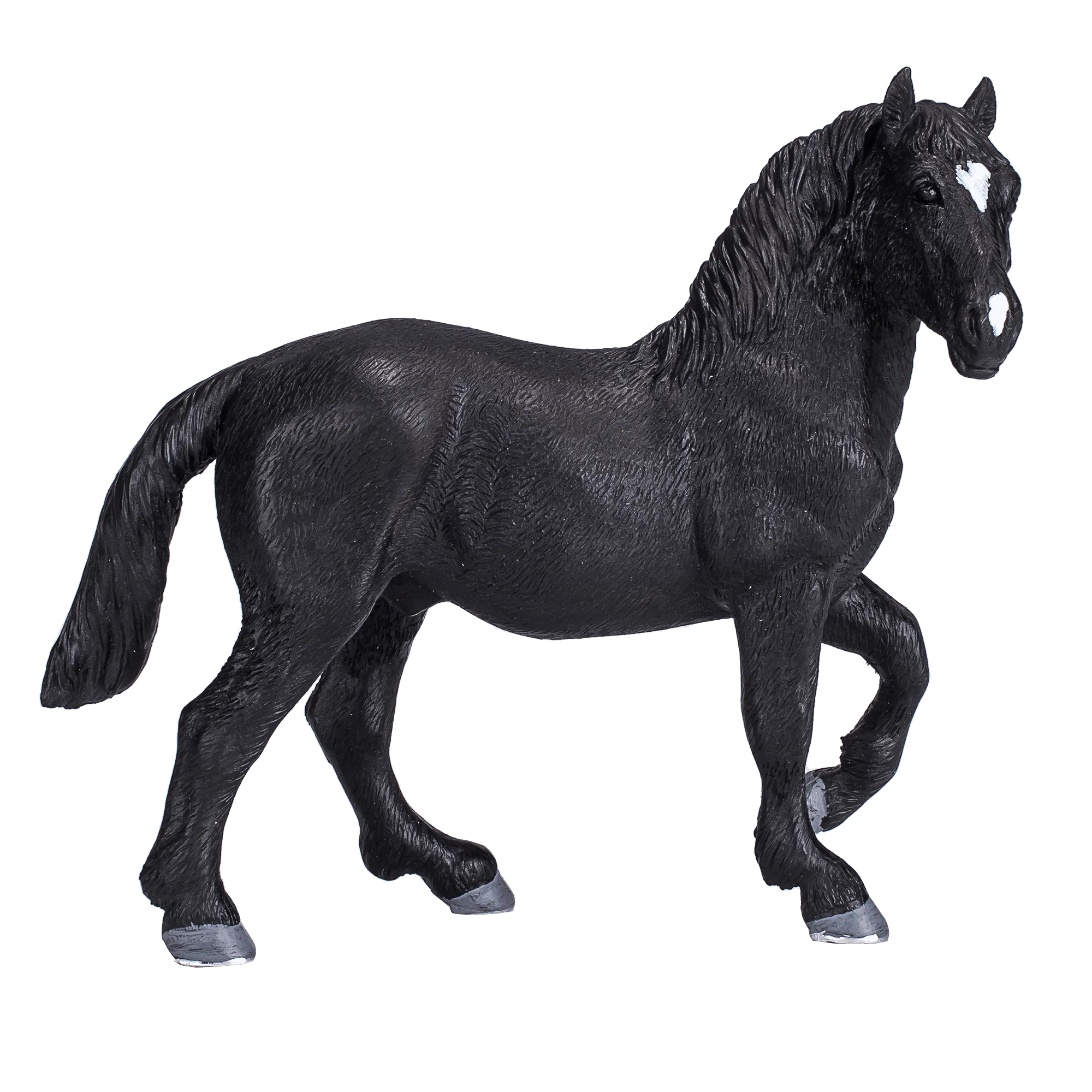
This guide walks through a repeatable setup you can finish in an afternoon. It uses real pieces from the Mojo Fun USA range as examples, including the Hanoverian Foal Black, Clydesdale Horse Black, Arabian Foal Chestnut, Percheron, and Arabian Camel, so you can see how scale and pose affect the final arrangement.
Start with scale, not species
The fastest way to reduce clutter is to sort your models by size before you place anything. A foal figurine next to a draft horse can look charming, but three foals and one draft horse on the same shelf usually reads as uneven. Group similar heights first, then decide where a deliberate size contrast actually helps the story you want the shelf to tell.
If you collect both horses and other animals, keep the non-horse pieces in a separate zone or a lower shelf. Mixing a camel into a row of horses can work as a focal point, but only when it is clearly intentional and given extra space around it.
- Line up every piece on a table before you commit to shelf positions.
- Photograph the lineup so you can compare arrangements without moving everything again.
Give each group a clear boundary
Once pieces are sorted by scale, build groups of three to five. Each group needs a visible gap on both sides, roughly the width of one adult horse model. That gap is what tells the eye where one idea ends and the next begins. Without it, even a well-chosen set of models looks like a single dense row.
Use the shelf itself as a boundary too. A group placed at the left edge, one in the center, and one at the right edge creates three anchor points. Anything between them can be lighter or smaller without feeling random.
- Aim for odd-numbered groups; they tend to look more natural than even pairs.
- If a group feels crowded, remove one piece rather than rearranging the whole shelf.
Vary height with simple risers
Clutter often comes from everything sitting at the same level. A small block, a stack of two books, or an acrylic riser under one or two models in a group adds height without adding more objects to the shelf. The goal is a gentle up-and-down rhythm, not a staircase.
Place the tallest piece slightly off-center within its group. Centering the tallest model makes the group look symmetrical and static, which can read as stiff. Off-center placement gives the eye a path to follow across the shelf.
- Keep risers neutral in color so they disappear behind the models.
- Do not raise more than two pieces in the same group; the effect gets busy fast.
Choose a theme per shelf, not per collection
You do not need one theme for your entire collection. You need one theme per shelf or per visible zone. A shelf of draft horses, a shelf of foals, and a shelf of desert animals can each feel curated even if they sit in the same cabinet. The theme is what makes the grouping feel intentional rather than accidental.
If you are short on space, rotate themes instead of cramming them together. Put the draft horses out for a few months, then swap in the foals and smaller breeds. This keeps the display fresh and gives every piece time on view without permanent crowding.
- Write the theme on a small label inside the cabinet door if you rotate often.
- Store off-display pieces in a dust-free box, not loose in a drawer.
Keep the shelf surface mostly empty
The single biggest clutter fix is negative space. Aim for at least half of the shelf surface to be visible. That sounds like a lot, but it is what separates a display from a storage shelf. Models need air around them to be seen as individual pieces.
Resist the urge to fill gaps with small accessories, ribbons, or extra foals. If a gap feels wrong, the group is probably too small or placed too far from its neighbors. Move the group rather than filling the space.
- Step back three feet and squint; if the shelf looks like a solid line, remove pieces.
- Dust the empty surface before placing models back so you are not tempted to skip it later.
Rotate on a schedule you can keep
Rotation is the long-term answer to clutter. Pick a simple schedule, such as the first weekend of each season, and swap two or three pieces. You do not need to redo the whole shelf. Small changes keep the display from becoming invisible to you and your visitors.
When you rotate, clean each piece before it goes back on display. A soft dry cloth is usually enough for painted figurines. Check for loose dust in the mane, tail, and base areas where it collects most.
- Keep a small 'on deck' tray near the shelf for pieces waiting their turn.
- Photograph each rotation so you can rebuild a favorite arrangement later.
Your step-by-step shelf reset
- 1. Empty the shelf completely: Take everything off, dust the surface, and lay the models out on a table or floor where you can see them all at once. This is the only way to judge scale and grouping honestly. Checkpoint: if you are tempted to leave one piece in place, you are not resetting, you are rearranging.
- 2. Sort by height into three piles: Make a tall pile, a medium pile, and a small pile. Foals and fine-featured breeds go in the small pile; draft horses and heavy builds go in the tall pile. Checkpoint: if a pile has more than eight pieces, split it again before you place anything.
- 3. Build groups of three to five: Pull pieces from one pile at a time to form a group. Keep the group visually consistent in scale, and set it aside as a unit before starting the next group. Checkpoint: a group with mixed scales is a red flag; move the odd piece to a different group.
- 4. Place groups with a horse-width gap: Put your first group at one edge of the shelf, then leave a gap roughly the width of one adult model before placing the next group. Continue across the shelf. Checkpoint: if the gaps look too small, they are. Double them and see how it reads.
- 5. Add height to one or two pieces per group: Slide a riser or small block under one or two models in each group, choosing the piece you want the eye to land on first. Keep the tallest piece slightly off-center. Checkpoint: if more than two pieces in a group are raised, remove a riser.
- 6. Step back and remove one piece: Look at the finished shelf from three feet away. Choose the piece that adds the least to its group and take it off. The shelf will almost always look better with one less model. Checkpoint: if you cannot decide, remove the piece closest to the center of the shelf.
- 7. Set a rotation date and store the rest: Put the removed pieces in a dust-free box with a note of the date. Mark a calendar for your next rotation, ideally three months out, so the display stays fresh. Checkpoint: if the storage box is not dust-free, add a cotton cloth over the top before closing it.
How specific models affect your layout
- Hanoverian Foal Black: The Hanoverian is a warmblood breed, a mix of light and heavy horse, and one of the oldest and most numerous warmbloods, with history going back to 17th-century Germany. A warmblood foal sits between pony and draft scale, so it works well as a bridge piece between a small foal group and a larger adult horse group on the same shelf.
- Cydesdale Horse Black: This hand-painted figurine is part of the MOJO Farm & Horses Collection, designed by artisans in the UK and made from premium quality Polyvinyl Chloride for durability and safe play. A durable, hand-painted draft horse can anchor a shelf group and handle occasional handling, so it is a good candidate for the front or edge position where visitors may pick it up.
- Arabian Foal Chestnut: Arabian horses are generally small in stature with a dished face and fine features, and Arabian blood contributed to the development of many other breeds. Fine-featured foals read as delicate on a shelf, so give them more empty space around them than you would a draft horse; crowding makes them disappear next to larger models.
- Percheron: The ancestors of the modern Percheron served as war horses carrying knights into battle before being bred more for size, weight, and strength as agricultural work took precedence. A heavy draft build takes up visual weight, so place the Percheron at the end of a group or on a lower shelf where its mass does not overpower smaller foals beside it.
A clean horse figurine display is not about owning fewer models. It is about giving the ones on view enough space, a clear group boundary, and a rotation schedule that keeps them from becoming background. Start with one shelf, use the steps above, and let the empty space do as much work as the models.