Quick answer
Independent play grows when the playroom is set up so your child can choose an activity without help. Start with a small, safe zone, offer only a few toys at a time, and stay nearby without directing the play. The goal is not to leave your child alone but to let them lead while you stay available.
Set up a yes-space your child can lead
A yes-space is a defined area where everything within reach is safe to touch, mouth, or climb on. That means anchoring furniture, covering outlets, and using a soft surface for sitting and rolling. The space does not need to be large. A corner with a mat, one low basket of toys, and a clear boundary is enough for most babies learning to sit up and toddlers who are starting to move.
Keep the setup simple so your child can see what is available. Rotate toys in and out every week or two instead of leaving everything out. Too many choices can make a toddler bounce between toys instead of settling into one. A small selection also makes cleanup faster, which matters when you are trying to protect a stretch of independent play.
Choose toys that reward solo exploration
The best independent-play toys do something when your child acts on them. A hanging toy that rattles, a squeaker, or a crinkle sound gives immediate feedback and teaches cause and effect without an adult narrating every move. For babies who are not yet sitting, a play gym lets them reach and bat at toys while lying on their back. For toddlers, open-ended items such as stacking cups, board books, and simple puzzles hold attention longer than toys with one button.
Match the toy to the current skill, not the next one. A toy that is too hard leads to frustration and a request for help; a toy that is too easy gets dropped in seconds. If your child loses interest quickly, try swapping one toy rather than adding three.
Stay close without directing the play
Independent play does not mean leaving the room. Sit nearby, read, or fold laundry, and let your child check in with a glance. If they look at you, smile or nod rather than starting a game. If they fuss, wait a few seconds before stepping in. Many babies will re-engage on their own once they realize you are not going to take over.
Resist the urge to correct how a toy is used. A toddler stacking cups sideways or carrying a puzzle piece around is still playing. Interrupting to show the right way ends the session early. Save your guidance for safety, not for play style.
A 6-step routine for building independent play
- 1. Pick one small zone: Choose a corner or a section of the playroom with a soft surface and clear edges. Remove anything your child can pull over or put in their mouth. Checkpoint: can you sit at the edge of the zone and still see your child clearly?
- 2. Offer two or three toys: Set out only what fits the current skill level. Put the rest in a closed bin or on a high shelf so your child cannot see the full stash. Common mistake: leaving every toy out, which leads to toy-hopping instead of focused play.
- 3. Start the play together: Spend one or two minutes playing alongside your child, then slowly pull back. Sit a little farther away or pick up your own quiet activity. Checkpoint: your child is still touching or looking at the toy after you stop narrating.
- 4. Wait before you rescue: When your child fusses or a toy rolls away, pause for a few seconds. Give them a chance to reach, scoot, or re-engage before you step in. Common mistake: jumping in at the first sound, which teaches your child that play always needs an adult.
- 5. End on a good note: Stop the session while your child is still interested, not after a meltdown. Put the toys back in the bin together if your child is old enough to help. Checkpoint: the next independent play session starts without resistance.
- 6. Repeat at the same time each day: A predictable slot, such as after breakfast or before nap, helps your child know what to expect. Keep the first sessions short and build from there. Next step: add one minute to the session each week as your child gets comfortable.
Playroom picks that support solo play
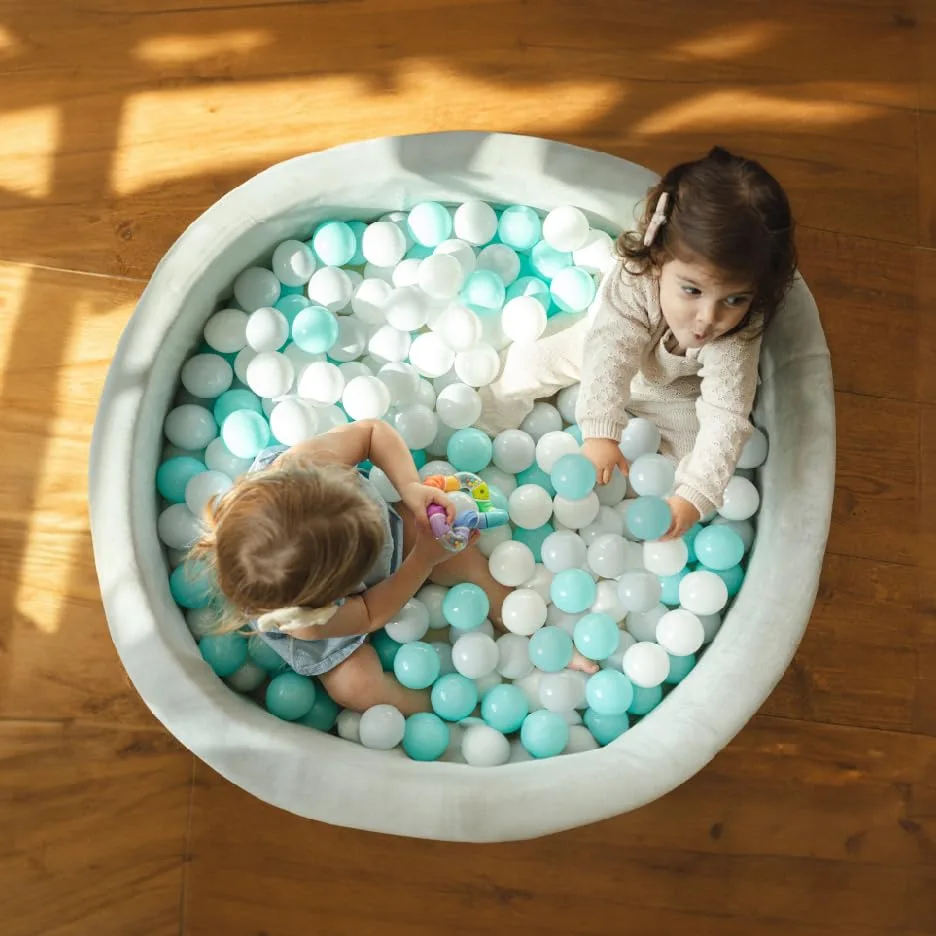
- Kids' Ball Pit for Home with 200 Balls | Aqua: The Kids' Ball Pit for Home with 200 Balls has soft but sturdy walls that offer security when babies sit upright, and it is light and easy to move despite its size. A contained play space gives a sitting baby a safe boundary to explore in, and you can move it between rooms or out of the way when the playroom needs to do something else.
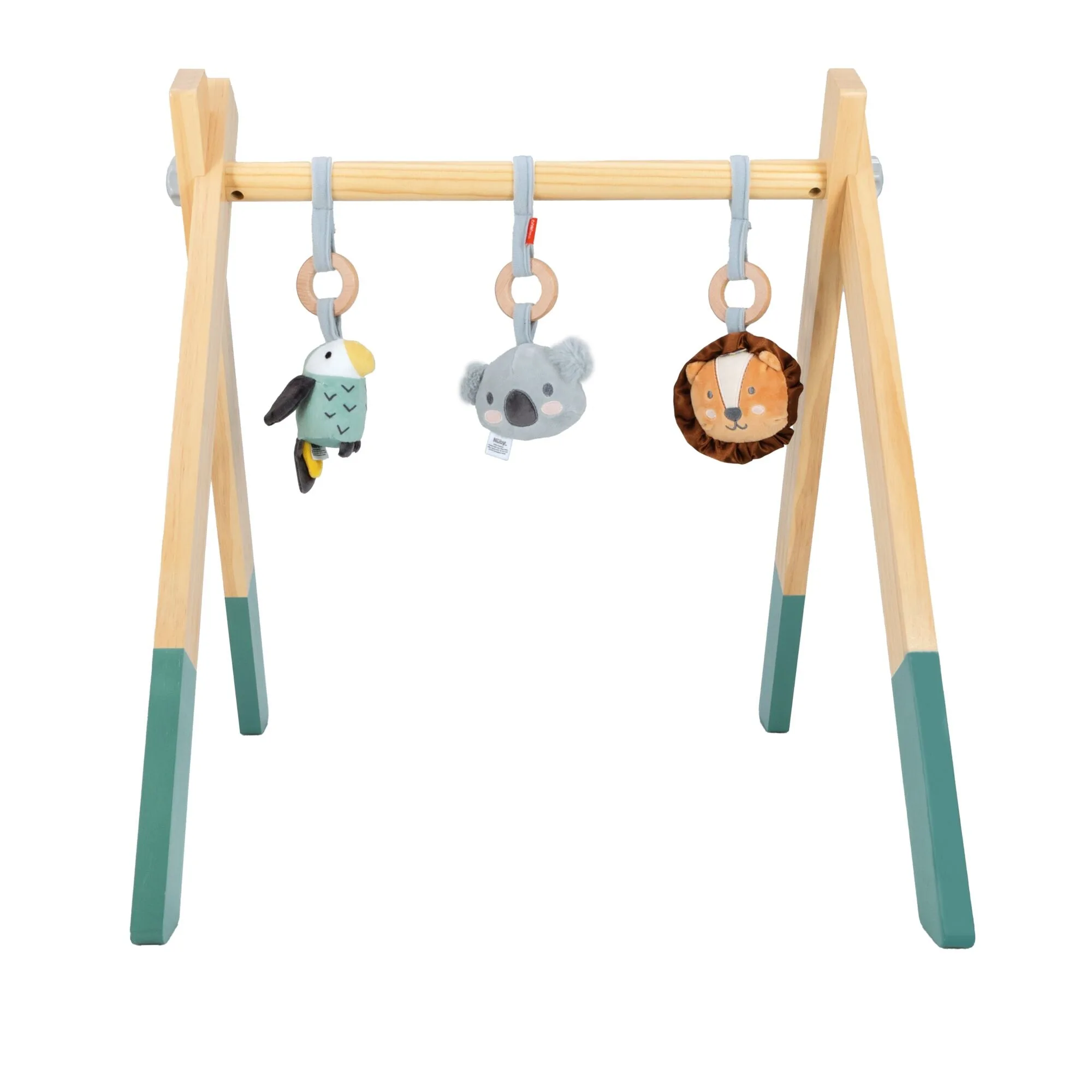
- Wooden Play Gym: The Wooden Play Gym has a solid wood A-frame and soft hanging toys, including a squeaking koala, rattling parrot, and scrunching lion, to encourage reaching and grabbing. A play gym gives a baby who is not yet mobile a way to practice hand-eye coordination independently, with sounds that respond to their own actions.
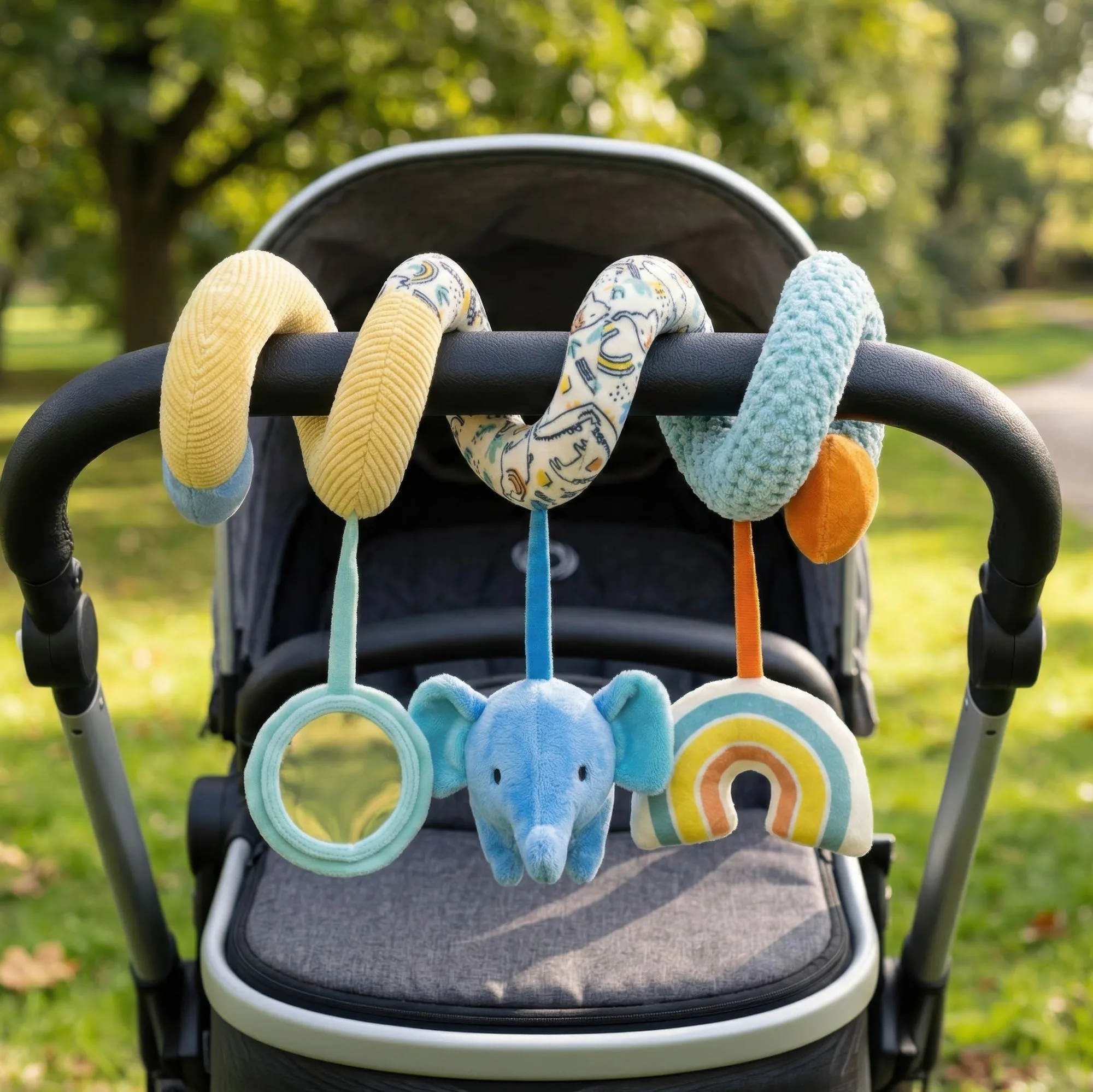
- Animal Adventures Spiral Activity Toy | Elephant: The Animal Adventures Spiral Activity Toy attaches to stroller or car seat handles and has three hanging sensory toys with squeaks, crinkles, and rattles. The same independent-play skills can carry over to outings, so a baby who is used to exploring a hanging toy at home has a familiar activity on the go.