Quick Answer
Most bra digging, slipping, and riding up comes down to band size, cup volume, or strap adjustment, not the bra itself. Check the band first: it should sit level and snug on the loosest hook. If it rides up, size down in the band. If cups dig into your ribs or spill, size up in the cup. Adjust straps last, and only enough to stay put without pulling.
A bra that digs into your ribs, slides off your shoulders, or creeps up your back all day is not a bra you have to live with. These are fit signals, and each one points to a specific fix.
The tricky part is that the symptoms overlap. Straps slipping can mean the band is too loose, not that the straps are too long. Digging underwires can mean the cup is too small, not that the bra is badly made. This guide walks through each symptom, the likely cause, and the correction, so you can stop guessing and start adjusting.
Symptom: The Band Rides Up Your Back
If the back of your bra climbs toward your shoulder blades by mid-morning, the band is almost certainly too loose. A band that fits properly stays level with the front and does most of the support work. When it is too big, the weight of your bust pulls the front down and the back up, and the straps end up doing a job they were not designed for.
The fix is counterintuitive: go down a band size, then go up a cup size to keep the volume the same. For example, if you wear a 36C, try a 34D. The band should feel snug on the loosest hook when new, because it will relax slightly over time. If you can pull the band more than an inch away from your back, it is too loose.
- Fasten a new bra on the loosest hook so you have room to tighten it as the elastic relaxes.
- If the band leaves red marks but does not ride up, it may be too tight, not too loose. Check for marks that fade within an hour versus deep grooves that persist.
Symptom: Underwire or Band Digs Into Your Ribs
Digging under the bust usually means the cup is too small or too shallow. When there is not enough room in the cup, your breast tissue pushes the wire down and into your ribcage. The same pressure can make the center gore float away from your chest instead of lying flat.
Size up in the cup before you size up in the band. If the wire still digs after a cup increase, the bra's shape may not match your breast shape. A bra with a longer line or side boning, like the Nadia Set Purple, distributes pressure differently than a standard cut. If the digging is at the sides rather than the center, look for a style with a wider wire or a longline band.
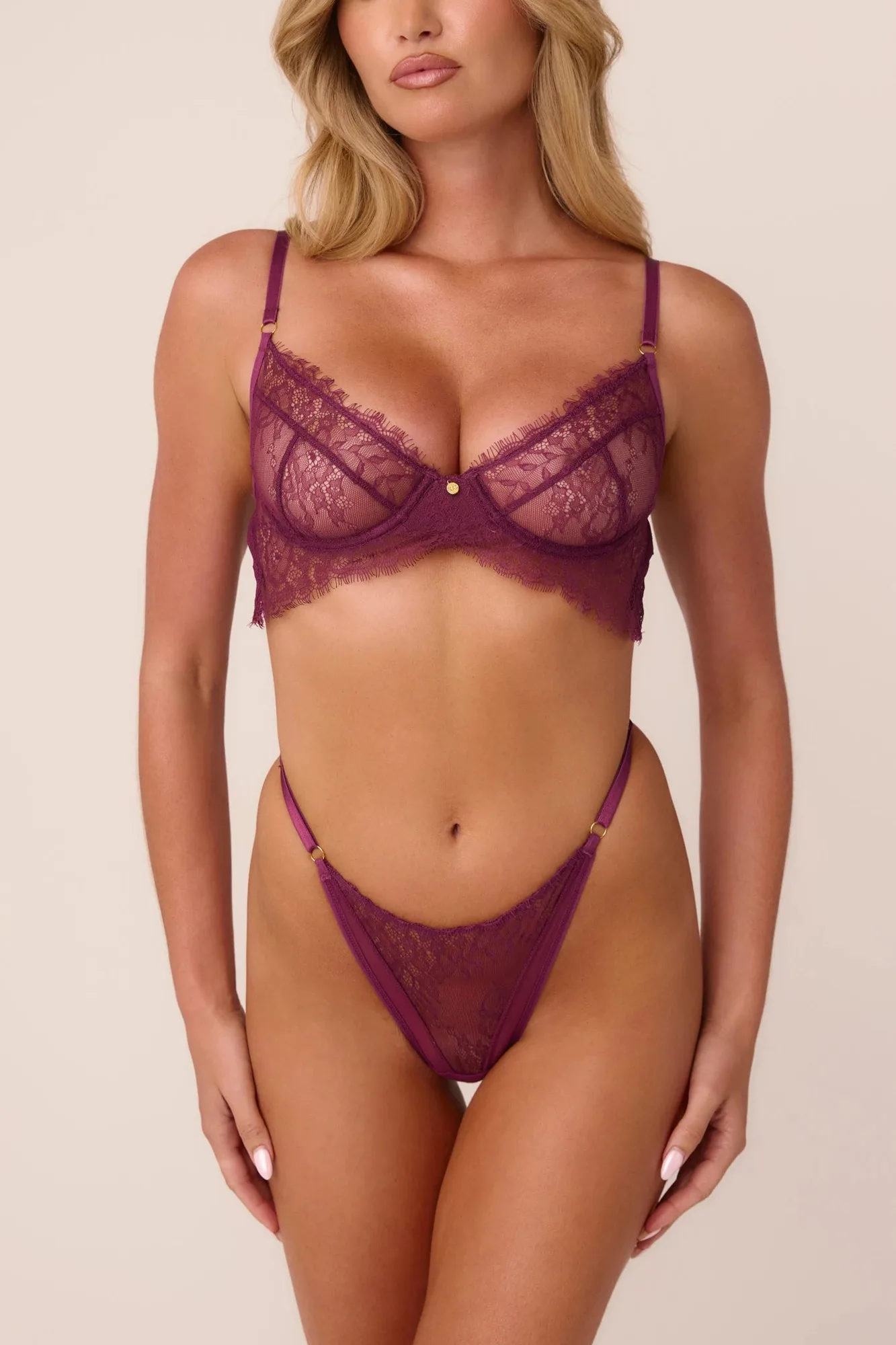
Nadia Set Purple
- Scoop your breast tissue forward and up after fastening so it sits inside the cup, not under the wire.
- If the gore floats but the band feels fine, the cup is likely too small, not the band.
Symptom: Straps Slip Off Your Shoulders
Slipping straps are usually a band problem in disguise. When the band is too loose, it shifts and takes the straps with it. Tightening the straps to compensate only creates a new problem: pressure on your shoulders and a band that still rides up.
Fix the band first, then adjust straps only enough to stay in place without digging. If the band is correct and straps still slip, your shoulder shape may need a different strap placement. A bra with a bandeau-style construction or adjustable back straps, like the Lyla Bra - Black, gives you more control over where the straps sit. Straps that are too far apart for your frame will always slide, no matter how tight you make them.
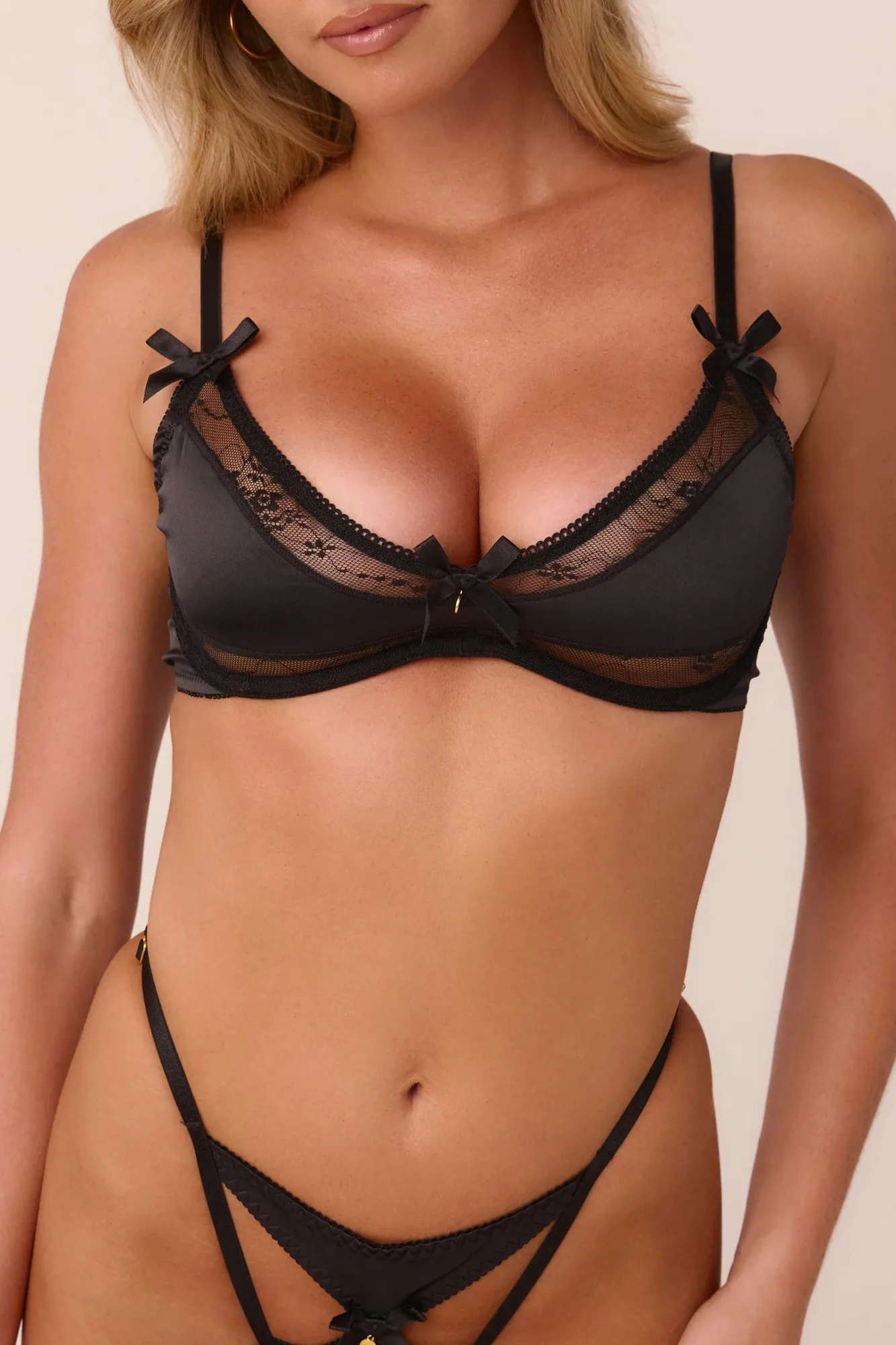
Lyla Bra - Black
- Tighten straps evenly, one side at a time, and check that the band stays level in back.
- If a strap falls off one shoulder only, your shoulders may be uneven, which is common. A style with a convertible or closer-set strap can help.
Symptom: Cups Gap, Wrinkle, or Spill
Gapping at the top of the cup usually means the cup is too big or too tall for your shape. Spilling over the top means it is too small. Wrinkling at the bottom can mean the cup is too shallow, so your breast pushes the fabric down instead of filling it.
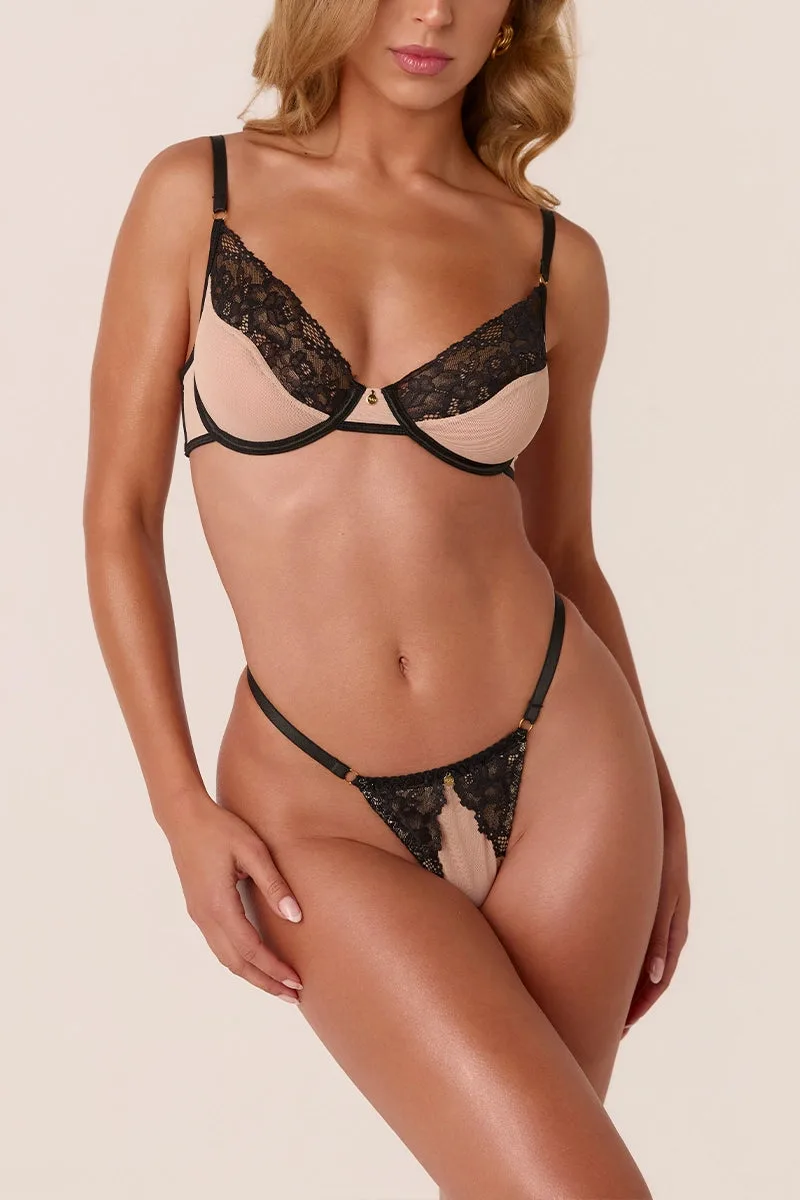
For gapping, try a cup size down or a style with a lower cut. For spilling, size up in the cup. If the cup fits but the shape feels off, the issue may be the bra's construction. An underwire bra with stretch lace, like the Pamela Set - Black, can accommodate slight size fluctuations better than a rigid molded cup. If you are between sizes, always fit to the larger breast, not the smaller one.
- Check the cup with the straps loosened. If it still gaps, the cup is too big.
- Stretch lace and mesh styles forgive small changes in size better than firm cups.
When to Stop Adjusting and Choose a Different Bra
Some fit problems cannot be fixed with a hook or a strap. If you have adjusted the band, cup, and straps and the bra still digs, slips, or gaps, the bra's shape does not match your body. No amount of tugging will change that.
This is especially common with molded cups, which keep a fixed shape and cannot adapt. If you have tried two sizes in the same style and neither works, switch styles rather than sizes. A bra that fits well will feel secure without being tight, and you will forget you are wearing it. If you are consistently between sizes, size up and use the loosest hook, or look for styles with more stretch in the band and cup.
- If two sizes in the same style fail, the style is wrong, not your size.
- A well-fitting bra should not leave deep marks or require constant readjustment.
Fit Diagnosis: Match Your Symptom to the Fix
- Band rides up in back: The band is too loose. Size down in the band and up in the cup to keep the same volume, then fasten on the loosest hook. If the band stays level and snug, this fix works. If it still rides up, the band size is still too big.
- Underwire digs into ribs: The cup is too small or too shallow. Size up in the cup before changing the band. If digging continues, try a longline or side-boned style. If the gore lies flat and the wire stops digging, the cup size was the issue.
- Straps slip off shoulders: Usually a loose band, not long straps. Fix the band first, then adjust straps only enough to stay put. If slipping continues, try a style with closer-set or adjustable back straps. If straps still slip after a band fix, the strap placement does not match your frame.
- Cups gap or spill: Gapping means the cup is too big or too tall. Spilling means it is too small. Fit to the larger breast if you are between sizes. If two cup sizes in the same style fail, switch to a stretch lace or mesh style that adapts to your shape.
Bras That Solve Common Fit Problems
- Lyla Bra - Black: Underwire design with stretchy satin and lace, adjustable back and shoulder straps, and a bandeau style. Adjustable back and shoulder straps let you fine-tune the fit if slipping straps are your main issue, while the bandeau construction sits differently than a standard bra.
- Nadia Set Purple: Longline finish with light boning on the side bust, made from soft eyelash lace and mesh, includes matching bra, panty, and garter belt. The longline band and side boning distribute pressure across a wider area, which can reduce digging under the bust and at the sides.
- Pamela Set - Black: Underwire bra made from nude illusion mesh and stretch lace with adjustable straps and sheer mesh panels. Stretch lace and mesh move with you, so the cup forgives small size fluctuations better than a rigid molded cup.
Bra fit problems are almost always solvable once you know which symptom points to which cause. Start with the band, then the cup, then the straps. If a style still fights you after two sizes, it is the style, not you. A bra that fits properly should feel secure and comfortable enough that you forget you have it on.