Quick answer
Measure your underbust and full bust with a soft tape, then compare each number to the brand's bralette size chart. Wireless bralettes are usually sized by band and cup range, so check the product's stated cup fit before choosing. If you fall between sizes, size up for comfort and use the adjustable straps or underband to fine-tune the fit.
What you need before you start
Use a soft measuring tape and wear a thin, unpadded bra or go without one. Stand in front of a mirror so the tape stays level around your back. If you do not have a soft tape, use a piece of string and measure it against a ruler, but keep the string snug without digging in.
How to measure your underbust and full bust
For your underbust, wrap the tape directly under your bust and around your ribcage, keeping it parallel to the floor. Breathe out normally and record the number in inches. For your full bust, wrap the tape around the fullest part of your bust, usually across the nipple line, and keep the tape straight across your back. Record that number too. These two measurements are the basis of most bralette size charts.
How to use a bralette size chart
A bralette size chart usually maps your underbust to a band size and your bust-to-underbust difference to a cup range. For example, a 1-inch difference often points to an A cup, 2 inches to a B cup, and 3 inches to a C cup, but brands vary. Always check the specific chart for the style you are buying, because wireless and triangle bralettes may use letter sizes, numeric sizes, or a simple small-to-large range.
How bralette sizing differs from bra sizing
Traditional bras rely on a band size plus a cup size, and the band does most of the support. Bralettes are often wire-free and use softer fabrics, so the fit depends more on the underband and the stretch of the fabric. That means your bralette size may not match your bra size exactly. If your bra size is 34B, you might wear a small or medium bralette depending on the brand's chart and how much compression you prefer.
Check the cup range before you buy
Some wireless bralettes are designed for a specific cup range, and wearing one outside that range can cause spillage or a loose fit. Look for cup guidance in the product details. For example, a triangle bralette may be cut for AA to B cups, while a crop bralette may be designed for B to D cups. If your cup size falls outside the stated range, choose a different style or size up if the band allows it.
What to do when you are between sizes
If your measurements fall between two sizes, size up for comfort, especially in wireless styles where the underband provides most of the support. A too-small band can dig in, while a slightly larger band can often be adjusted with straps or a hook-and-eye closure. If the bralette has no adjustable straps and a tight underband, sizing up is usually the safer choice.
Your step-by-step bralette sizing routine
- Measure your underbust: Wrap a soft tape snugly under your bust and around your ribcage, keeping it level. Breathe out and record the number in inches. Common mistake: letting the tape ride up at the back. Check in a mirror that it is parallel to the floor.
- Measure your full bust: Wrap the tape around the fullest part of your bust, usually across the nipple line, and keep it straight across your back. Record the number. Checkpoint: the tape should touch your body without compressing it. If it leaves a mark, loosen it slightly.
- Find your cup range: Subtract your underbust from your full bust. A 1-inch difference is often an A cup, 2 inches a B cup, and 3 inches a C cup, but always confirm with the brand's chart. Common mistake: assuming your bra cup size is the same as your bralette cup range. Wireless styles can fit differently.
- Compare to the bralette size chart: Match your underbust and cup range to the chart for the specific style. Note whether the chart uses letter sizes, numeric sizes, or small-to-large. Checkpoint: if your cup range is outside the stated fit, choose a different style rather than forcing the size.
- Decide between sizes: If you are between two sizes, size up for comfort, especially if the underband is not adjustable. If the band is adjustable, you can sometimes stay with your smaller size. Common mistake: choosing a size that digs in. A bralette should feel snug but not leave deep marks.
- Check adjustability: Look for adjustable straps, a hook-and-eye closure, or a soft elastic underband. These features let you fine-tune the fit after your first wear. Next step: wear it for an hour at home before removing tags, so you can feel how the band and straps behave when you move.
Bralettes that show how cup range and sizing work
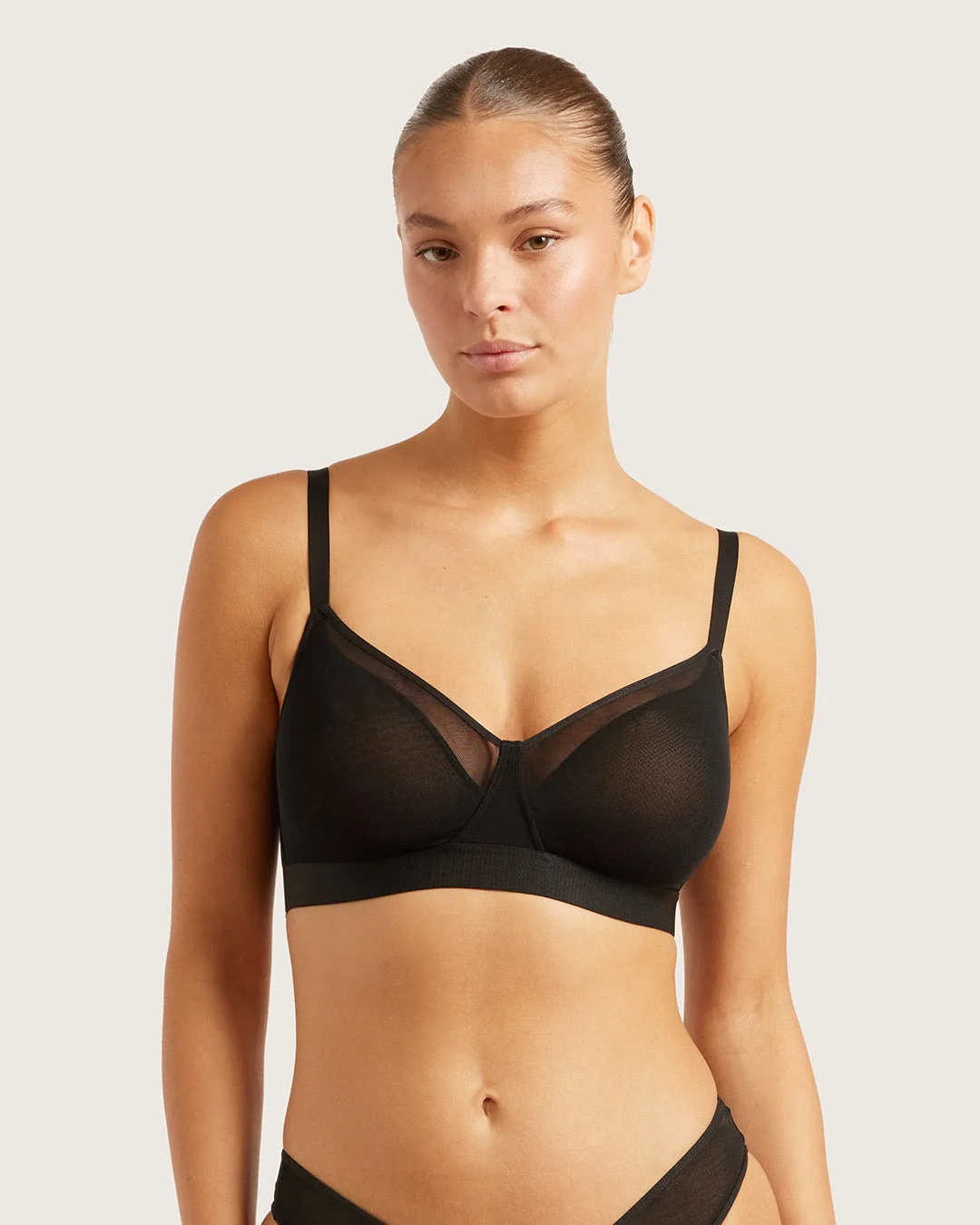
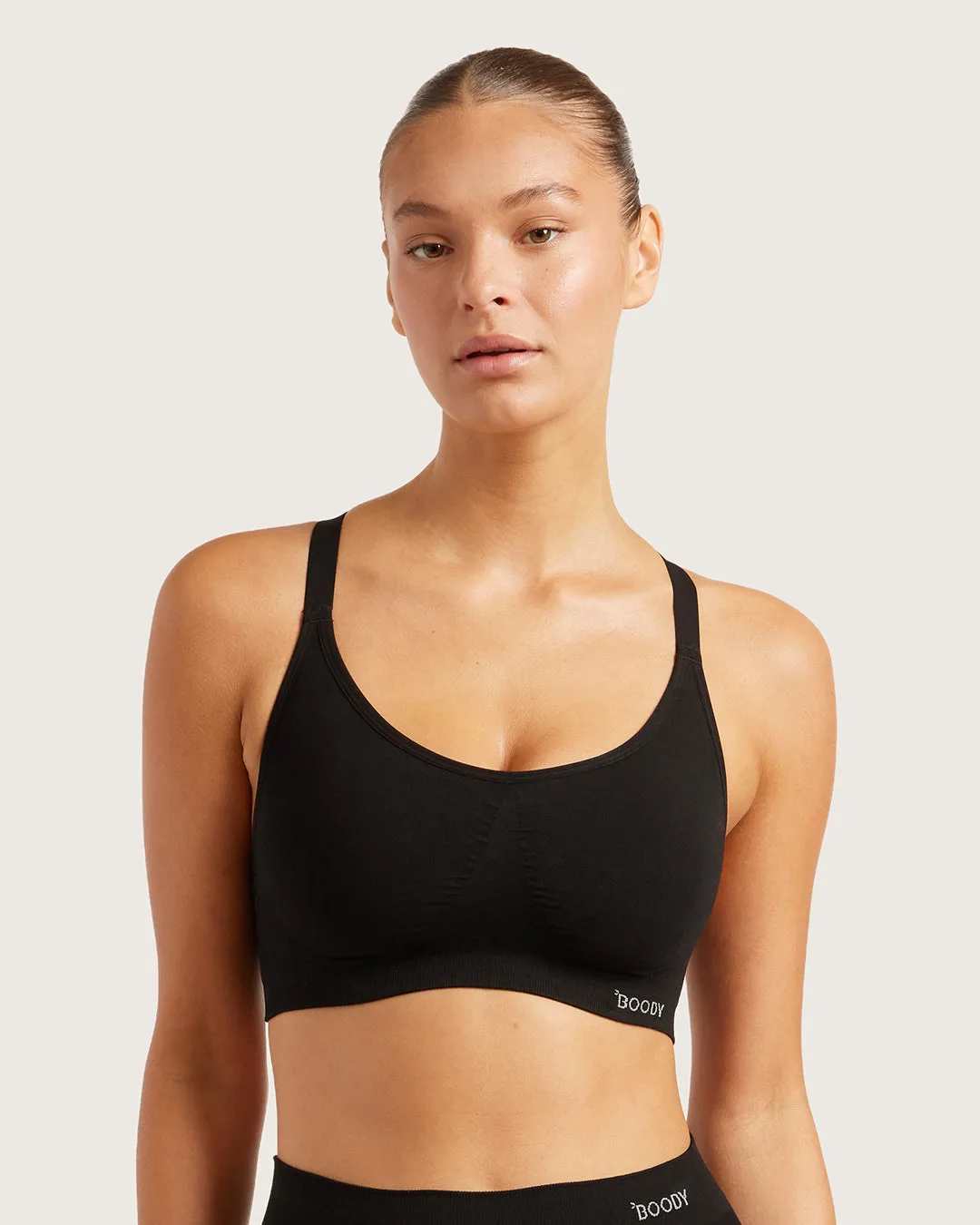
- FreeMesh Crop Bralette: Specifically designed for B–D cups with wire-free, medium support. If you measure in the B–D cup range, this crop bralette is built for your size, so you can start with your usual band size.
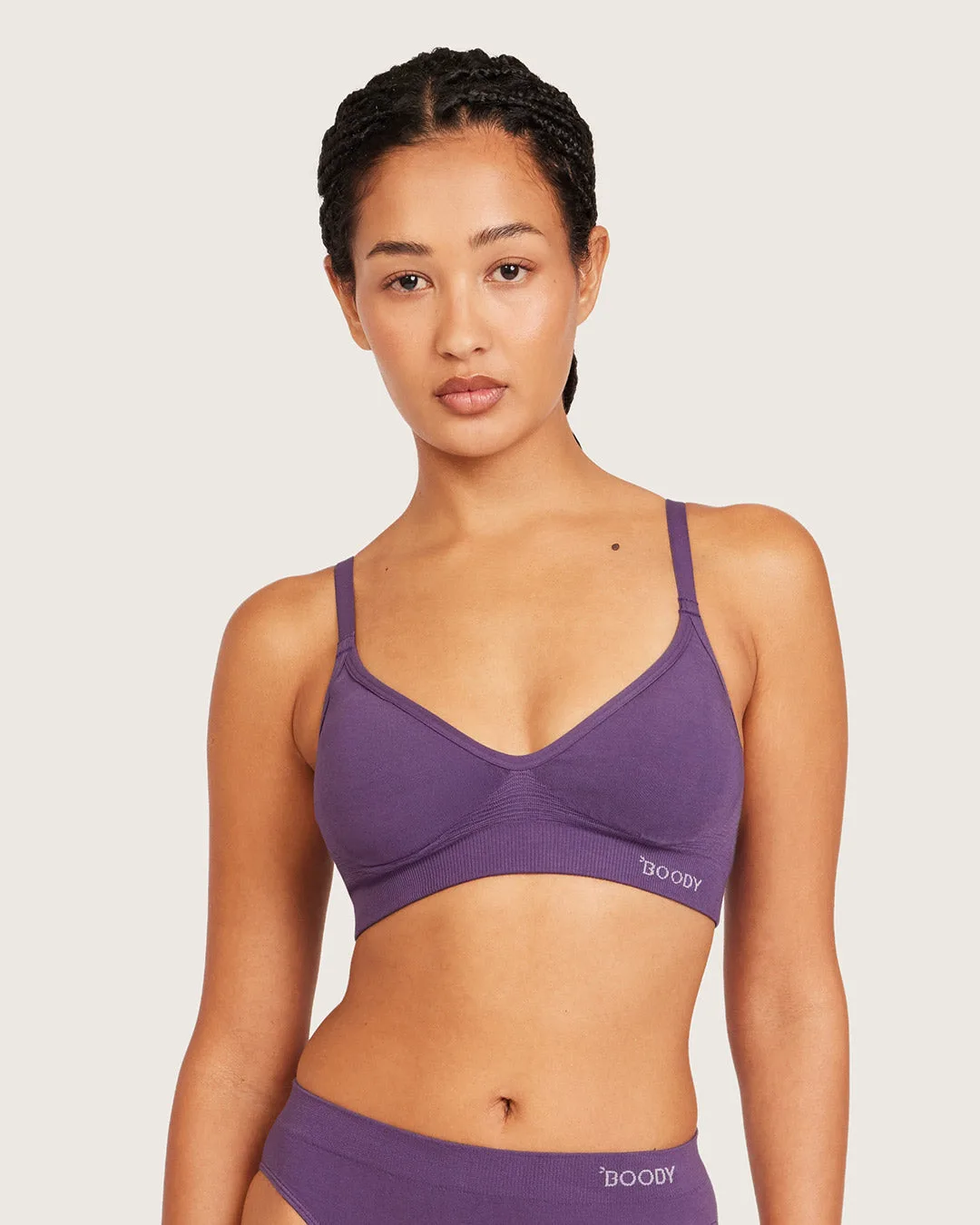
- FreeMesh Triangle Bralette: Cut in a flattering triangle shape, with double strap detailing on front. No padding or wires. AA - B cup. If your cup size is AA to B, this triangle bralette matches your range; if you are larger, choose a style with a wider cup fit.
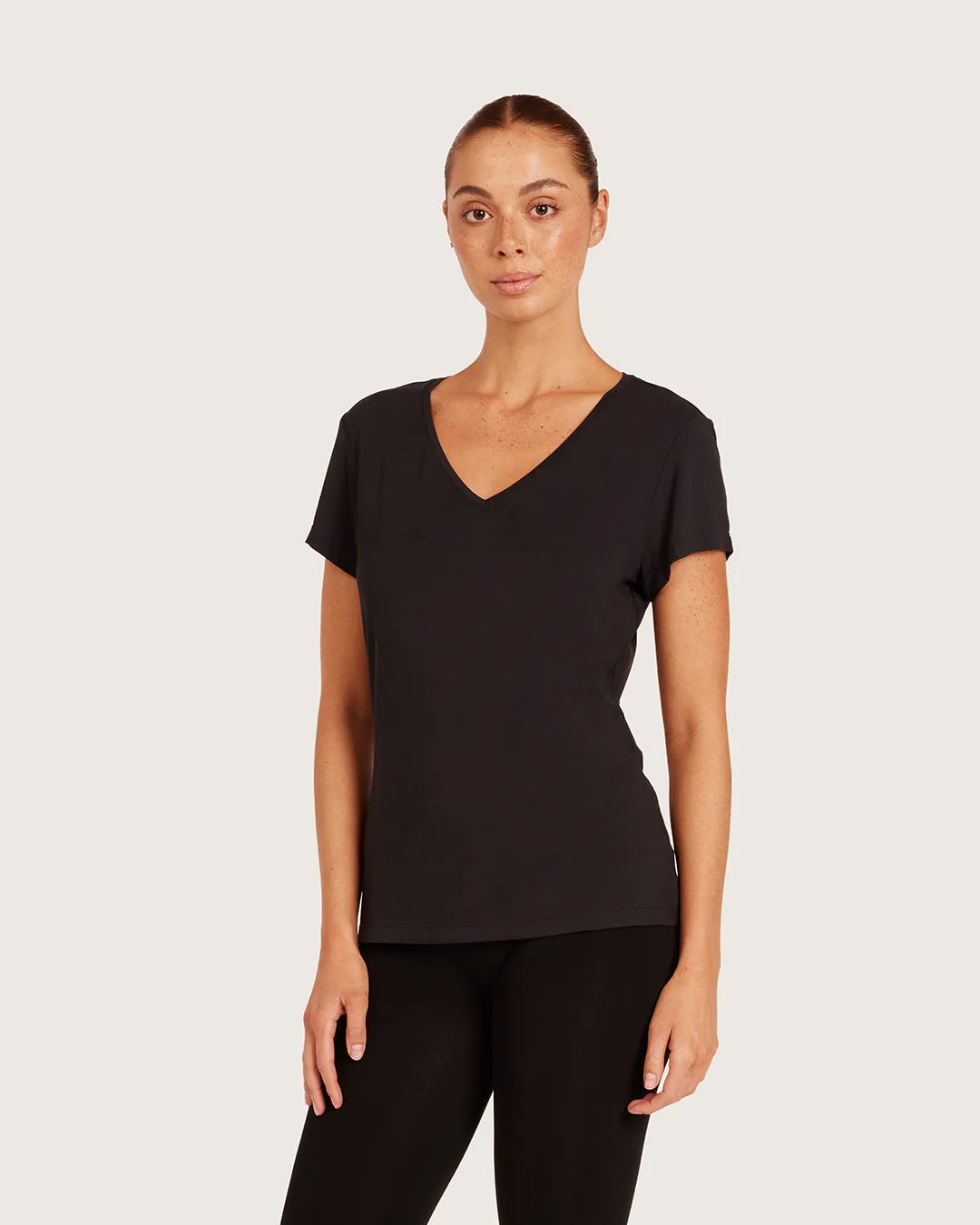
- Women's Base Layer Crew Neck T-Shirt: Classic fit that follows your natural silhouette. Choose your usual size for a slim fit, or size up for a looser fit. This top is not a bra, but the same size-up logic applies when you want a looser layer over a bralette.