Quick answer
To fit a harness on your cat, choose a snug but comfortable fit, adjust the straps around the chest and neck, and always test for escape before heading outdoors.
Why a proper fit matters
A correctly fitted harness prevents escapes and keeps your cat comfortable during walks. A loose harness can slip off, while a tight one can restrict breathing or cause chafing.
Different harness styles fit differently. Vest-style harnesses offer more coverage and are harder to escape, while H-style harnesses may require more precise adjustment.
Adjusting for comfort and security
The key is to ensure you can fit two fingers between the harness and your cat's body. This allows freedom of movement without being too loose.
Check the chest strap: it should sit behind the front legs, not across the throat. The neck strap should be snug but not tight enough to cause discomfort.
After adjusting, let your cat walk around indoors to see if the harness shifts or chafes. Re-adjust as needed before heading outside.
Step-by-step fitting guide
- Introduce the harness: Let your cat sniff and inspect the harness before putting it on. Reward calm behavior with treats to create a positive association. If your cat is nervous, practice short sessions over several days.
- Loosen all straps: Adjust all buckles and straps to their loosest setting so you can slip the harness over your cat's head without pulling. Check that the neck opening is large enough to avoid catching ears.
- Position the harness: Place the harness over your cat's head, with the chest piece centered on the sternum. The D-ring (for leash attachment) should sit on the back. Ensure the chest strap is not lying across the throat.
- Secure the chest strap: Fasten the chest strap behind the front legs. It should be snug but allow two fingers to slide underneath. A too-loose chest strap can allow your cat to back out.
- Adjust the neck strap: Tighten the neck strap so it is comfortable but not restrictive. You should be able to fit two fingers between the strap and your cat's neck. If the neck strap is too tight, your cat may gag or resist walking.
- Test the fit: Attach the leash and let your cat walk around indoors. Watch for any signs of chafing, slipping, or discomfort. Re-adjust as needed. Never take your cat outside until the harness passes the indoor test.
Product spotlight
-
zeze Plaid Cat Harness & Leash Set: The zeze Plaid Cat Harness & Leash Set is made from high-quality polyester webbing and comes in two colorways: Yellow & Purple and Green & White. The durable webbing and adjustable design make it a reliable choice for comfortable, secure daily walks.
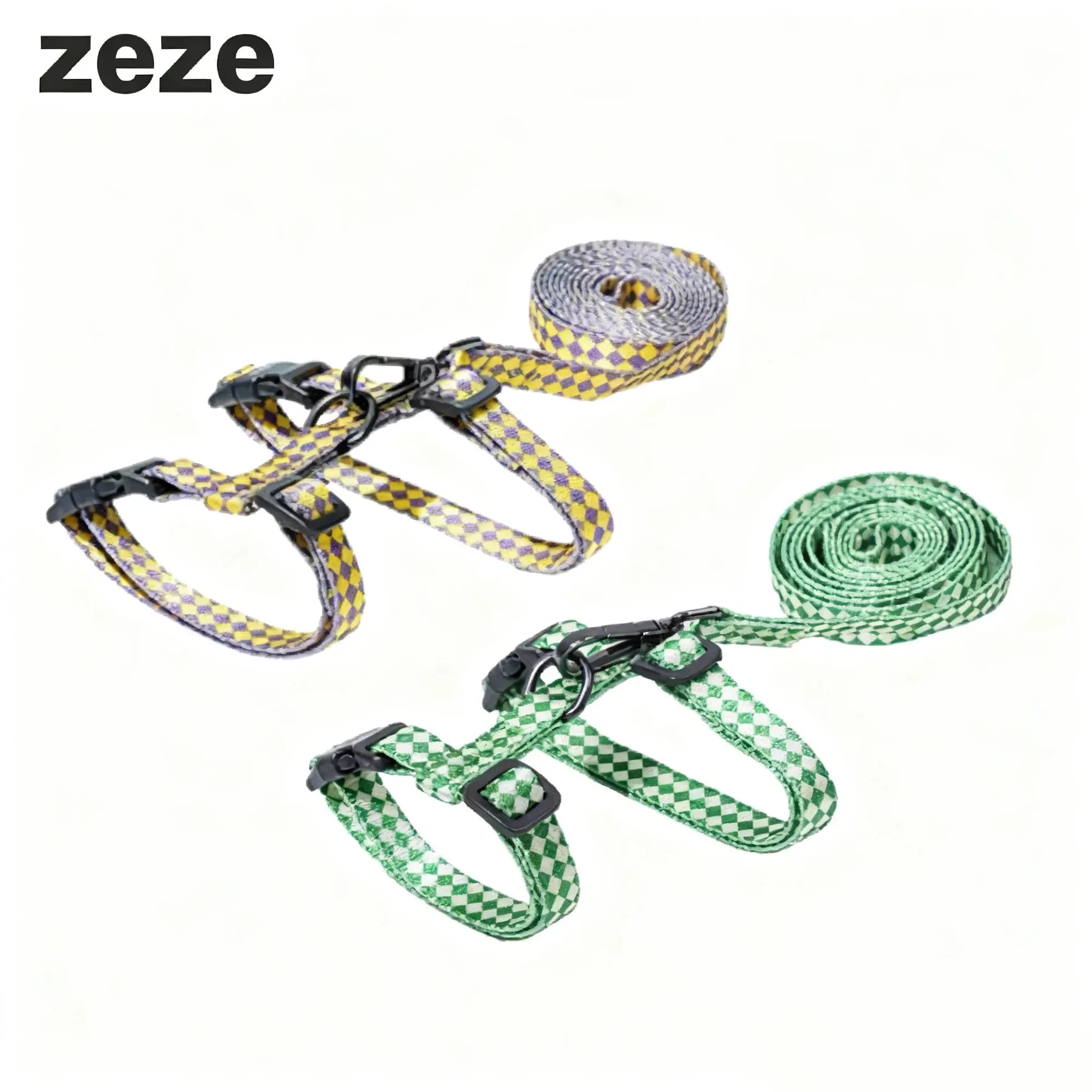
zeze Plaid Cat Harness & Leash Set