Quick Answer
To fit a no pull dog harness, start by selecting the correct size based on your dog’s chest girth, then adjust each strap so two fingers fit snugly between the harness and your dog. Test for security and movement before each walk.
Why Proper Fitting Matters
A correctly fitted no pull harness distributes pulling force across your dog’s chest instead of the neck, reducing strain and injury risk. It also prevents your dog from backing out of the harness, which is especially important for escape artists.
Common Fitting Mistakes to Avoid
One common mistake is choosing a harness based on weight alone—most dogs vary in chest depth and neck circumference. Another is leaving the harness too loose, which allows your dog to slip out. Over-tightening can chafe or restrict movement, so aim for a snug but comfortable fit.
Step-by-Step Fitting Guide
- Measure Your Dog's Chest Girth: Use a soft measuring tape around the widest part of the chest, just behind the front legs. Add 2-3 inches for a comfortable fit. Compare this to the harness size chart. Two fingers should fit snugly under the tape when measuring.
- Loosen All Straps: Before putting the harness on your dog, fully loosen all adjustable straps. This makes it easier to slide on and prevents tangling. If the harness has a top handle, make sure it isn't twisted.
- Slide the Harness Over Your Dog's Head: Place the neck loop over your dog's head. The D-ring for the leash should rest on your dog's chest (front) or back, depending on the design. If your dog resists, slip the harness on from below their chin rather than over the top.
- Secure the Belly Strap: Clip or buckle the belly strap behind your dog's front legs. Adjust it so it sits in the natural indent behind the ribcage, not over the ribs or too far back. A common mistake is clipping the belly strap too loosely—tighten it so you can fit two fingers underneath.
- Tighten the Neck and Chest Straps: Adjust the neck strap so it sits high up, just behind the ears, without choking. Tighten the chest strap until the harness is snug but not digging in. Test by trying to slip your fingers under the strap—if you can fit more than two, tighten it.
- Perform the 'Squeeze Test' and Check Range of Motion: Gently tug the harness to make sure it doesn't slide sideways. Let your dog walk and run a few steps—if the harness shifts or restricts movement, readjust. If the harness slips after a few steps, the chest strap may be too loose; tighten one notch at a time.
Product Spotlight
-
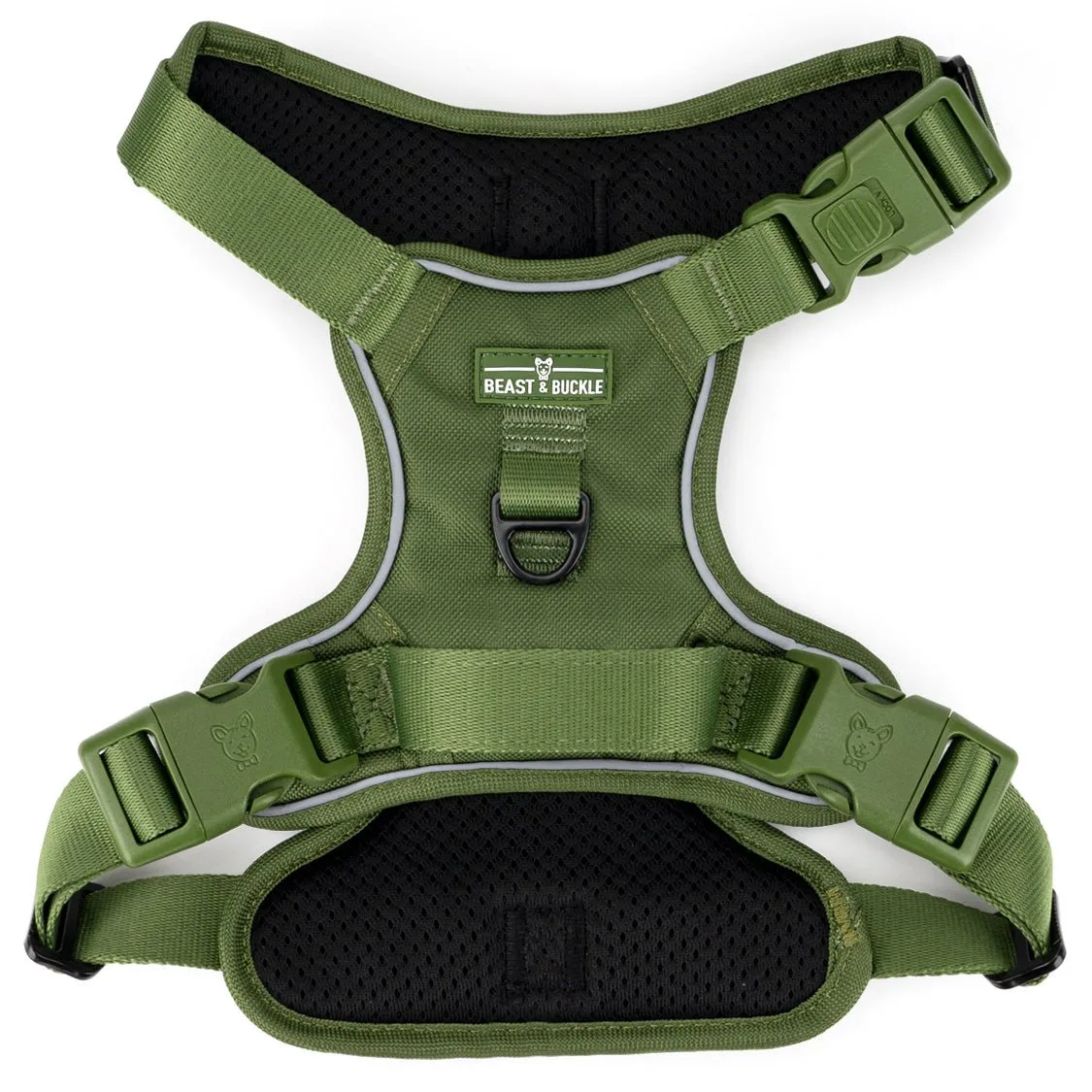
Olive Green No Pull Dog Harness: The Beast & Buckle No Pull Harness features D-rings on both sides and a safety handle on the back. The dual D-rings allow you to attach the leash to the front ring to discourage pulling, while the back handle gives you quick control in emergencies, such as when your dog tries to bolt.
Olive Green No Pull Dog Harness