Quick answer
Fit the K9R M1 Lightspeed harness snugly but not tight: two fingers should slide under each strap, the chest piece should sit behind the elbows, and the neck strap should allow a finger's width of slack. Adjust in this order: neck, chest, then side buckle.
Why the M1 Lightspeed fits differently than padded harnesses
Most cat harnesses add thick padding that traps heat and can irritate a cat's skin during long walks. The M1 Lightspeed takes the opposite approach—it's laser-cut to remove bulk rather than add it, so the harness sits close to the body. This means your fit check is about precision, not comfort padding. You want the harness snug enough that it can't shift, but not so tight that it restricts your cat's ribs or shoulders.
Because the M1 is lightweight, a loose fit is easier to miss. A harness that feels comfortable to you may still be too loose for a cat that can back out of it. The key is to check the fit at the chest and behind the elbows, not just around the neck.
Why a snug fit matters for cats
Cats are escape artists. If the harness is too loose, they can wriggle out or slip a leg, which defeats the safety purpose. A snug but not tight fit keeps the harness in place without restricting movement or breathing.
Step-by-Step Fitting Process
- Loosen all straps first: Unfasten every buckle and slide the adjusters to their loosest position so the harness opens wide. Place it on a flat surface with the D-ring at the top. Check that the harness forms a clear figure-eight shape before you start; a twisted strap is the most common fitting mistake.
- Slide the neck loop over the head: Hold the harness by the neck loop and slip it over your cat's head with the D-ring on the back. The neck strap should sit about one finger-width below the ears, not pressing on the throat. If the neck loop feels tight or the cat pulls back, loosen the neck strap first — never force it over the head.
- Position the chest strap: Bring the chest strap under the cat's chest, just behind the elbows. The harness should form an H shape when viewed from above, with the D-ring centered on the back. Check that the chest strap is not pressing on the trachea; it should rest on the sternum.
- Adjust the neck and chest straps: Tighten the neck strap first so it sits snugly but allows two fingers to slide under. Then adjust the chest strap so it fits close to the body without restricting movement or breathing. The harness should be snug but not tight; you should be able to slide two fingers under each strap.
- Check the fit points: Ensure the harness lies flat with no twists, the front clip sits centered on the chest, and the back ring rests between the shoulder blades. Move the cat's legs to confirm full range of motion. A properly fitted harness will not slide or rotate when you gently pull on the leash.
- Test with a leash indoors: Attach a leash and let your cat walk around indoors while you hold the leash loosely. Watch for any slipping, chafing, or signs of discomfort, and adjust the straps as needed before going outside. If the harness slides or your cat shows discomfort, re-check the fit before any outdoor walk.
Product facts
-
K9R - M1 Lightspeed Harness for Cats: The M1 Lightspeed Cat Harness is hand-built in-house using a laser-cut process to eliminate bulk instead of padding it on. Less bulk means the harness contours closely to your cat's body, so a correct fit is easier to judge and less likely to shift during walks.
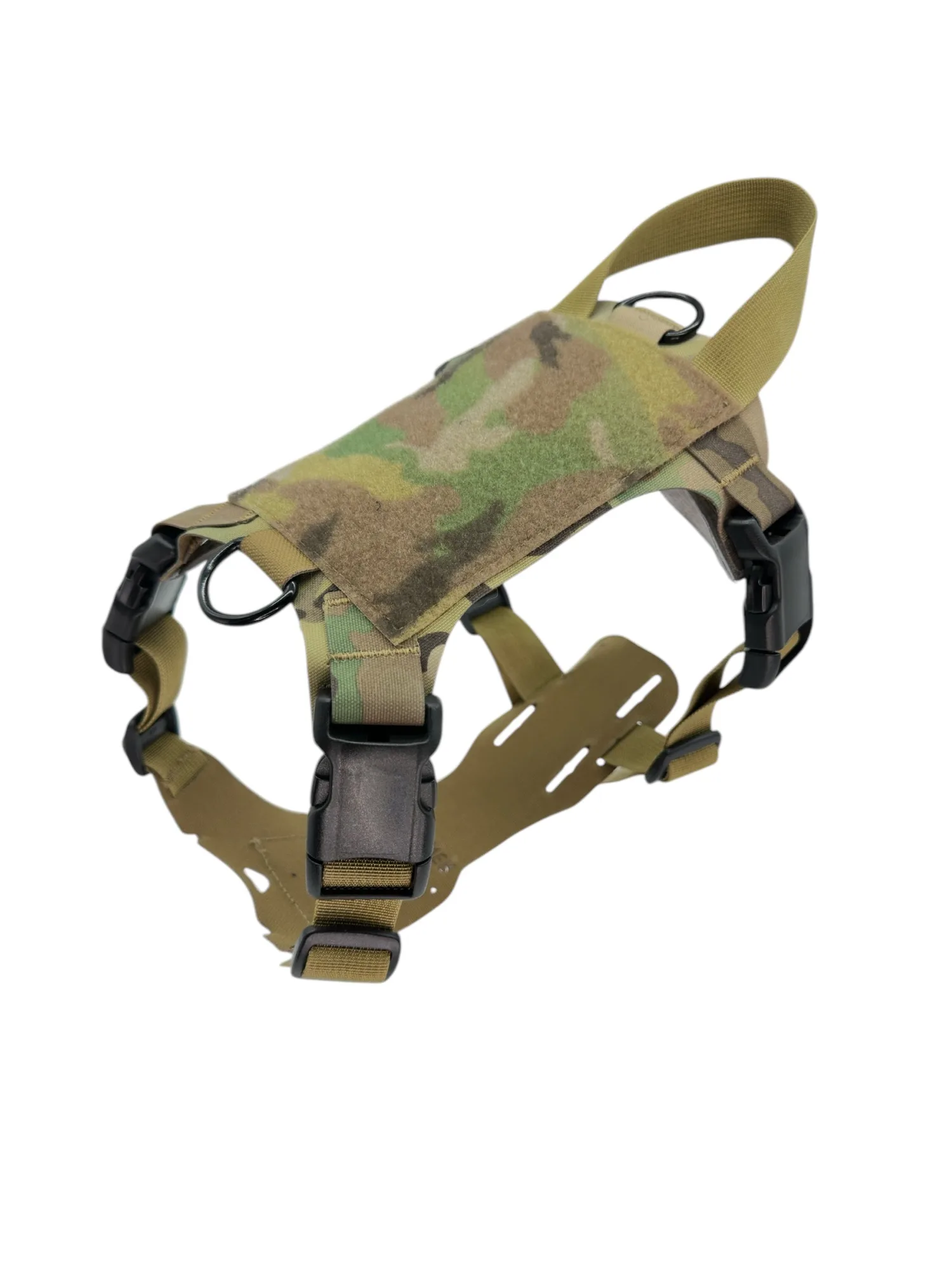
K9R - M1 Lightspeed Harness for Cats