Quick answer
Measure your yard's usable rectangle first, then place the playhouse in the least-used corner and the climber along a fence line so both share one safety zone. If the yard is smaller than roughly 12 by 12 feet, choose a foldable jungle gym you can store flat between uses instead of a fixed playhouse.
Measure the usable rectangle, not the whole yard
Walk the yard and mark the area you can actually give to play: subtract patios, garden beds, grills, and the path you use to reach the back gate. What remains is your usable rectangle. Write down its length and width, then subtract the safety clearance each product needs around it. A playhouse and a climber can share one clearance zone if their activity areas overlap, which is the single biggest space saver in a small yard.
Choose a layout that shares one safety zone
Two common small-yard layouts work well. The corner layout puts the playhouse in a back corner and runs the climber along the adjacent fence, so children move between them without crossing the lawn. The fence-line layout lines both pieces against one long fence, leaving the center open for running. Avoid placing a climber in the middle of the yard or directly in front of a door or gate, since that forces a walking path through the fall zone.
Pick equipment that folds or stacks when not in use
In a small yard, storage matters as much as footprint. A foldable jungle gym can be collapsed and moved against a wall or into a shed, which frees the yard for other uses on non-play days. Fixed playhouses and larger climbers stay put, so they suit yards where the play zone can remain dedicated. If you are unsure which fits, measure the folded dimensions against your storage spot before buying.
Set ground rules for surfaces and anchoring
Place climbers on level ground and use the anchoring method the manufacturer specifies for your surface. Grass, mulch, and rubber tiles behave differently under load, and a slope of even a few inches can make a climber feel unstable. Check that the playhouse sits on a flat, well-drained spot so the base does not rot or shift after rain.
Step-by-step small-yard setup
- Measure and mark the usable rectangle: Use a tape measure and stakes or chalk to outline the area you can dedicate to play, subtracting patios, beds, and walking paths. Write down length and width. Checkpoint: if the rectangle is under about 12 by 12 feet, plan for a foldable or compact climber rather than a fixed playhouse plus climber.
- Draft two layouts on paper before moving anything: Sketch a corner layout and a fence-line layout using your measurements. Mark doors, gates, and the path you use most, then cross out any layout that blocks them. Common mistake: placing the climber in the center of the yard, which splits the space and forces foot traffic through the fall zone.
- Position the playhouse first: Set the playhouse in the least-used corner or against the fence line. Leave the manufacturer's recommended clearance on all open sides. Checkpoint: you should be able to walk fully around the playhouse without stepping into the climber's activity area.
- Place the climber to share the safety zone: Put the climber alongside the playhouse so their clearance zones overlap rather than stack. Keep the tallest climbing side facing the fence, not the open lawn. Common mistake: leaving a gap between the two pieces that looks tidy but wastes the shared clearance and shrinks the open play area.
- Level and anchor both pieces: Check for slope with a level or a ball rolled across the base. Anchor the climber using the method specified for your surface, and confirm the playhouse sits on flat, drained ground. Checkpoint: push gently on the climber's top rail. Any wobble means the ground or anchoring needs attention before use.
- Test the route a child will actually take: Walk the path from the door to the playhouse, then to the climber, then back. Look for pinch points, trip hazards, and spots where a running child would hit a fence or planter. Next step: adjust by rotating one piece 90 degrees rather than buying new equipment.
- Plan the off-season storage spot: If you chose a foldable jungle gym, fold it once and measure the folded footprint against your shed, garage, or wall space. If it does not fit, decide now whether it stays out year-round. Common mistake: assuming a foldable piece will store easily without measuring the folded size first.
Products that fit small-yard layouts
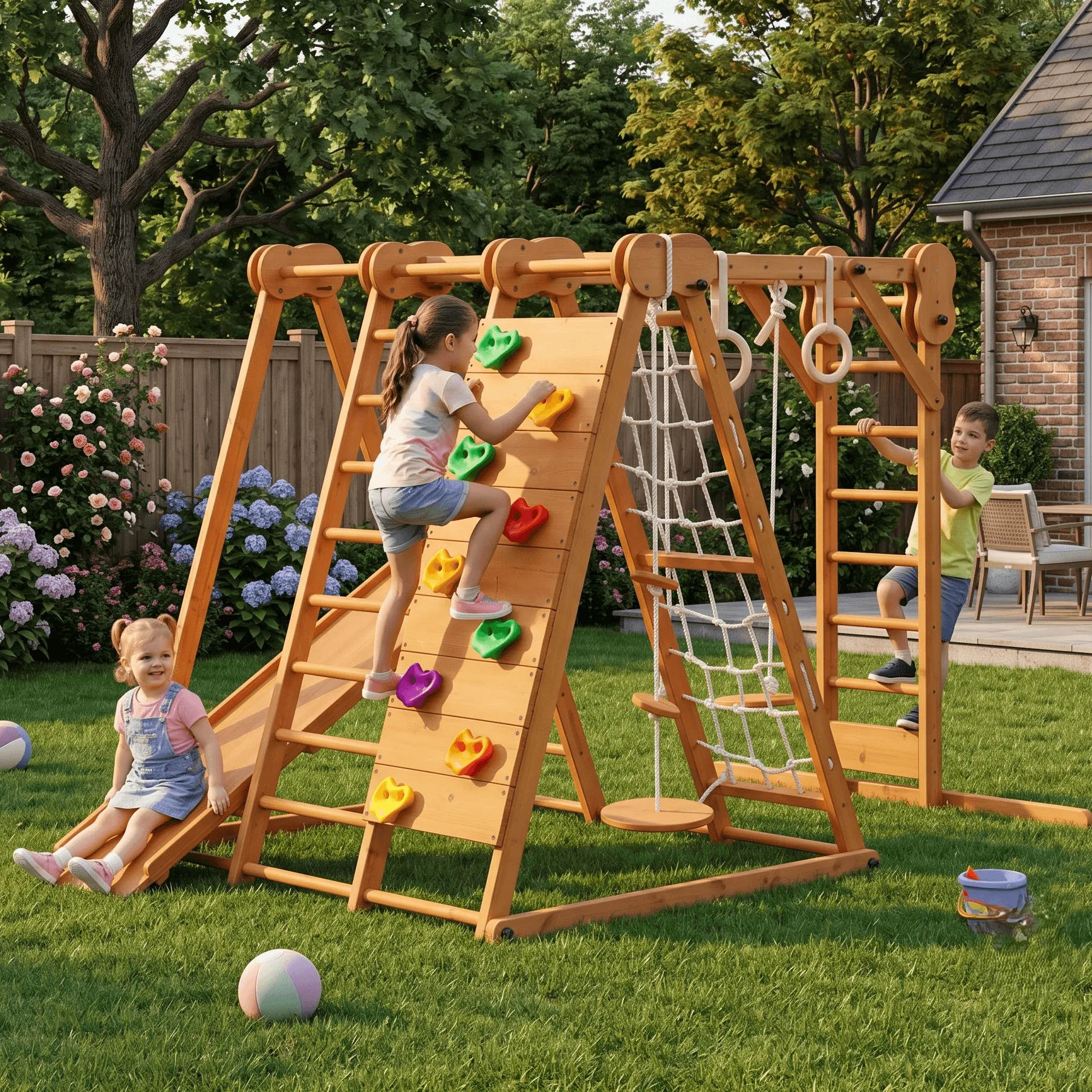
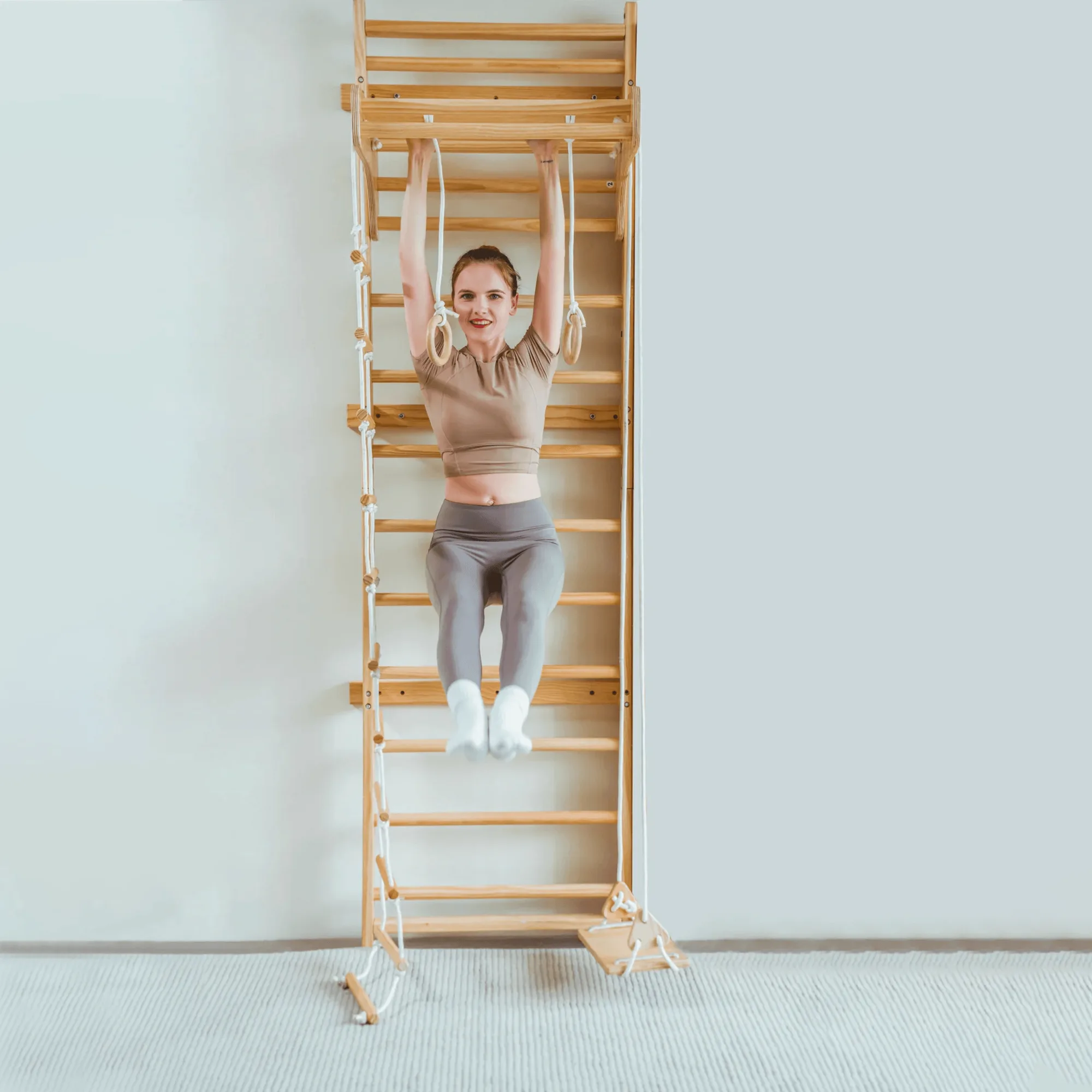
- Chestnut | Foldable Jungle Gym: Chestnut 8-in-1 Jungle Gym for Toddlers is a wooden playset built for both indoor and outdoor fun, with a climbing wall, slide, monkey bars, rope ladder, swing, and more. The multi-activity design means one footprint covers climbing, sliding, and swinging, so you do not need separate pieces competing for space.
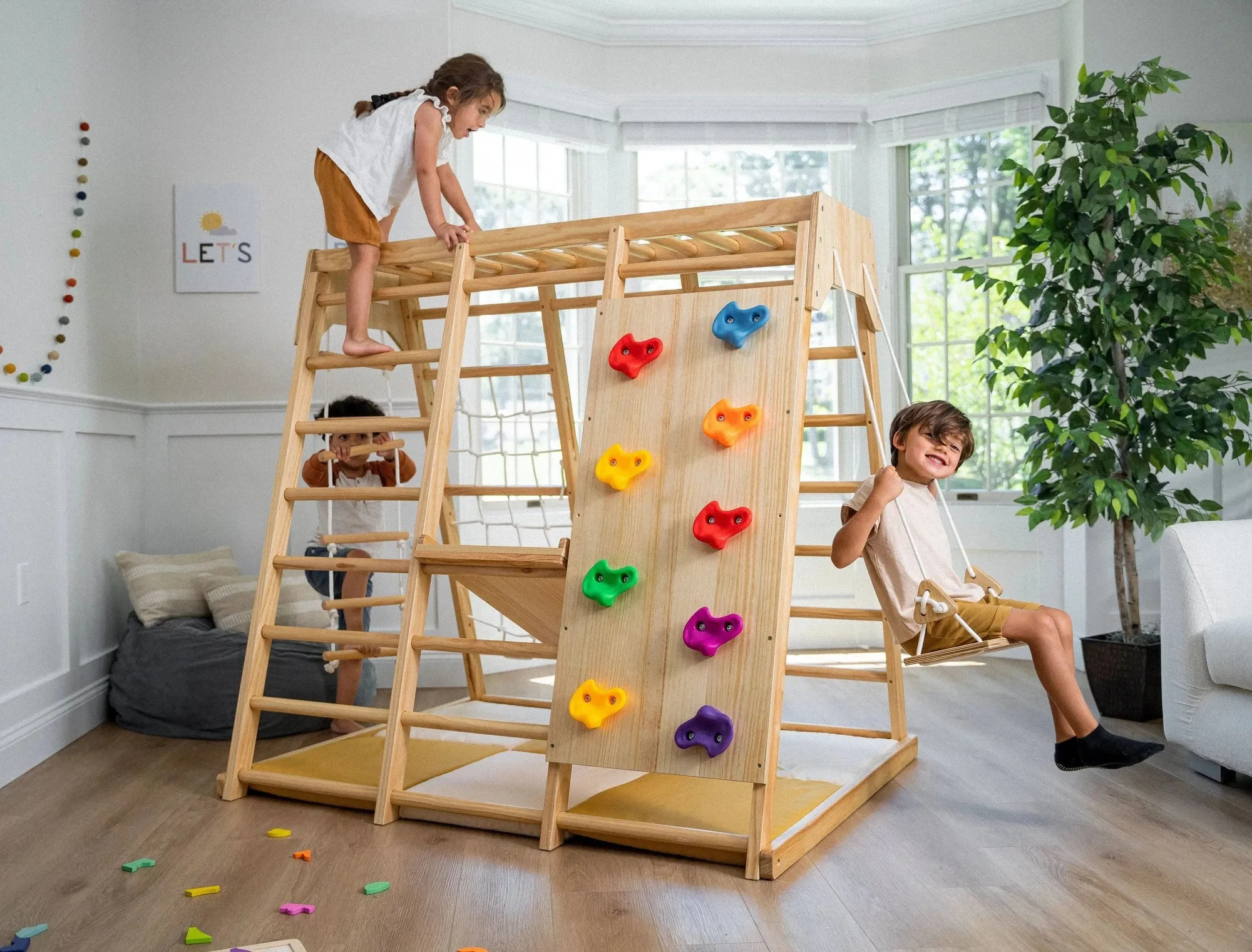
- Magnolia | Jungle Gym: Magnolia 7-in-1 indoor playset is designed for climbing, sliding, and imaginative play and aligns with Montessori values. If your outdoor space is too tight even for a compact climber, an indoor playset keeps the same active play indoors without adding yard footprint.