Quick Answer
To fit the Julius-K9 IDC Guide Dog Harness, adjust the straps to create a snug but comfortable fit that allows the dog to move naturally while maintaining secure contact for clear communication.
Why a Proper Fit Matters for Guide Dogs
A guide dog harness is more than just a piece of equipment—it's the primary communication tool between you and your dog. A poorly fitted harness can cause discomfort, chafing, or even lead to miscommunication during navigation. The Julius-K9 IDC Guide Dog Harness is designed with adjustable straps to accommodate different body shapes, but the fit depends on your careful adjustment.
Unlike standard walking harnesses, a guide dog harness must allow the dog to feel subtle pressure cues from your hand. If the harness is too loose, those cues are lost; if it's too tight, it restricts the dog's movement and can cause skin irritation. Finding the balance is key.
Step-by-Step Fitting Guide
- Loosen all straps: Before placing the harness on your dog, fully loosen all adjustable straps to create extra room for easy positioning. Check that the harness is not twisted before you begin.
- Position the harness: Place the harness over your dog's head, ensuring the padded chest piece sits comfortably on the sternum, not too high on the throat or too low on the belly. The harness should not restrict your dog's breathing or front leg movement.
- Secure the chest strap: Fasten the chest strap and tighten it until you can fit two fingers flat between the strap and your dog's chest. This prevents chafing while maintaining a secure hold. If you can fit more than two fingers, it's too loose; if less, it's too tight.
- Adjust the back strap: Tighten the back strap so that it sits snugly along the dog's spine without pulling to one side. The harness should stay in place when the dog moves. Check that the harness doesn't shift when your dog walks or turns.
- Check for chafing points: Run your fingers under all straps and padding to ensure there are no areas that pinch or rub. Pay special attention to the armpits and behind the ears. If you find any red marks after a short wear, adjust the straps immediately.
- Test the connection: Attach the leash and practice a few basic commands. The harness should transmit subtle cues without needing excessive force, and your dog should move freely. If your dog seems hesitant or uncomfortable, recheck the fit before using it for longer sessions.
About the Harness
-
Julius-K9 IDC® Guide Dog Harness: The IDC® Guide Dog Harness features adjustable straps for a customizable fit. This allows you to fine-tune the harness to your dog's unique measurements, ensuring comfort and security.
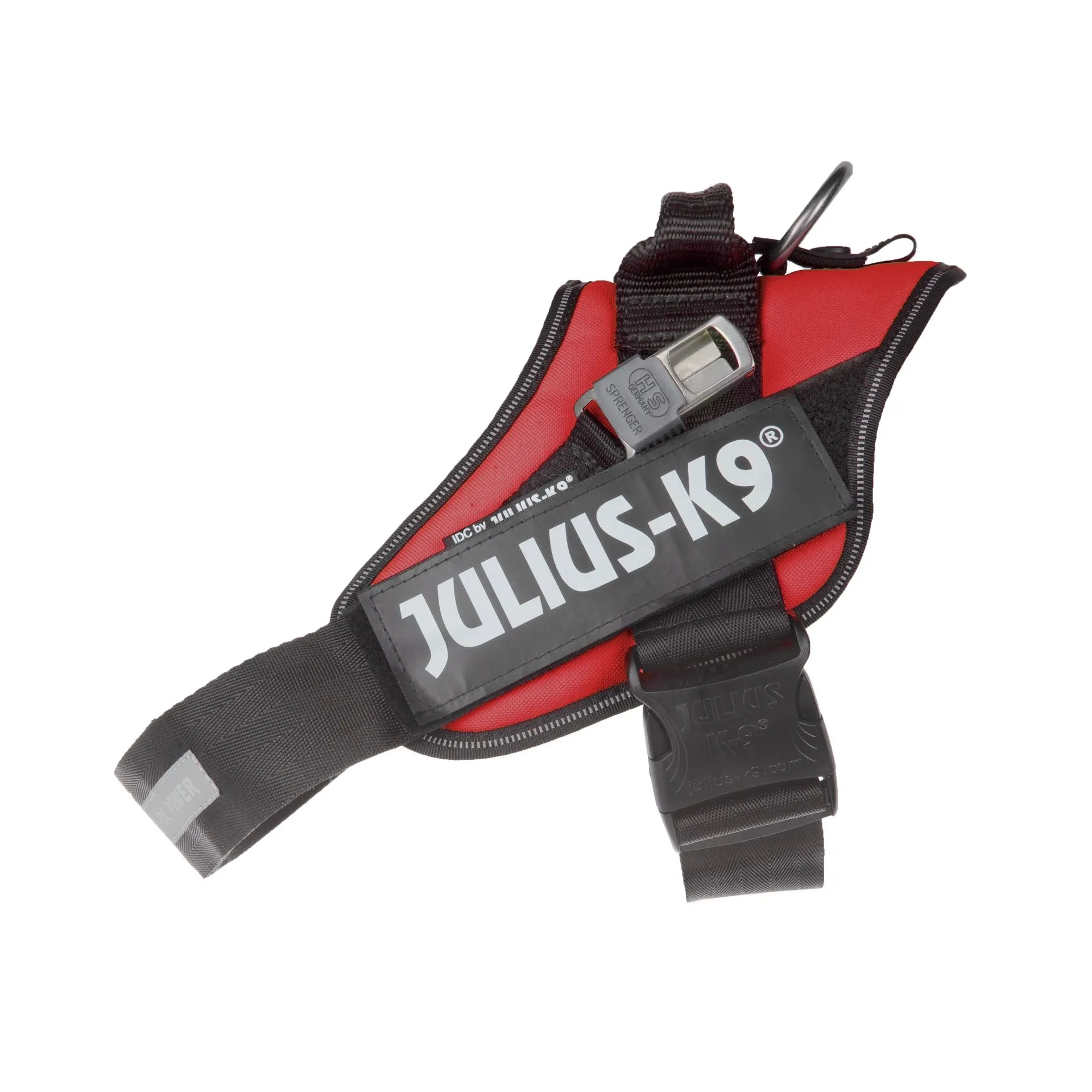
Julius-K9 IDC® Guide Dog Harness