Quick answer
To fit weekly contact lenses for astigmatism, start with a proper eye exam and prescription, then follow a step-by-step process to ensure the toric lens aligns correctly on your eye, checking for rotation and comfort.
Why astigmatism fitting is different
Unlike standard spherical lenses, toric lenses have different powers in different meridians to correct the irregular curvature of your cornea. This means they must stay oriented correctly on your eye. If a toric lens rotates, your vision may blur or fluctuate.
Weekly contact lenses for astigmatism, like Acuvue Oasys for Astigmatism, are designed with stabilization features to help keep the lens in place. However, proper fitting is essential to ensure these features work effectively.
Key factors in a successful fit
A successful fit depends on several factors: the base curve of the lens matching your cornea, the diameter covering your astigmatic area, and the axis of the cylinder power aligning with your prescription. Your eye care professional will measure these during a contact lens fitting.
It's also important to consider your tear film and lid anatomy. These can affect how the lens settles and rotates. Be honest about any dryness or discomfort during the trial period.
Trial lenses and follow-up
Most fitters will give you a trial pair to wear for a week or two. This allows you to assess comfort and vision in real-world conditions. After the trial, you'll return for a follow-up to check the fit and make any necessary adjustments.
If you experience persistent blurriness or discomfort, don't ignore it. It may indicate that the lens parameters need to be changed, or that a different brand or type of lens would work better for your eyes.
Step-by-step fitting process
- Get a comprehensive eye exam: Visit an eye care professional for a full exam that includes a refraction test to determine your exact astigmatism prescription, including cylinder power and axis. Check that your prescription includes the axis number; it's crucial for toric lens fitting.
- Choose the right lens parameters: Based on your exam, select a toric lens with the correct base curve, diameter, and cylinder power. For example, Acuvue Oasys for Astigmatism offers specific parameters for various prescriptions. Ensure the lens diameter covers your astigmatic area; otherwise, vision may be unstable.
- Insert the lens and check alignment: Insert the lens as usual, then look in a mirror to check if the lens is centered and the orientation marks (if any) are in the correct position. Blink a few times to let the lens settle. If the lens rotates more than 10 degrees, it may need a different design or fit.
- Assess comfort and vision: Wear the trial lens for a few hours and evaluate comfort and visual clarity. Blurriness or discomfort can indicate a poor fit. If vision is blurry, note whether it improves after blinking; this can help your fitter adjust the prescription.
- Attend follow-up appointments: Return to your eye care professional for a follow-up to evaluate the fit after a week or two of wear. They may adjust the prescription or try a different lens. Don't skip follow-ups; they are essential for long-term comfort and eye health.
Product spotlight
-
Acuvue Oasys for Astigmatism - 6 Pack: Acuvue Oasys for Astigmatism are 1-2 week soft disposable contact lenses made from 62% Senofilcon A, with 6 lenses per box. This silicone hydrogel material provides high oxygen permeability, which is important for maintaining corneal health during extended wear, and the 6-pack is convenient for a monthly supply.
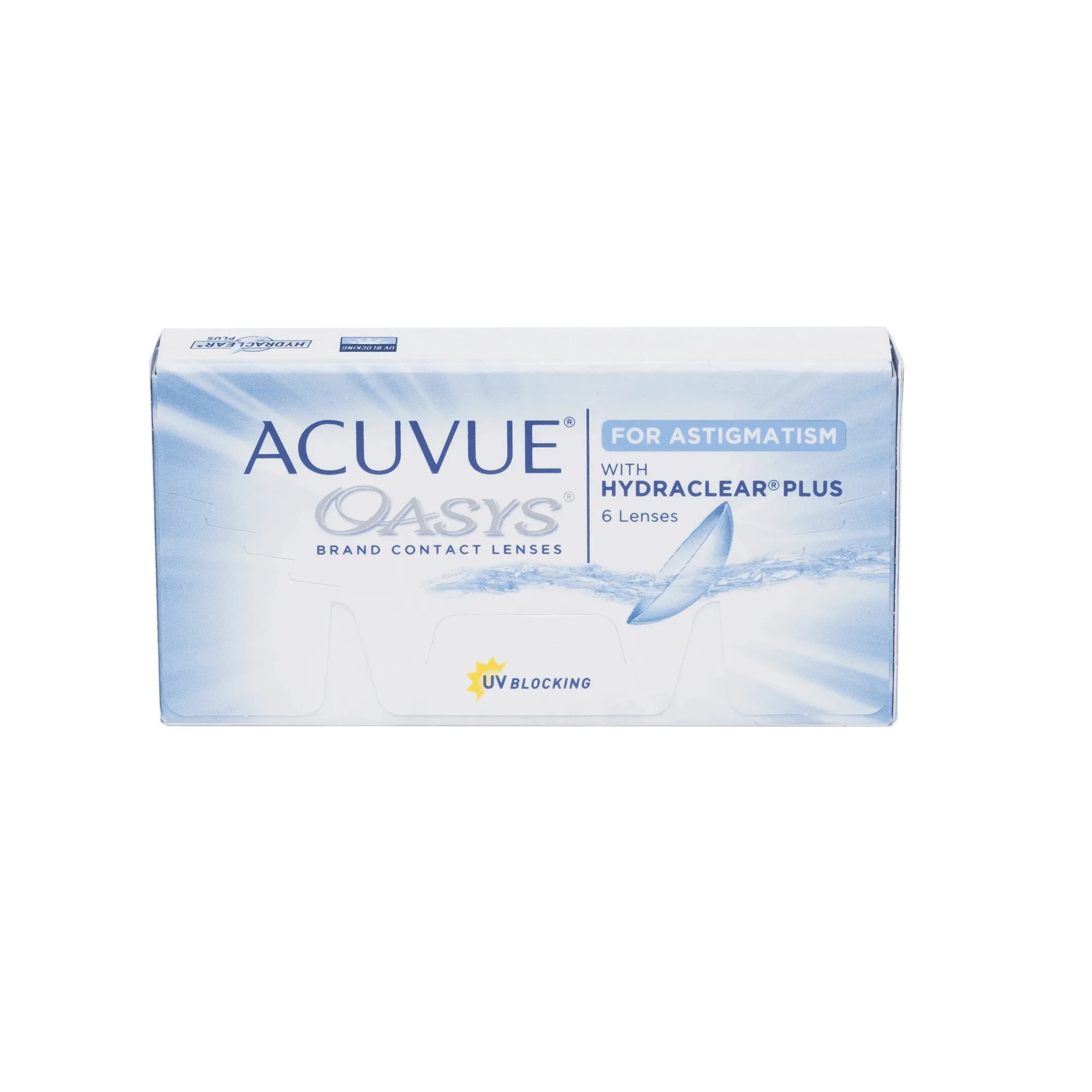
Acuvue Oasys for Astigmatism - 6 Pack