Quick Answer
A bra band that rides up at the back is nearly always too loose, so tighten the band or move down a band size and up a cup size. Fasten on the loosest hook when new so you have room to tighten it as the elastic relaxes, and check the band sits level all the way around. If it still climbs after that, the band size is wrong, not the cup.
You fasten your bra, look in the mirror an hour later, and the back band has crept halfway up your shoulder blades. It is one of the most common bra back fit problems, and it is rarely caused by the cups. The band is the anchor of the whole bra, and when it loses grip, everything shifts.
The good news is that a bra riding up is usually a sizing or fastening issue you can fix in minutes, not a sign you need a whole new lingerie drawer. Work through the checks below in order, and stop when the band stays level.
Symptom: The Back Band Climbs Through the Day
The classic sign is a band that sits level when you put the bra on but has risen by mid-morning, often with the front pulling down and the straps digging in. You may also notice the centre front lifting away from your chest. This is a bra band climbing pattern, and it points to the band rather than the cups.
Before you change anything, check the band height in a mirror with your arms down. A well-fitting band runs level around your ribcage, front and back, and stays there when you raise your arms. If the back sits higher than the front, the band is not doing its job.
- Look at the band in a mirror from behind, not just the front.
- Raise your arms and see whether the band shifts upward.
- Note whether the straps are doing the work the band should be doing.
Likely Cause: The Band Is Too Loose
A band that is too loose cannot grip your ribcage, so it slides upward toward the narrowest part of your back. This is the most common reason a bra rides up back, and it is why sizing down in the band often solves the problem instantly. Many people wear a band one or two sizes larger than they need because they were fitted that way years ago.
The fix is to fasten on a tighter hook first, then reassess. If you are already on the tightest hook and the band still climbs, the bra has stretched past its useful life or the band size is simply wrong for you. Remember that band size and cup size are linked, so dropping a band size usually means going up a cup size to keep the same volume.
- Fasten on the loosest hook when the bra is new, so you can tighten it as the elastic relaxes.
- If you are on the tightest hook and it still rides up, size down in the band.
- When you drop a band size, go up a cup size to keep the same cup volume.
Corrective Action: Adjust the Band and Straps Together
Start by unfastening the bra and refastening it one hook tighter than usual. Put it on, then bend forward slightly and use your hand to scoop the band down at the back so it sits level. Stand up and check the mirror again. If the band now stays put, you have found your fix.
Next, loosen the straps slightly. Straps that are too short pull the back band upward, which mimics a loose band even when the band is the right size. You want the straps snug enough to stay on your shoulders but not tight enough to lift the band. Adjust the band first, then the straps, and recheck in the mirror.
- Tighten the band one hook at a time and check after each adjustment.
- Loosen the straps so they sit flat without pulling the band up.
- Scoop the band down at the back after fastening, then recheck the level.
When to Stop Adjusting and Choose Another Option
If you have tightened the band to the tightest hook, loosened the straps, and the back still climbs, stop adjusting. At this point the bra is either stretched out or the wrong size, and further tightening will only cause discomfort and dig in. A band that leaves red marks or feels restrictive is too tight, even if it stays level.
Your options are to replace the bra or have it altered. If the band has stretched over time, replacement is usually the better choice because the elastic has lost its recovery. If the bra is new and still rides up on the tightest hook, the band size is wrong and you should try a smaller band with a larger cup. A quick fitting in-store will confirm this faster than guessing online.
- Stop if the band leaves marks or feels tight enough to restrict breathing.
- Replace a stretched band rather than tightening it further.
- Try a smaller band with a larger cup if the bra is new and still climbs.
Band Fit Diagnosis: What Your Bra Is Telling You
- Band rides up on the loosest hook: The band is too loose for your ribcage. Tighten one hook and recheck in a mirror. If it stays level, you have your fix. If not, size down in the band and up in the cup.
- Band rides up on the tightest hook: The band has stretched or the band size is wrong. Further tightening will not help. Replace the bra if it is old, or try a smaller band with a larger cup if it is new.
- Band stays level but straps dig in: The straps are too short and may be pulling the band upward. Loosen them slightly. Adjust the band first, then the straps, and recheck the level.
- Band leaves red marks or feels restrictive: The band is too tight, even if it stays level. Comfort matters as much as position. Stop tightening. Go back one hook or try a different band size.
Bras That Help You Check Band Fit
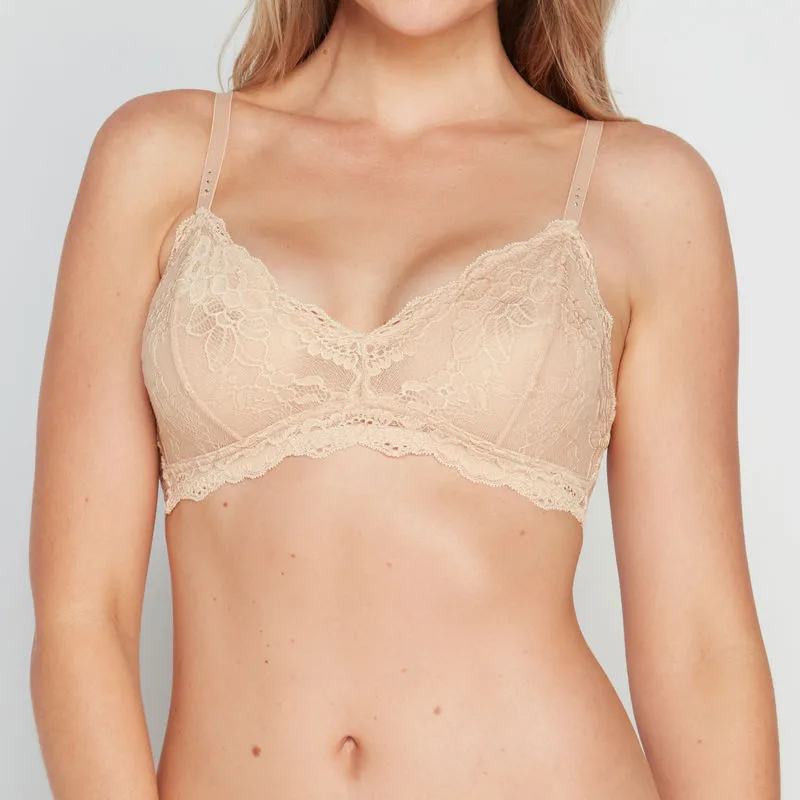
- My Fit Lace Bralette - Clearance: Easy, wire free soft cup bralette ensures comfort all day and all night, in a floral stretch lace with Pleasure State's signature trio of crystals. A wire-free bralette relies entirely on the band for support, so it is a useful test of whether your band size is right. If a bralette rides up, the band is almost certainly too loose.
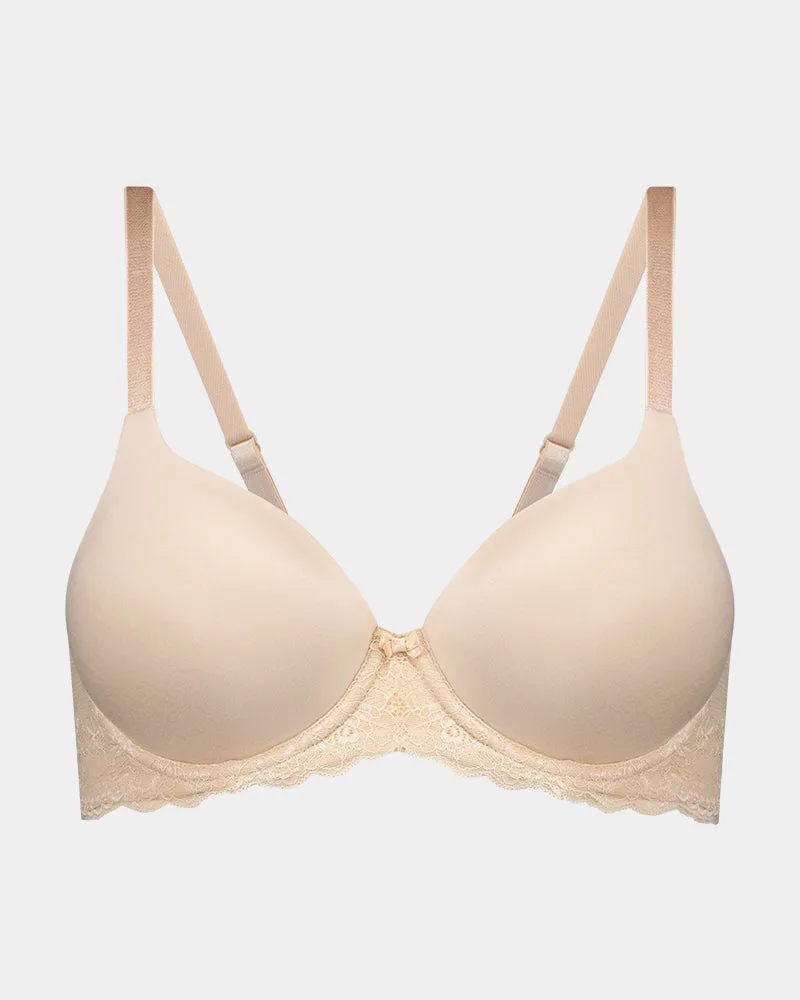
- Want To Wear Lace Contour Bra: Cups are lined in extra soft marshmallow-feel foam and the cup moves and flexes with the body, with a soft sleek back fabric and encased elastics. A contour bra with a smooth back band makes it easier to see whether the band sits level, because there is less lace and hardware to distort the line. Check the back band in a mirror before deciding the size is wrong.
A bra that rides up at the back is usually a band problem, not a cup problem. Tighten the band, loosen the straps, and check the level in a mirror. If it still climbs on the tightest hook, stop adjusting and either replace the bra or try a smaller band with a larger cup.