Quick answer
Most squeaky swing sets are fixed by cleaning and lubricating the moving contact points: swing hangers, swing beam brackets, and chain or rope connections. If the squeak continues after lubrication, tighten loose bolts, replace worn hangers, and check that the frame is level. Stop and replace hardware when you see rust, cracks, or elongation around a bolt hole rather than lubricating it again.
A squeaky swing set is annoying, but it is also useful information. The pitch and location of the noise usually tell you whether you are dealing with dry metal-on-metal contact, a loose bolt, or a worn hanger that needs replacement.
This guide walks through swing set noise troubleshooting in the order that saves the most time: find the source, treat the cause, and know when to stop repairing and swap the part. You do not need special tools, and most fixes take under 30 minutes.
Step 1: Locate the Squeak Before You Lubricate Anything
Have one person push an empty swing gently while another walks around the set and listens. Squeaks come from three main zones: the top swing hangers where the chain meets the beam, the swing beam brackets where the beam meets the frame, and the A-frame leg joints or ground anchors. A rhythmic squeak that matches the swing's motion almost always points to the hanger or beam bracket, while a creak that appears when kids climb usually comes from deck or ladder joints.
Mark each noisy spot with a small piece of painter's tape so you do not lose track. Test one zone at a time by pushing only that swing or only stepping on that deck section. This turns a vague swing set noise into a specific repair target.
- Push one swing at a time instead of the whole set.
- Listen at the top of the frame first, since sound travels down the legs.
- Note whether the squeak happens on the forward stroke, the back stroke, or both.
Step 2: Clean and Lubricate the Right Contact Points
Once you know the location, wipe away dirt, grit, and old grease with a dry cloth. Grit trapped in a hanger is a common cause of swing set noise because it turns a smooth pivot into a grinding one. For metal pivot points, apply a small amount of silicone-based or white lithium lubricant to the bushing area, not the whole chain. Wipe off the excess so it does not collect dust.
For wooden joints, avoid spraying lubricant into the wood itself. Tighten the bolt first, then lubricate only the metal washer and bracket surfaces. If a chain is the source, a light wipe with lubricant on a rag is enough; soaking a chain attracts grit and makes the problem return faster.
- Lubricate bushings and washers, not bare wood.
- Use a small amount and wipe away drips.
- Re-test after 10 minutes of swinging before assuming the fix failed.
Step 3: Tighten, Shim, or Replace Worn Hardware
If lubrication quiets the set for a day and then the squeak returns, the problem is mechanical, not just dryness. Check every bolt on the swing beam and hangers with a wrench. A bolt that turns easily is loose, and a bolt that spins without tightening may have stripped wood threads, which means the hole needs a larger bolt or a hardware replacement rather than more torque.
Look for rust streaks, cracked castings, or oval-shaped bolt holes. Any of these means the part has lost strength, and lubricating it will not restore safety. This is the point to stop treating the symptom and replace the component. Heavy-duty hangers such as SNS XD Swing Hangers are built from cast steel with bronze bushings and a 250 lb weight limit, which makes them a sensible upgrade when original hangers are worn or undersized.
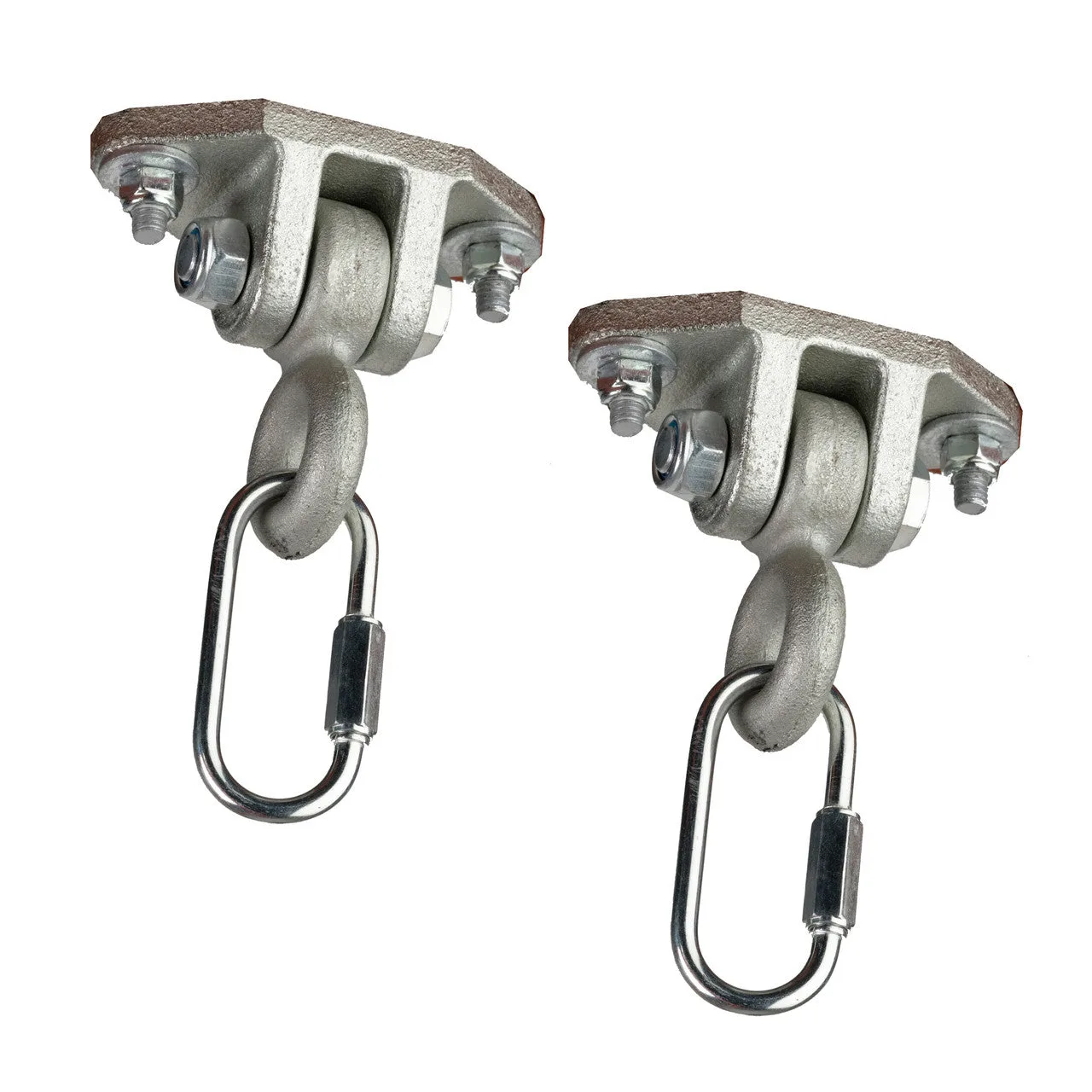
SNS XD Swing Hangers
- Tighten bolts in a cross pattern so the frame stays square.
- Replace any bolt that will not hold torque.
- Check the beam for cracks before adding weight back to the set.
Step 4: Silence Frame and Ground Contact Noise
Some squeaks are not from the swing at all. A frame that shifts slightly in its ground anchors can produce a low creak that sounds like it comes from the top. Check that the legs sit flat and that anchors are snug. If the set sits on a slope, the frame flexes with each swing and no amount of lubricant will stop it.
Also check accessories that hang from the beam, such as trapeze bars or rings. A loose accessory can rattle against the beam and mimic a hanger squeak. Tighten or remove the accessory, then test again to confirm the real source.
- Confirm the frame is level before chasing more squeaks.
- Remove hanging accessories one at a time during testing.
- Recheck anchors after heavy rain or ground freeze.
When to Stop Repairing and Replace Instead
Stop lubricating and tightening when you find rust that has eaten into a load-bearing part, cracks in cast metal, or bolt holes that have widened into ovals. These are structural failures, and the safe move is replacement, not another round of grease. The same applies if a swing beam bracket flexes visibly when a child swings.
If the squeak comes back within a week of a proper fix, the hardware is worn beyond what maintenance can correct. Replacing hangers and brackets is inexpensive compared with the risk of a failure, and it usually eliminates the noise permanently.
- Replace, do not repair, cracked or deeply rusted load-bearing hardware.
- If a fix lasts less than a week, plan a hardware swap.
- Keep a written record of which parts you replaced and when.
Squeak Diagnosis Chart
- Rhythmic squeak at the top of the swing: Dry or gritty swing hanger bushing. Clean the hanger, apply silicone or white lithium lubricant to the bushing, and wipe off excess. If the squeak returns within a week, replace the hangers instead of relubricating.
- Creak when kids climb or walk on the deck: Loose deck or ladder bolts, or a frame that is not level. Tighten bolts in a cross pattern and check that all legs sit flat on the ground. If a bolt spins without tightening, the wood threads are stripped and the hole needs a larger bolt or new hardware.
- Low groan from the base of the frame: Movement at the ground anchors or a frame on a slope. Re-seat the anchors and confirm the set is level before swinging again. If the frame flexes visibly, stop use and correct the footing before continuing.
- Rattle that sounds like a squeak: A loose accessory such as a trapeze bar, rings, or a hanging attachment knocking against the beam. Tighten or remove it and retest. If the noise stops when the accessory is removed, the accessory mount is the problem, not the swing set.
- Squeak that survives lubrication and tightening: Worn or cracked load-bearing hardware. Look for rust streaks, cracks, or oval bolt holes on hangers and beam brackets. Stop repairing and replace the part. SNS XD Swing Hangers and a high-tensile bracketing kit are direct upgrades for worn components.
Parts That Solve Recurring Swing Set Noise
- SNS XD Swing Hangers: Made from cast steel with bronze bushing and 2-bolt mounting hardware, designed for use with Heavy-Duty Swing Seats, with a 250 lb weight limit. Bronze bushings pivot more smoothly than worn or dry original hangers, which is often the permanent fix for a rhythmic hanger squeak.
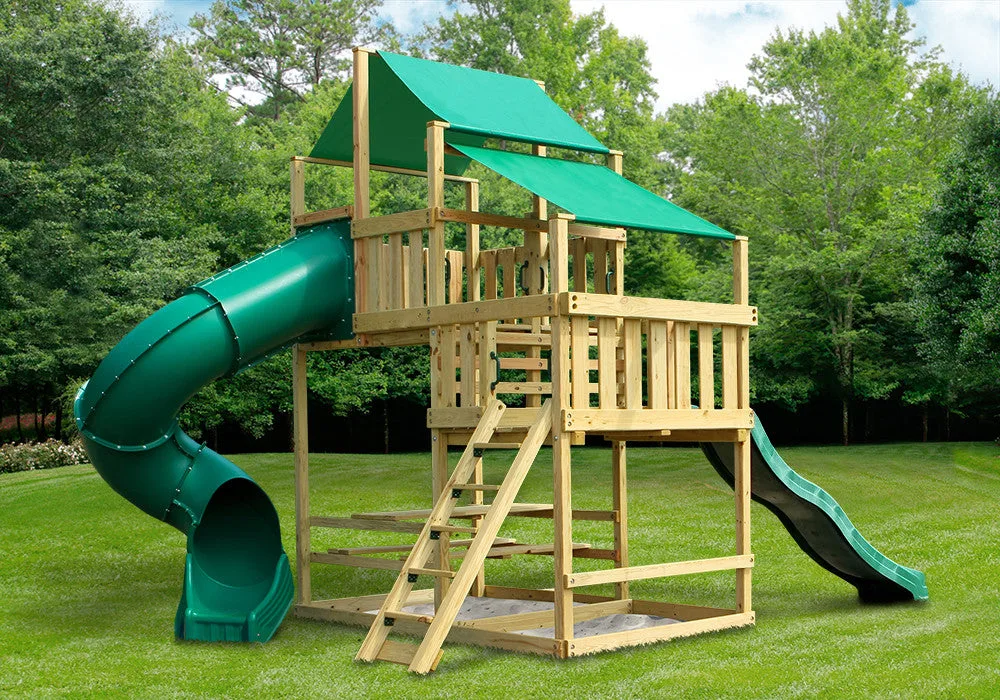
- Frontier DIY Swing Set - Hardware-Only Kit: Includes a patented two-piece swingbeam bracketing system made from 7 gauge high-tensile steel, and the playset is easy to modify and fits almost any slide combination. If your squeak traces back to a flexing or stripped swing beam bracket, a high-tensile bracketing system restores a solid, quiet connection.
A squeaky swing set is usually a maintenance reminder, not a crisis. Clean and lubricate the pivot points first, tighten what is loose, and replace any hardware that is cracked, rusted, or stripped. Do those three things in order and most sets go quiet for good.