Quick answer
Add nail polish thinner two to three drops at a time, close the bottle, roll it between your palms, and test on a swatch before adding more. Never use acetone or nail polish remover. If the polish still drags, strings, or smells sour after two rounds, the formula is past saving and you should replace it.
A bottle that used to glide on smoothly now pulls, streaks, or leaves a gummy ridge down the middle of the nail. That is a thick nail polish problem, and it is almost always about solvent loss rather than age alone. Every time you open the bottle, the fast-evaporating solvents that keep the formula fluid escape into the air. What is left behind is pigment, glitter, and film-formers in a thicker base.
The good news: this is one of the few nail problems you can genuinely reverse at home. The fix is nail polish thinner, not remover, and the technique matters as much as the product. Below is the diagnosis-first approach: match the symptom to the cause, take the smallest corrective step, and know the point where you should stop and move on.
Why nail polish gets thick in the first place
Nail polish is a suspension of pigment, glitter, or flakes in a solvent base. Those solvents are volatile by design so the polish sets quickly on the nail. Every open bottle, every half-used manicure, and every warm storage spot pushes solvent out of the bottle. The pigment load stays the same, so the ratio shifts and the polish thickens.
This is why the same bottle can behave differently in different seasons. A polish that was perfect in spring may feel stringy by late summer if it sat near a window. It also explains why glitter-heavy and flakie formulas tend to thicken faster than simple cremes: there is more solid material competing for less solvent.
- Store polish upright, away from direct sun, and tighten caps fully after each use.
- Wipe the neck of the bottle before closing so dried polish does not break the seal.
- Expect glitter, flakie, and reflective formulas to need thinning sooner than cremes.
Symptom check: is it thick, or is it something else
Before you reach for thinner, confirm the problem is consistency. Thick polish drags, leaves brush marks, pools at the cuticle, or forms strings when you lift the brush. If the polish separates into layers in the bottle, that is normal settling and a good shake may fix it. If it has hardened into a solid puck at the bottom, no thinner will bring it back.
A second check is smell and texture. Thinner works on polish that is still liquid but sluggish. If the polish smells sharply of solvent or has turned gritty, the formula has degraded and thinning will only postpone the inevitable.
- Liquid but sluggish: good candidate for thinner.
- Separated but fluid: shake well first, then reassess.
- Solid, gritty, or sour-smelling: replace the bottle.
How to thin nail polish without wrecking the formula
Work in small increments. Add two to three drops of thinner to the bottle, close it, and roll it between your palms for about thirty seconds. Do not shake aggressively, especially with glitter or flakie polishes, because shaking traps air bubbles and can tangle the particles. Test on a swatch or a bare nail before adding more.
If the polish still drags after the first round, repeat with two more drops. Two rounds is usually enough for a bottle that has lost moderate solvent. If you are working with a 15ml bottle that has been open many times, you may need three or four drops total, but add them gradually. Over-thinning is harder to fix than under-thinning.
- Use only nail polish thinner, never acetone or polish remover.
- Roll, do not shake, to protect glitter and flakie particles.
- Test on a swatch after every addition.
What not to use, and why it matters
Acetone and nail polish remover are solvents, but they are the wrong ones for this job. They dissolve the film-formers that make polish stick and wear well. A bottle thinned with remover may look fine for a day, then turn cloudy, separate, or refuse to dry properly. You are trading a consistency problem for a durability problem.
The same caution applies to adding fresh polish to an old bottle. It can work in a pinch if the two formulas are similar, but it changes the color and finish unpredictably. Thinner is the only additive designed to restore consistency without altering the formula's intent.
- Acetone, remover, and water are not thinners.
- Mixing two different polishes changes color and finish.
- If a polish needs constant thinning, the bottle is done.
When to stop and replace the bottle
There is a clear stopping point. If two rounds of thinner do not restore a workable consistency, or if the polish thickens again within a week, the formula has degraded past the point where thinning helps. At that stage you are spending more time fighting the bottle than enjoying the manicure.
This is also the moment to look at how the polish is stored and how old it is. A bottle that has been open for years, stored in a warm bathroom, or left uncapped overnight is a poor candidate for revival. Replace it, and apply the storage habits above to the next one.
- Stop after two rounds of thinning with no improvement.
- Stop if the polish re-thickens within a week.
- Stop if the texture is gritty or the smell has turned.
Keeping good bottles good
The best thick nail polish fix is prevention. Keep bottles capped and upright, store them in a cool dark place, and avoid leaving the cap off while you work. If you pour polish onto a palette, pour only what you need and do not return the excess to the bottle.
For formulas with heavy particle loads, like reflective glitter or flakie polishes, a little maintenance goes a long way. A drop or two of thinner before a long storage period can keep the formula workable. It is easier to maintain consistency than to rebuild it.
- Cap immediately after each brush load.
- Store away from heat and direct light.
- Add a drop of thinner before long storage for particle-heavy formulas.
Thick polish diagnosis: symptom, cause, action, stopping point
- Drags and leaves brush marks: Solvent loss has raised the pigment-to-solvent ratio. Add two drops of nail polish thinner, roll the bottle, and test on a swatch. If it flows smoothly after one or two rounds, stop there.
- Strings or forms gummy threads: The film-formers are concentrating and the polish is close to unusable. Thin in two-drop increments and check texture after each round. If it still strings after two rounds, replace the bottle.
- Bubbles or cloudy finish after thinning: You either shook the bottle or added too much thinner at once. Roll gently and let the bottle rest before the next use. If cloudiness persists, the formula has separated and is past saving.
- Thickens again within a week: The bottle is losing solvent faster than the formula can hold it, which usually means the cap seal or storage conditions are the real problem. Replace the polish and fix the storage before buying a new bottle.
Formula examples and what they tell you about thinning
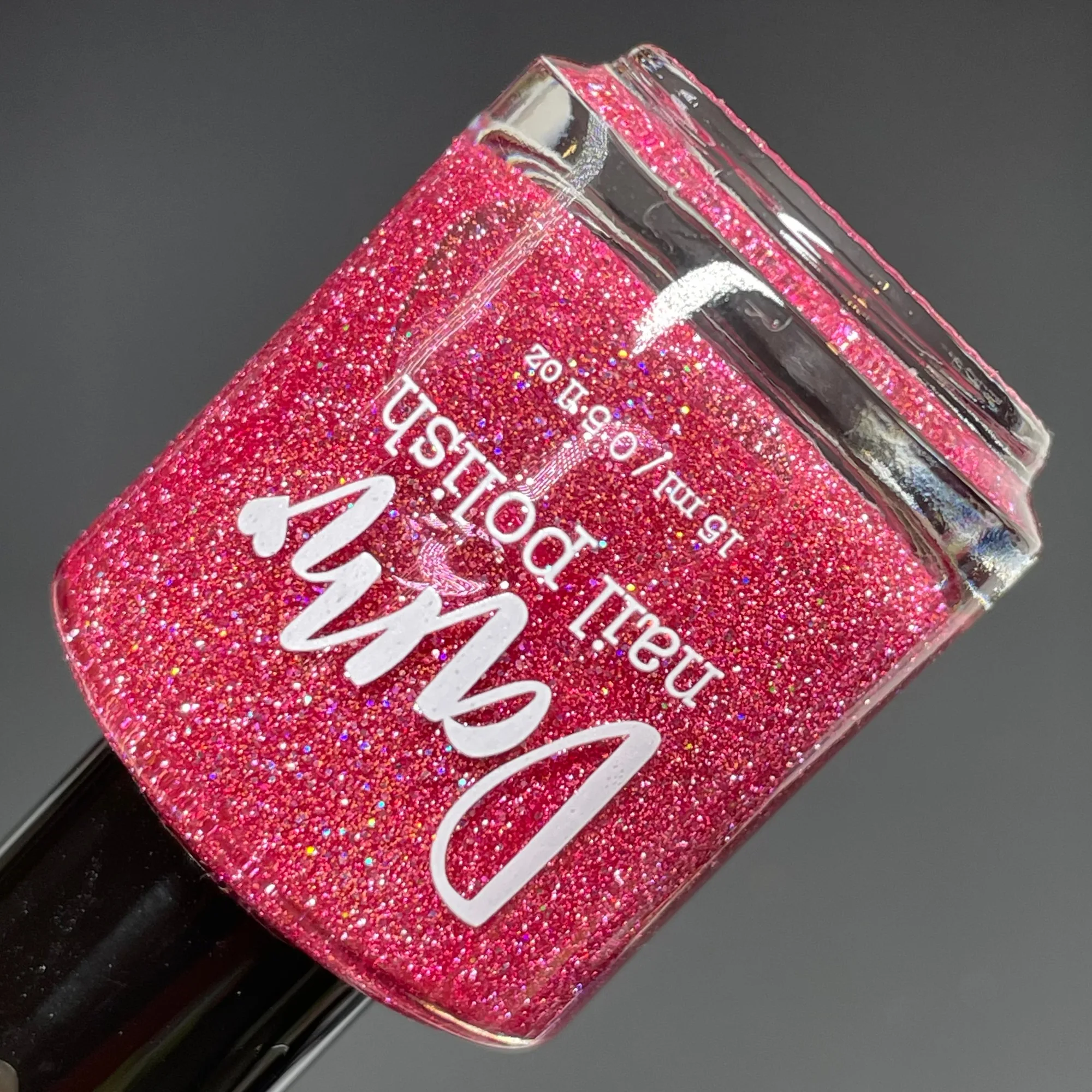
- Apple Fruit Butter - Red Reflective Glitter Nail Polish - Jams & Jellies Collection: Red jelly packed with ultra holographic glitters as well as red reflective glitters; recommended two coats in a 15ml bottle. Heavy glitter and reflective particle loads leave less room for solvent, so this type of formula thickens faster and benefits from small, gradual thinner additions.
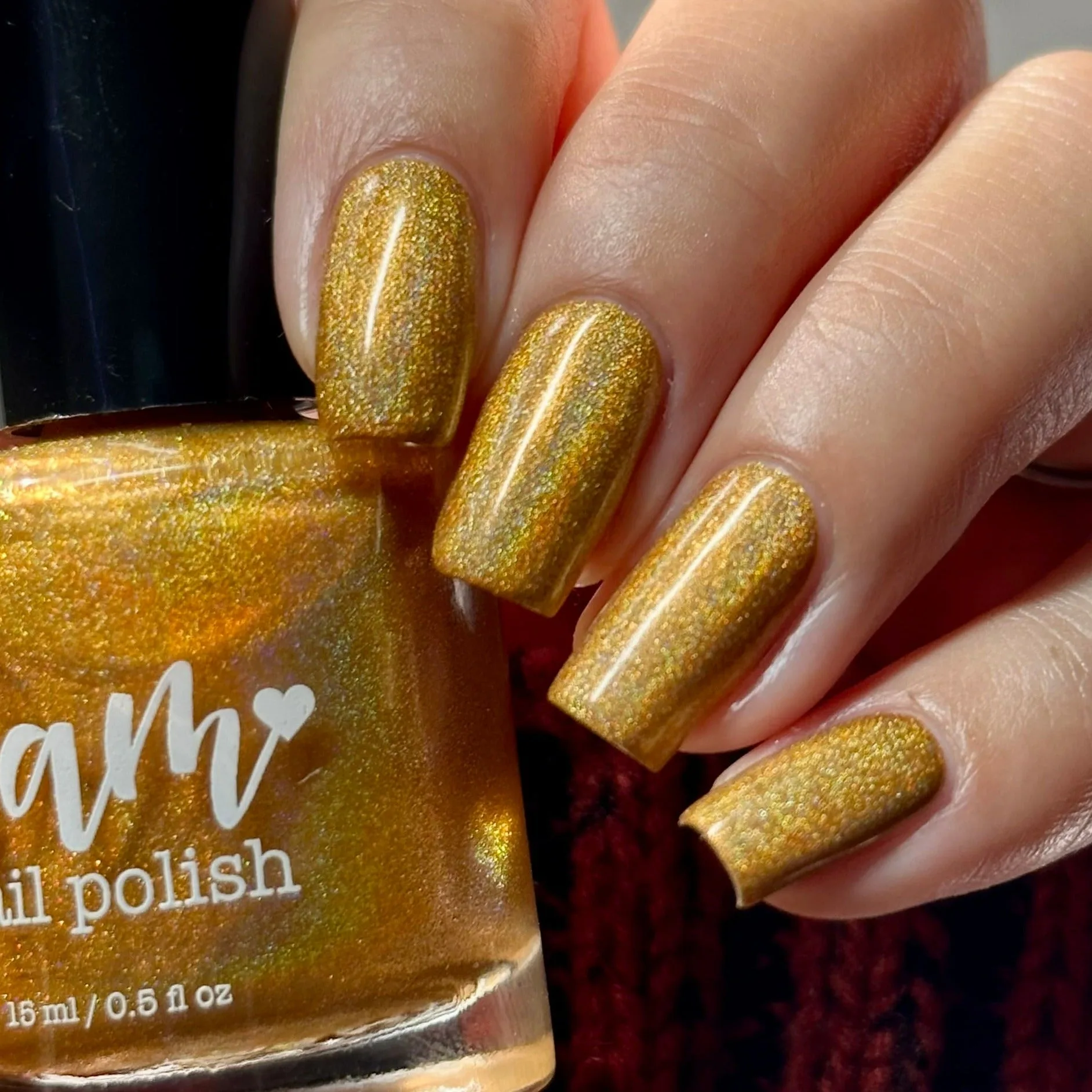
- Citrine - Yellow Orange Holographic Polish - Gemstone Collection Pt. 4: Golden yellow holographic polish with a strong holographic effect, recommended two to three coats in a 15ml bottle. Holographic pigments are fine and can settle, so shake gently before thinning and test on a swatch to confirm the effect still reads evenly.
- It's Too Peopley Out There - Green Multichrome Flakie Reflective Glitter Nail Polish - Home Sweet Home Series: Green and pink shifting flakes with silver reflective glitters; recommended two coats in a 15ml bottle. Flakie and reflective formulas are the most prone to tangling and bubbling, so roll the bottle instead of shaking and add thinner two drops at a time.
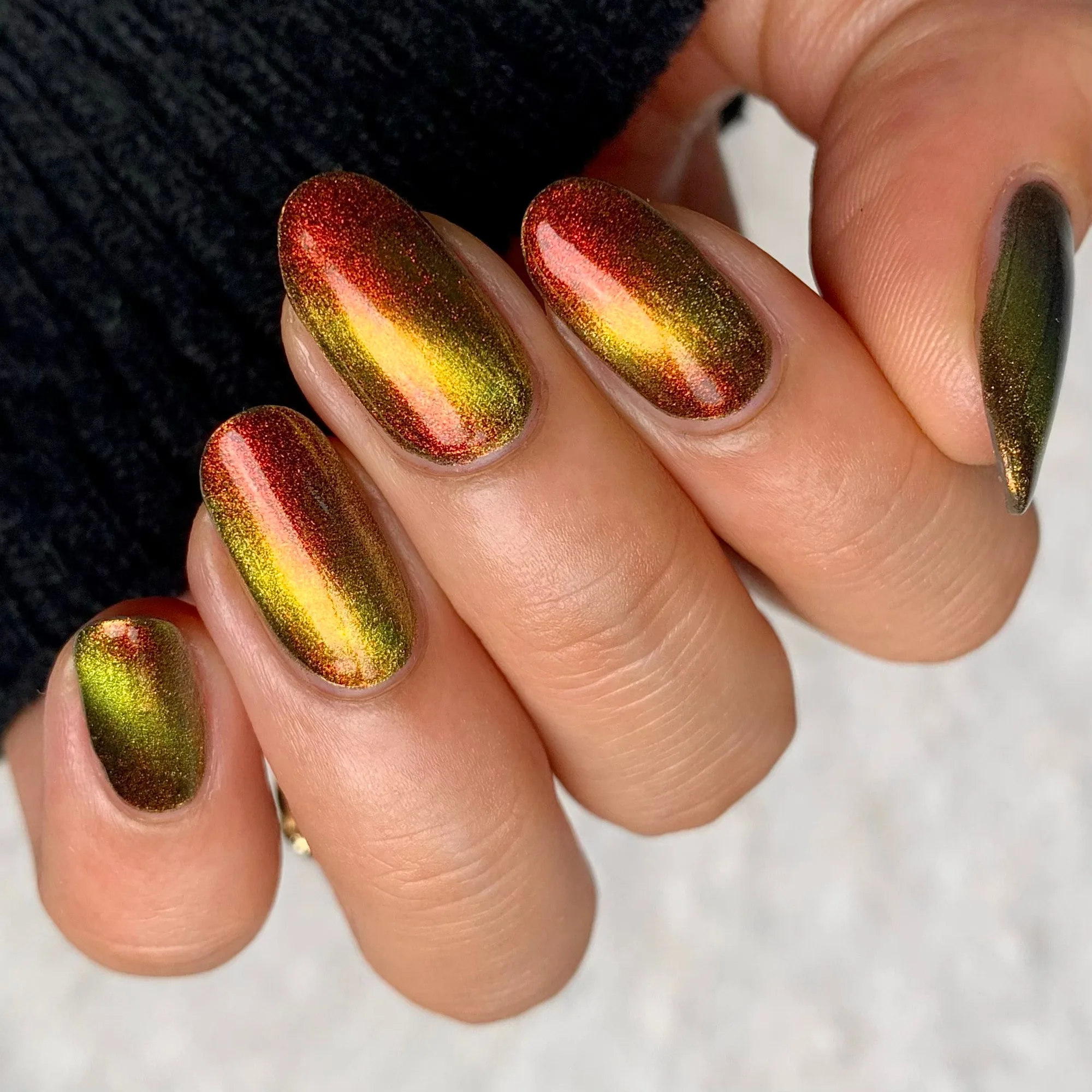
- Cosmic Chaos - Shifting Multichrome Magnetic Nail Polish - Shifts Red and Orange - Into the Multiverse Collection: Multichrome that shifts red and orange with a magnetic effect that shifts gold and green; a nail art magnet is required; recommended two to three coats in a 15ml bottle. Magnetic formulas rely on particle mobility, so over-thinning can weaken the magnetic pull; keep additions minimal and test the shift before adding more.
Thick nail polish is a solvable problem when you treat it as a solvent issue rather than a lost cause. Use nail polish thinner in small increments, roll instead of shake, and test on a swatch before committing. When two rounds do not restore the formula, stop, replace the bottle, and store the next one away from heat and light.