Quick answer
To frame and hang a fine art print without damage, start by measuring the print and choosing a frame that matches its standard size. Use archival materials to prevent acid burn, hang with damage-free adhesive strips if you cannot use nails, and place the print away from direct sunlight. Check the frame's hanging hardware and use a level to keep it straight. For Mary Engelbreit prints, allow up to one week for processing before framing.
Measure the print and pick the right frame size
Fine art prints from Mary Engelbreit come in standard frame sizes, which makes shopping for a frame easier. Measure the paper edge to edge, then choose a frame that matches those dimensions. If you want a mat, add the mat width to the frame size. For example, an 8x10 print with a 2-inch mat needs an 12x14 frame. Avoid buying a frame that is slightly too small; it can bend the paper or leave no room for breathing space. A frame that is too large can make the print look lost. Standard sizes also mean you can replace a frame later without custom costs.
Use archival materials to prevent long-term damage
The biggest hidden risk to a fine art print is acid migration from cheap backing boards, mats, or tape. Look for frames labeled archival, acid-free, or museum-grade. If you are reusing a frame, replace the backing with an acid-free foam board or corrugated plastic. Never use rubber cement, scotch tape, or hot glue directly on the print. Instead, use photo corners or archival linen tape on the back of the print only. This keeps the artwork reversible and protects it from yellowing or brittle edges.
Hang without nails using adhesive strips or hooks
If you rent or do not want to patch walls, hanging art prints without nails is possible with damage-free adhesive strips. Choose strips rated for the weight of your framed print, plus a little extra for safety. Clean the wall with rubbing alcohol and let it dry completely before applying. Press the strip firmly for 30 seconds, then wait one hour before hanging the frame. For heavier frames, use removable plastic hooks that grip the wall with micro-suction or adhesive. Always follow the weight limit; a fallen frame can scratch the print or break glass.
Protect prints from sunlight and heat
Ultraviolet light fades inks and yellows paper over time. Hang your print away from windows that get direct sun, or use a frame with UV-filtering glass or acrylic. Even indirect sunlight can cause gradual fading, so rotate prints if you have a bright room. Avoid hanging prints above radiators, fireplaces, or heating vents; heat and moisture can warp paper and weaken adhesives. If you must hang in a sunny spot, consider a floating frame with a UV-protective glaze and accept that some fading may still occur over many years.
Level and secure the frame so it stays straight
A crooked frame is distracting, and constantly nudging it can damage the paper. Use a bubble level or a level app on your phone. Mark the wall lightly with a pencil where the hanging hardware will go. For two hooks, measure from the top of the frame down to the taut wire or D-rings, then transfer that measurement to the wall. Press the frame gently onto the hooks and check level again. If the frame still tilts, add a small piece of museum putty under the bottom corners. This also keeps the frame from sliding when doors close or bass from speakers vibrates the wall.
Step-by-step framing and hanging process
- Measure the print and frame: Lay the print flat and measure width and height to the nearest 1/8 inch. Compare to standard frame sizes. If adding a mat, double the mat width and add it to both dimensions. Common mistake: measuring the frame opening instead of the glass size. Checkpoint: write down the exact dimensions before shopping.
- Prepare a clean, flat workspace: Wipe a table with a damp cloth and let it dry. Wash and dry your hands to avoid oils. Place a clean sheet of paper or a lint-free cloth on the table. Common mistake: working on a bed or carpet where dust and fibers can stick to the print. Checkpoint: hold the print by the edges only.
- Attach the print to the backing: Use archival photo corners or linen tape on the back of the print. Position the print so it is centered on the backing board. Common mistake: taping the front or using regular tape that yellows. Checkpoint: gently lift the backing; the print should stay in place without shifting.
- Insert into the frame and seal: Place the glazing (glass or acrylic) on top of the print, then the frame. Secure the backing with flexible points or a backing board. Common mistake: overtightening the frame clips, which can crack glass or dent the frame. Checkpoint: shake gently; nothing should rattle.
- Choose a hanging method: For no nails, use adhesive strips rated for at least 1.5 times the frame weight. For nails, use two hooks spaced apart for stability. Common mistake: using one hook for a wide frame, which causes tilting. Checkpoint: test the hold by pulling gently on the frame after hanging.
- Hang level and protect from light: Mark the wall, install hardware, and hang the frame. Use a level to check. If near a window, add UV-filtering glazing or move the frame. Common mistake: hanging in direct sun without UV protection. Checkpoint: step back and view from multiple angles; adjust as needed.
Mary Engelbreit prints ready to frame
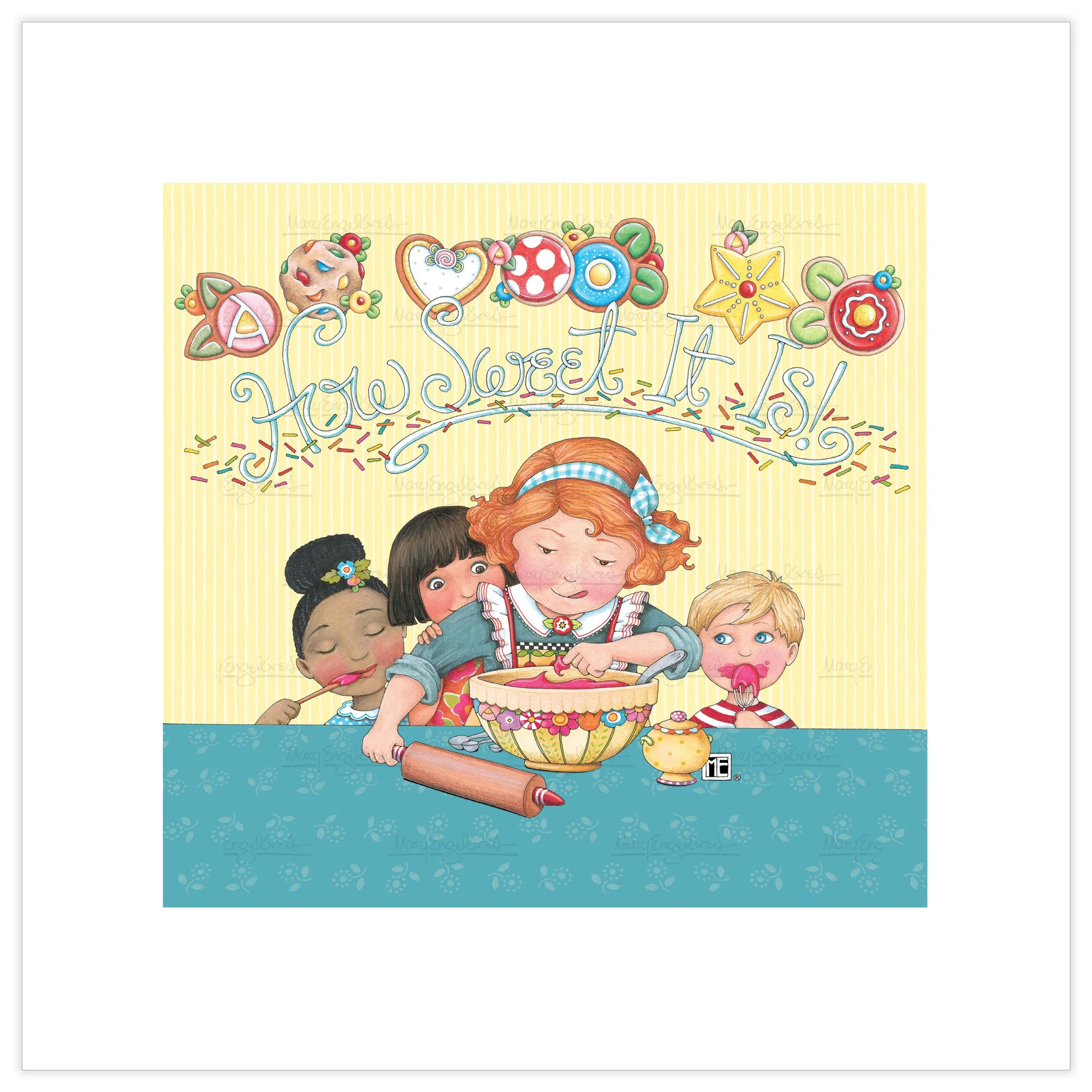
- How Sweet It Is Fine Art Print: Printed on high-quality, textured paper and available in standard frame sizes. Standard sizes mean you can buy a ready-made frame instead of paying for custom framing, and the textured paper looks best without glass that creates glare.
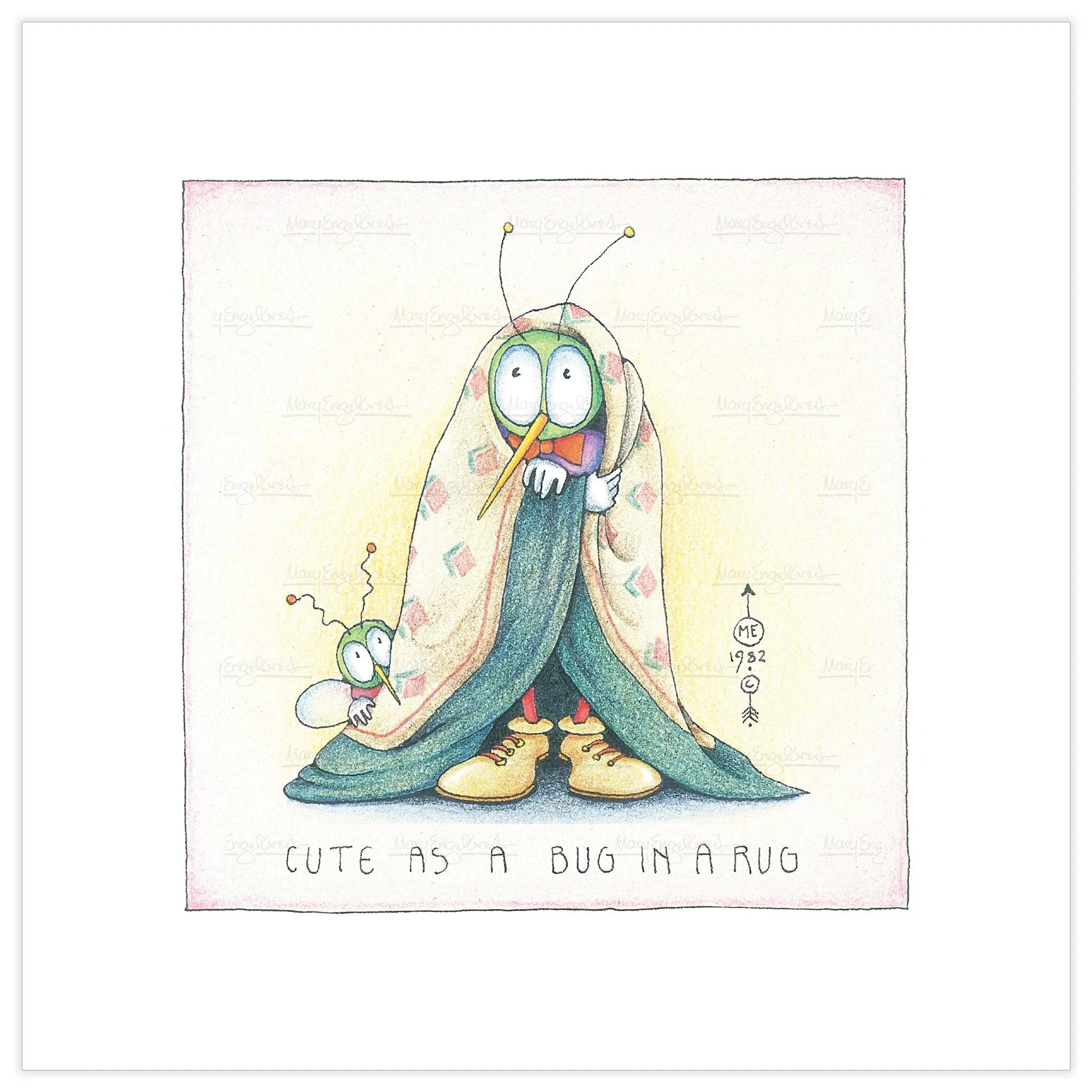
- Bug in a Rug Fine Art Print: This classic illustration reads 'Cute as a bug in a rug' and is printed on textured paper with standard frame sizes. The square-ish format works well in a simple frame with a wide mat, and the text is a conversation piece that suits a child's room or a cozy nook.
- Snooze Fine Art Print: Engeldark artwork with snarky humor, printed on textured paper and available in standard frame sizes. The dark humor pairs well with a black frame and UV-filtering glass to keep the bold contrast from fading; hang it in a home office or hallway where the joke lands.