Quick answer
To get a comfortable back carry in a meh dai, start with the waistband snug at your natural waist, seat your baby high on your back with knees above hips, bring the panel to the base of the neck, and tighten the shoulder straps from bottom to top while keeping the fabric flat. Do the final tighten in front of a mirror or with a second pair of hands, and always finish with a pelvic tilt and a visible, kissable airway.
Prep the carrier and your body before the first lift
Lay the meh dai out with the waistband untwisted and the straps separated so you are not fumbling while supporting your baby. Put the waistband on and fasten it snugly at your natural waist, which is the narrowest part of your torso, not on your hips. Tighten it enough that it does not slide when you tug, but still allows a full breath. If your meh dai has a structured waistband, center the panel behind you; if it has a simple tie waist, knot it securely and tuck the tails out of the way. Practicing the waistband alone a few times builds the muscle memory that makes the back carry feel calm instead of rushed.
Seat your baby high and centered on your back
For a back carry, the goal is a high, tight seat so your baby's weight sits against your center of gravity rather than pulling you backward. Hold your baby facing your chest, then slide them around your side to your back while keeping one hand on their upper back. Aim for the bottom of the panel to sit at your baby's knee pits, with knees higher than hips and the fabric supporting the whole thigh. A common mistake is letting the seat sag toward your lower back; that low position strains your shoulders and lets your baby slump. If you are new to back carrying, start with a toddler or older baby and practice over a bed or sofa.
Bring the panel up and secure the top rail
Once the seat is set, pull the panel up your baby's back until the top edge reaches the base of the neck, or about armpit height for a newborn. The panel should be smooth, not bunched, and centered so the straps come over your shoulders evenly. If the panel is too low, your baby can lean back; if it is too high, it can press on the neck. Check that the fabric is not covering your baby's face and that their chin is clear. This is the moment to confirm the panel is not twisted, because a twist here will make the shoulder straps dig in later.
Tighten the shoulder straps in the right order
Bring the shoulder straps over your shoulders and cross them on your chest or route them under your arms, depending on your meh dai's design and your comfort. Tighten in small increments, starting with the lower portion of each strap and working upward toward the shoulder. This bottom-to-top order lifts the seat and prevents the panel from riding up. A common mistake is yanking the top straps first, which creates slack at the seat and a loose carry. Finish by tying off the straps with a flat knot that sits away from your baby's reach, and tuck any loose tails into the waistband.
Do a comfort and safety checkpoint before you walk
Stand in front of a mirror and look for three things: a visible airway, a supported pelvis, and even strap tension. Your baby's face should be clear and kissable, with no fabric blocking the nose or mouth. The waistband should still be at your natural waist, and the shoulder straps should feel like they are distributing weight across your upper back rather than cutting into your neck. Bounce gently and check that the carry does not shift. If anything slips, untie and start again from the seat. A comfortable back carry baby position is one you can maintain for a walk, not just for a photo.
Meh dai back carry steps at a glance
- Fasten the waistband at your natural waist: Put the waistband on snugly at the narrowest part of your torso, untwisted, with the panel centered behind you and the straps separated. Checkpoint: the waistband should not slide when you tug, but you should still breathe easily.
- Scoot your baby high onto your back: Hold your baby facing you, slide them around your side to your back, and aim for the panel bottom at their knee pits with knees higher than hips. Common mistake: letting the seat sag low, which pulls on your shoulders and lets your baby slump.
- Pull the panel up to the base of the neck: Bring the fabric up your baby's back until the top edge sits at the base of the neck or armpit height for a newborn, smooth and centered. Checkpoint: the panel must not cover the face or press on the neck.
- Tighten the shoulder straps bottom to top: Route the straps over your shoulders, cross or tie them according to your carrier, and tighten in small increments starting low and working upward. Common mistake: tightening the top first, which leaves slack at the seat and a loose carry.
- Tie off and tuck the tails: Finish with a flat knot positioned away from your baby's reach, then tuck loose strap ends into the waistband so they do not dangle. Checkpoint: the knot should sit flat against you, not dig into your back or your baby.
- Run the mirror check before you walk: Confirm a visible, kissable airway, a supported pelvis with knees above hips, and even strap tension across your upper back. If anything shifts when you bounce gently, untie and restart from the seat.
Meh dai-friendly products from hope&plum
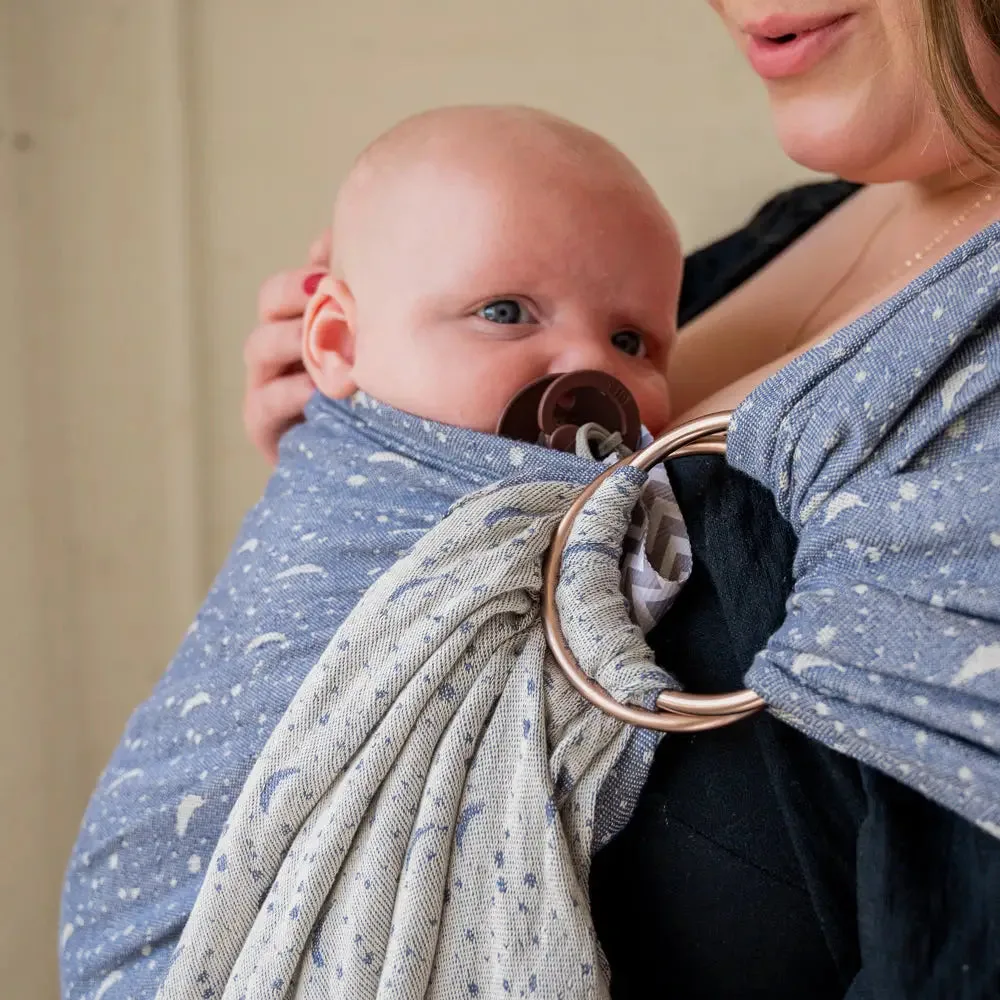
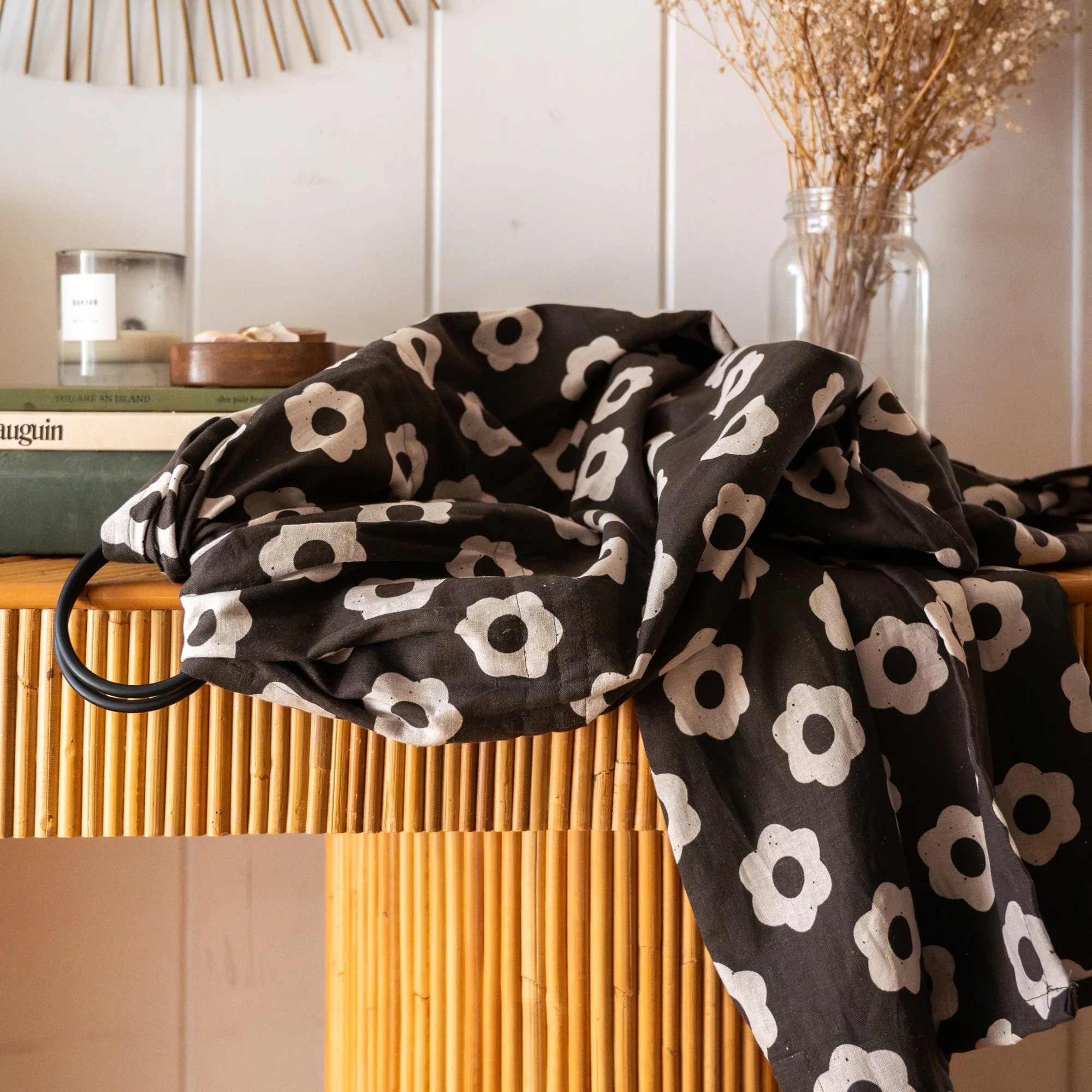
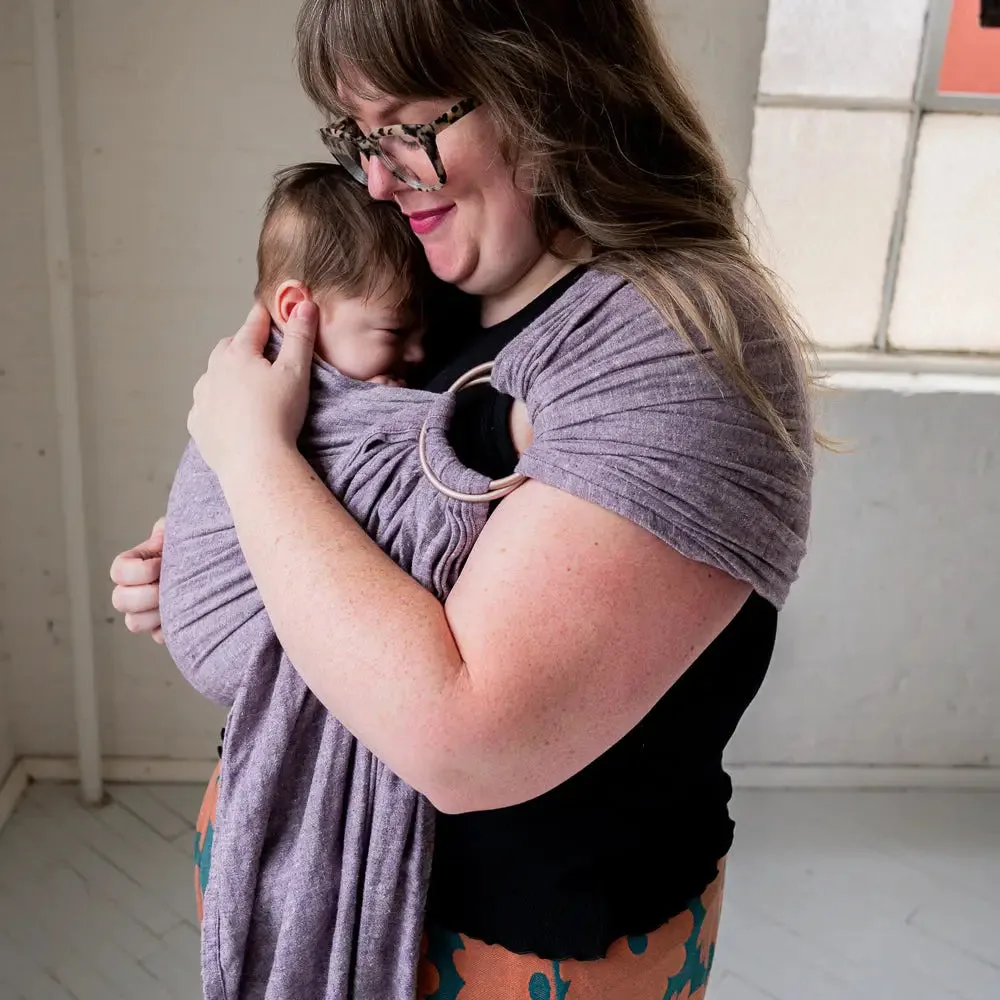
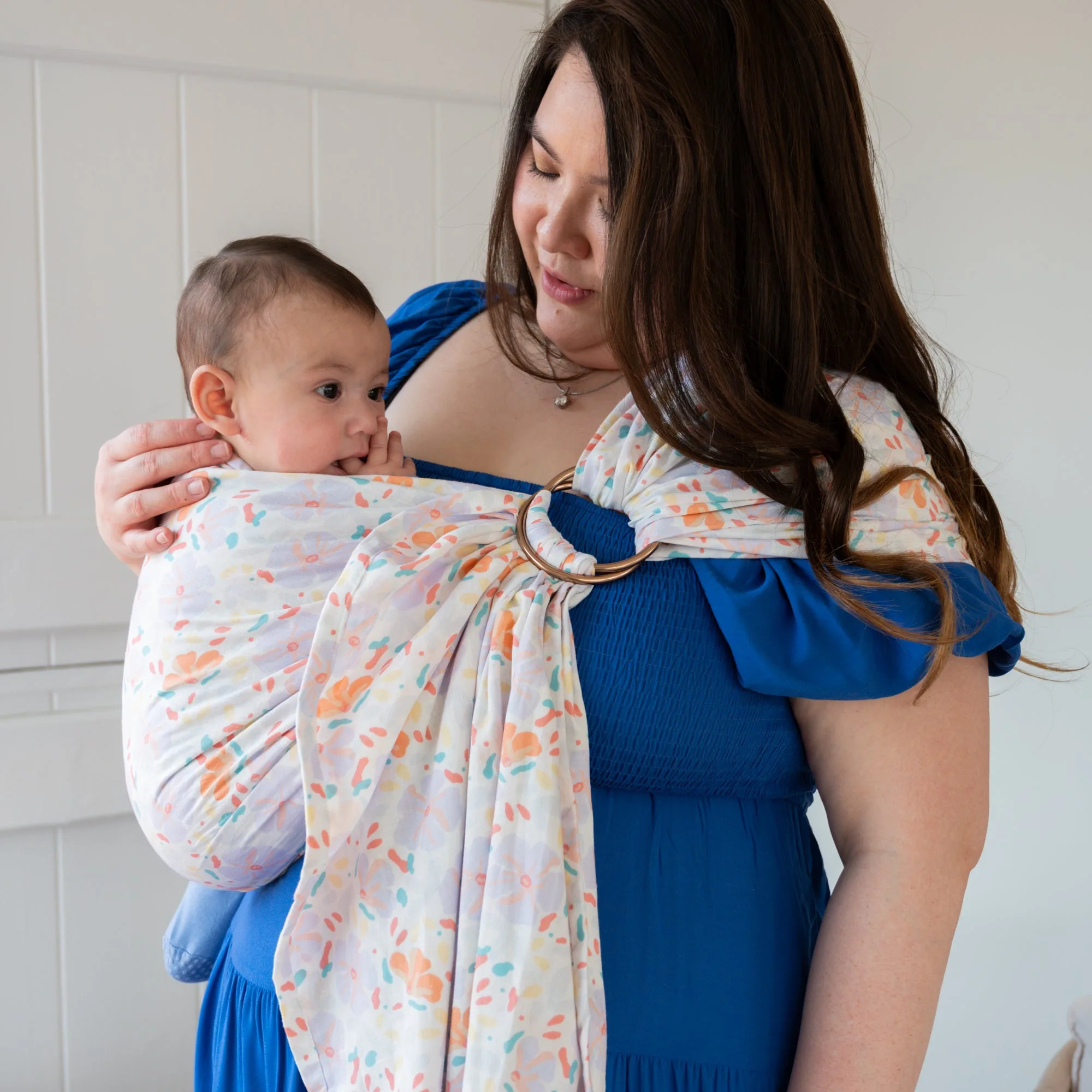
- Guava Ring Sling: The Guava Ring Sling is a bold, vibrant pink dyed solid, and it adjusts by sliding the fabric through the rings with no buckles. If you want a quick, buckle-free carry for front or hip positions while you practice your meh dai back carry, a ring sling gives you a simple alternative that still uses fabric tension rather than hardware.
- Nepeta Ring Sling: The Nepeta Ring Sling features an illustrative pattern of blooms, wings, and feline companions, and it adjusts by sliding the fabric through the rings with no buckles. A patterned ring sling can be a practical backup for short carries or for caregivers who prefer a visual guide to fabric tension, and the no-buckle adjustment is the same principle you use when tightening a meh dai.