Quick answer
Groom a sensitive-skinned dog at home with lukewarm water, a fragrance-free or hydrolysed-protein shampoo, and a slow, two-pass lather that avoids scrubbing the skin. Rinse until the water runs clear, dry with low heat, and detangle with your fingers or a wide-tooth comb while the coat is still damp. If your dog has open sores, a diagnosed skin condition, or reacts painfully to touch, see your vet before grooming.
Set up a low-stress grooming space before water touches the coat
Sensitive skin often comes with a sensitive nervous system. Before you turn on the tap, lay a non-slip mat in the tub or shower, put everything you need within arm's reach, and clip your dog's nails if they are long enough to scratch the skin during the bath. Use a leash or a non-slip harness if your dog tends to bolt. Keep the room warm but not steamy, and have two towels ready: one for the body and one for the face. If your dog pants, whale-eyes, or tries to climb out before the water starts, stop and try again another day. A calm dog is less likely to scratch, and scratching is what turns a mild flare into a hot spot.
Choose a shampoo that matches the coat, not just the skin label
Many sensitive-skin shampoos are gentle but too thin to handle a curly or woolly coat, which means you end up scrubbing harder to spread the product. That friction is often worse for the skin than the shampoo itself. Look for a formula that does two jobs: cleans without stripping, and adds enough slip to let you work through tangles with your fingers. Hydrolysed wheat protein and starch are common in detangling formulas because they help smooth the coat surface, while glycerin attracts moisture. Avoid heavily perfumed products and anything with a strong menthol or tea-tree tingle unless your vet specifically recommended it. If your dog has a known allergy, patch-test on a small area behind the ear 24 hours before a full bath.
Bathe with a two-pass lather and a long rinse
Wet the coat thoroughly with lukewarm water, then dilute a small amount of shampoo in a cup of water and pour it along the back and sides. Massage with flat palms, not fingertips, moving in the direction of the coat. Let it sit for one to two minutes, then rinse. For the second pass, use a little more shampoo on the areas that get greasy: the collar line, the base of the tail, and the belly. Rinse until the water runs completely clear and you cannot feel any slip between your fingers. Soap residue is one of the most common causes of post-bath itching, and it is easy to miss in thick coats.
Dry gently and detangle while the coat is still damp
Squeeze water out with your hands, then press towels against the coat rather than rubbing. If you use a dryer, keep it on the lowest heat setting and hold it at least 12 inches away, moving constantly. Stop when the coat is about 80 percent dry. This is the best moment to detangle: the hair is still slightly elastic and less likely to snap. Work in small sections, starting at the ends and moving toward the skin. Use your fingers first, then a wide-tooth comb. If you hit a mat, do not pull through it. Hold the hair between the mat and the skin so you are not tugging the skin, and work the tangle apart with your fingers or a detangling spray. For dogs with woolly or wavy coats, a de-tangle shampoo in the bath makes this step much faster and reduces the need for pulling.
Step-by-step sensitive-skin grooming routine
- Brush before you bathe: Remove loose hair and surface dirt with a soft slicker or wide-tooth comb before any water is involved. Work in small sections and stop if the skin looks red or your dog flinches. Checkpoint: if you find mats, deal with them now rather than after the bath, when they tighten.
- Wet and lather with lukewarm water: Use water that feels neutral on your inner wrist. Dilute shampoo in a cup, pour it along the back, and massage with flat palms for one to two minutes. Avoid scrubbing in circles. Mistake to avoid: hot water feels good to you but strips oils and increases itching.
- Rinse until the water runs clear: Rinse from the neck down, parting the coat with your fingers to reach the undercoat. Keep rinsing for at least 30 seconds after the water looks clear. Checkpoint: run your fingers through the coat. If it feels slick or soapy, keep rinsing.
- Towel dry and detangle damp: Press towels against the coat to absorb water. While the coat is still damp, detangle in small sections using your fingers, then a wide-tooth comb, holding hair between the tangle and the skin. Mistake to avoid: rubbing vigorously with a towel causes friction and tangles.
- Finish with a cool rinse or leave-in conditioner: If your dog tolerates it, a final cool-water rinse can calm the skin. Otherwise, apply a small amount of leave-in conditioner to the ends only, avoiding the skin. Next step: keep a grooming log of products and reactions to spot patterns.
Products that fit a sensitive-skin grooming routine
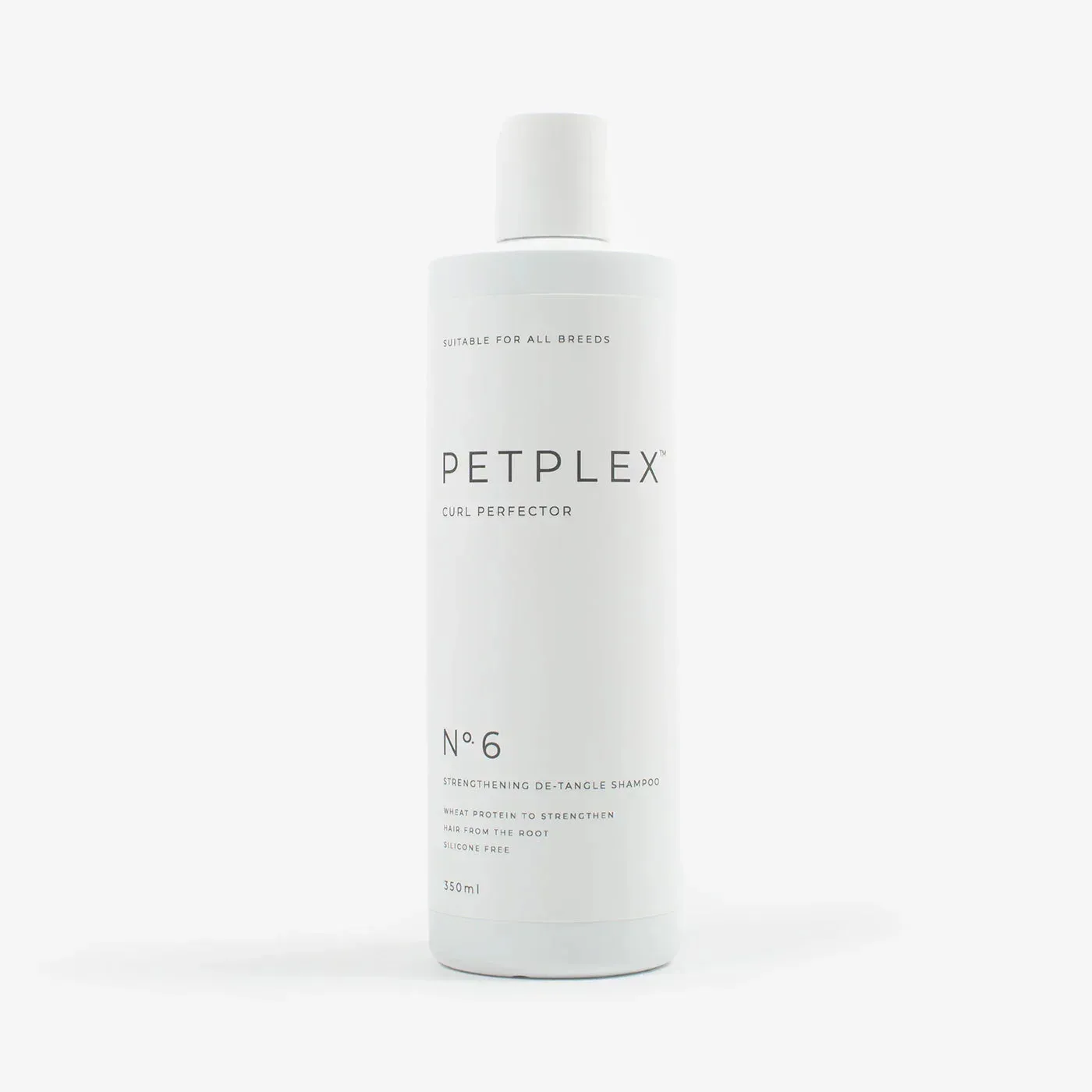
- PetPlex No. 6 Curl Perfector Strengthening De-Tangle Shampoo: PetPlex No. 6 Curl Perfector Strengthening De-Tangle Shampoo is formulated with hydrolysed wheat protein, hydrolysed wheat starch, and glycerin to cleanse, detangle, and improve coat manageability for dogs with woolly, wavy, and textured coats. If your sensitive-skinned dog has a curly or thick coat, this gives you the slip you need to detangle with less pulling, which means less friction on the skin during and after the bath.