Quick answer
Use adhesive hooks or strips rated for the weight of your canvas, apply them to a clean wall, and press firmly before hanging. This method keeps your walls hole-free and is ideal for renters.
Why adhesive hooks work for canvas wraps
Canvas wraps are lighter than framed glass art, so most standard adhesive hooks can support them without sagging. The key is to match the hook's weight rating to your canvas size and choose a hook that grips the frame, not the canvas surface.
Adhesive hooks are not a one-size-fits-all solution. For larger or heavier canvas wraps, you may need multiple hooks or a heavy-duty adhesive strip system. Always check the weight rating and the surface condition of your wall before committing.
Trade-offs to consider
Adhesive hooks are great for smooth surfaces like painted drywall, glass, or tile, but they may fail on textured walls or in humid areas like bathrooms. The adhesive bond weakens over time, especially with temperature changes, so check the hook periodically.
For large canvas wraps, a single adhesive hook may not hold. Use two hooks spaced evenly, or consider a damage-free picture-hanging strip system designed for heavier frames. Always verify the weight rating against your canvas.
Step-by-Step: Hang Your Canvas Wrap Without Nails
- Choose the right adhesive hook: Pick a hook rated for at least 2–3 times the weight of your canvas. For a standard 16×20 canvas wrap, use two adhesive hooks rated for 10 lb (4.5 kg) or more. Avoid suction cups on textured walls. Check the hook's weight rating before you start.
- Mark the placement: Use a pencil to mark where the top corners of the canvas will sit. Hold the canvas against the wall, level it, and mark the top edge lightly. Then measure the distance from the top of the canvas to the hanging point (the top of the frame or the wire) and mark that point on the wall. Use a level to ensure the marks are straight before applying adhesive.
- Prepare the wall surface: Clean the wall with a damp cloth and dry it completely. Adhesive hooks need a smooth, dust-free surface to stick properly. Avoid textured walls, which reduce adhesion. Test the adhesive on a small, hidden area first if you are unsure about the paint finish.
- Apply the adhesive hooks: Press the adhesive hook firmly against the wall for 30 seconds, then wait at least an hour before hanging. Position the hooks so they align with the canvas hanging hardware (wire or sawtooth). Use a level to mark hook placement; a small bubble level prevents a crooked canvas.
- Hang the canvas wrap: Lift the canvas and rest it on the hooks. For heavy or large canvases, use two hooks spaced apart to distribute weight. Check that the canvas is level and adjust the hooks if needed. If the canvas is large, consider using two adhesive hooks rated for at least 5 lb each.
- Check weight limits and wall surface: Adhesive hooks have weight limits, and textured or damp walls may not hold them. Always test the hook's grip by pressing firmly for 30 seconds before hanging. For heavier canvas wraps, use multiple hooks or consider a damage-free hanging strip system.
Canvas wrap considerations
-
Premium Canvas Print: All sizes have a 1.25" depth and use a giclée fine art canvas print with a semi-gloss coating. The 1.25-inch depth means the wrap sits off the wall, so you need adhesive hooks with enough projection or a cleat system to keep the canvas flush and stable.
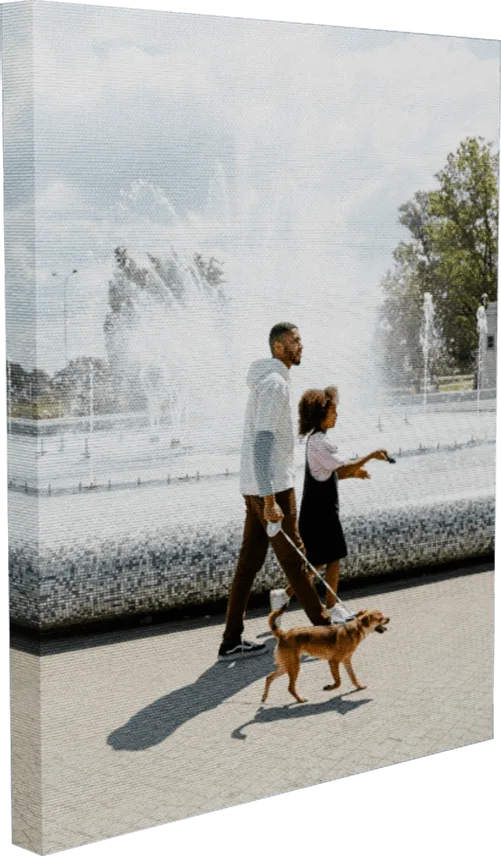
Premium Canvas Print