Quick answer
Put the cave where your cat already relaxes, leave it completely alone for at least three days, and let your cat make the first move. If your cat won't use a new cat cave after that, the problem is almost always placement, scent, or too much handling, not the bed itself. Work through the steps below in order and change only one thing at a time.
Why a new cave can sit empty for days
A cat cave is a small, enclosed space, which is exactly why shy cats love it and exactly why a brand-new one can feel suspicious at first. It smells like a warehouse, a box, and strangers rather than like your home. Cats also rely on routine and known escape routes, so anything new in their territory gets checked before it gets used.
That is normal. The cats who take longest to settle in are usually the ones who need the cave most, so the goal is patience plus a few deliberate moves rather than coaxing, pushing, or relocating the bed every day.
Set up the cave before your cat inspects it
Do the prep work in one sitting so the cave is ready the moment it lands on the floor. Unwrap it, check for loose packing material, and place it in its first spot. Then step back and let your cat do the inspection on their own schedule.
If you have a felt cave, a light rub with a dry cloth removes surface dust without wetting the wool. Skip washing it before first use, since a freshly washed cave smells even less like home.
Seven steps to settle a cat into a new cave
- 1. Pick a spot your cat already uses: Place the cave within arm's reach of a sleeping spot, a sunny patch, or a window your cat already watches. Do not put it in a hallway, next to a washing machine, or in the middle of a busy room. Checkpoint: if you cannot remember seeing your cat relax within a few feet of that spot, choose a different one.
- 2. Swap scent before you introduce the cave: Rub a dry cloth over your cat's cheeks and chin, then wipe it inside the cave. Alternatively, set a favorite blanket inside for a day and then remove it, leaving the familiar smell behind. Common mistake: spraying perfume, air freshener, or scented cleaner on or near the cave. Strong fragrance is a reason to avoid a bed, not a reason to use it.
- 3. Leave the cave alone for three full days: No picking your cat up and placing them inside, no tapping the opening, no moving it closer to where they are hiding. Let them investigate on their own, including at night when the house is quiet. Checkpoint: paws inside, chin resting on the rim, or a single nap all count as progress. Full entry is not required yet.
- 4. Make the entrance easier to trust: If your cat approaches but will not go in, gently widen or fold back the opening a little, or place a favorite toy just inside the rim. Keep the cave's shape intact so it still feels enclosed rather than collapsed. Common mistake: tipping the cave on its side or squashing it flat. That removes the enclosed feeling that makes a cave appealing in the first place.
- 5. Add a familiar layer inside: Place a thin, unwashed blanket or a shirt you have worn inside the cave. Keep it thin so the cave does not become crowded or unstable, and do not add a second bed on top of the first. Checkpoint: if your cat sleeps on the blanket but not in the cave, you are close. Give it another few days before changing anything.
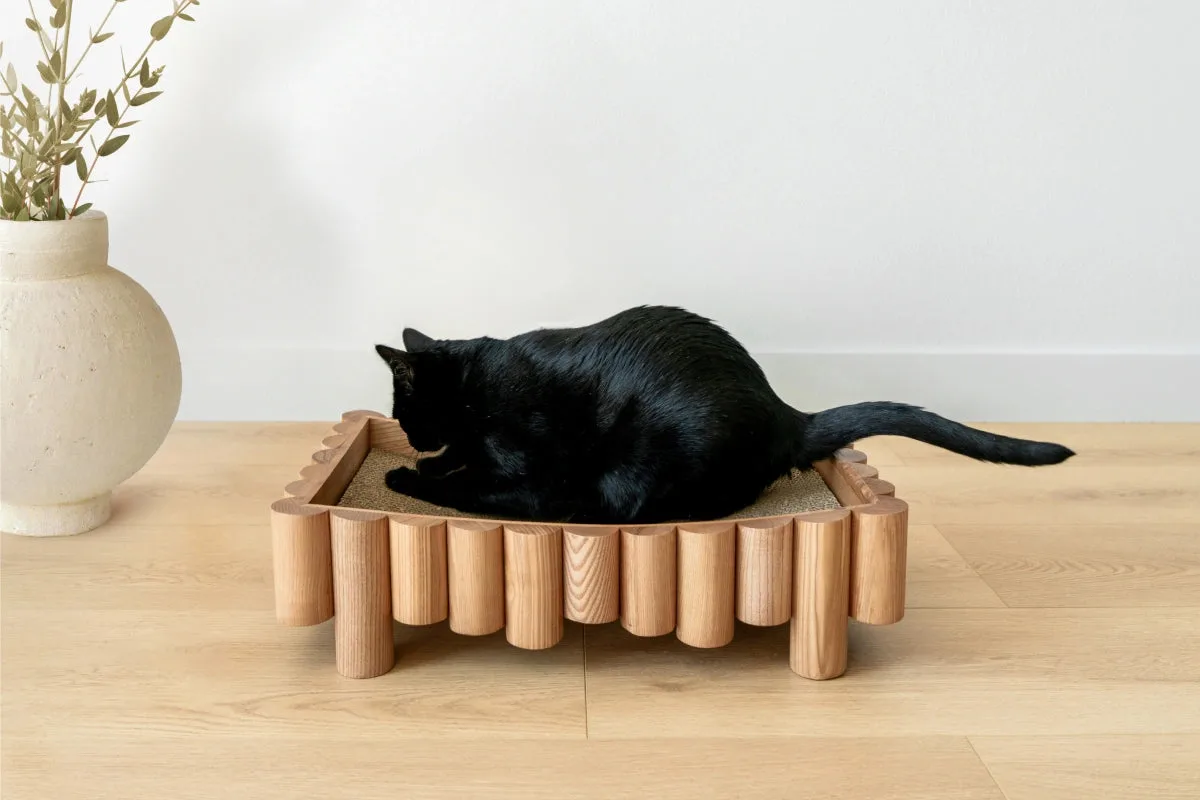
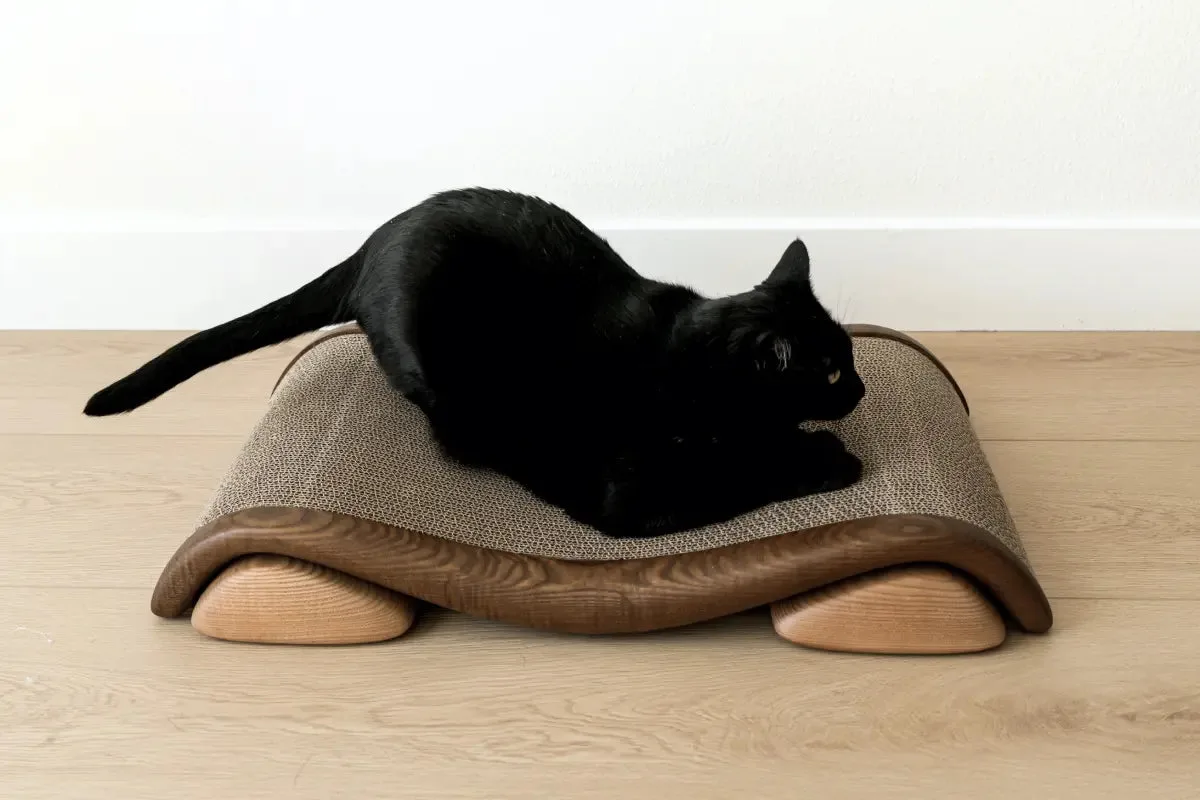
- 6. Offer a nearby alternative instead of forcing the cave: Some cats want to scratch and stretch before they want to hide. A curved scratcher with a contained nook, or a contoured piece they can lean into, gives them a comfortable option a few feet away while the cave stays available. Common mistake: removing the cave because the alternative got used. Cats often adopt the cave weeks later once it has stopped being new.
- 7. Stop moving the cave and reassess after two weeks: Once your cat shows any interest, leave the cave in place. If two weeks pass with zero contact, change one variable only: move it to a quieter corner, or swap the blanket inside, then wait again. Next step: if your cat avoids all enclosed spaces, including boxes, that is a preference rather than a training problem, and an open contoured bed is the better fit.
Mau caves and scratchers that suit a settling-in period
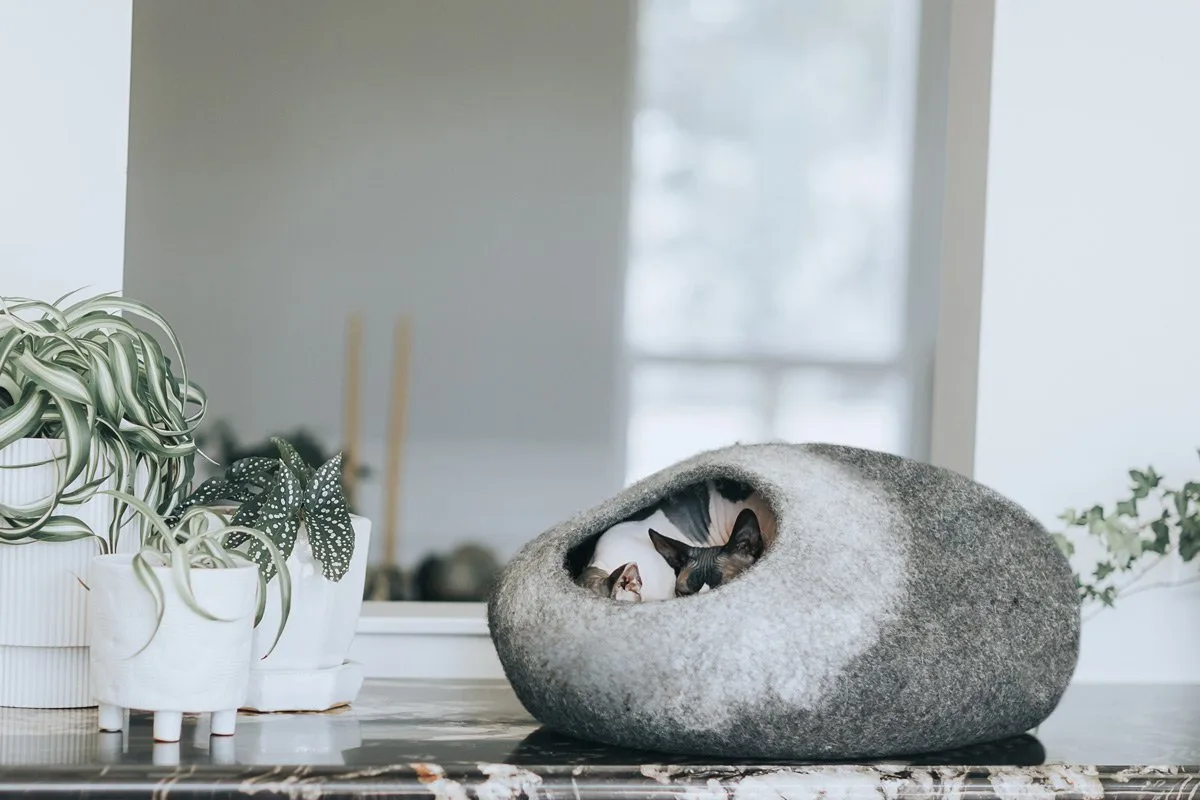
- Skyline Cat Cave: The Skyline Cat Cave is made of wool felt and designed with a calming gradient inspired by the skyline. Wool felt is a material many cats take to quickly, and the gradient finish means the cave can sit in a living room without looking like pet gear.
- Bambu: Bambu is a scratcher made from premium solid ash wood with elevated walls and a gently curved design that creates a contained nook for lounging, with shredded cardboard bits kept enclosed. If your cat ignores an enclosed cave but loves to scratch and stretch, a curved scratcher with a contained nook gives them a nearby alternative that still keeps mess off the floor.
- Groove: Groove is designed to contour to your cat's body and movement, inviting them to scratch, stretch, and unwind. A contoured piece can work as a stepping-stone for cats who will not enter a fully enclosed cave yet, because it offers contact and stretching without a closed roof.