Quick answer
Measure your mattress depth and bed length, then attach the bedrail according to the manufacturer's instructions, making sure it locks securely and leaves no gaps.
Why bedrail installation matters for toddler safety
A properly installed bedrail prevents your toddler from rolling off the bed during the night. But a rail that's fitted too loosely or at the wrong height can create a gap where your child could get trapped. Getting the measurement and attachment right is key to making the 'big kid bed' transition safer.
Step-by-step installation guide
- 1. Measure your mattress depth and bed length: Use a measuring tape to confirm your mattress depth (from the top of the mattress to the bottom of the box spring) and the length of the bed frame. Check the bedrail's minimum and maximum mattress depth specs – most models require at least 10 cm and no more than 26 cm. A too-thick or too-thin mattress will prevent the rail from locking securely.
- 2. Position the bedrail against the bed frame: Slide the bedrail under the mattress so the bottom lip sits flush against the bed frame or slats. Center the rail along the side of the bed. For portable rails, ensure the folded-down position allows easy access when not in use. Align the rail so it's straight – a crooked rail wastes coverage and may wobble.
- 3. Tighten the straps or locking mechanism: Most bedrails use adjustable straps or a tension lock that you tighten until the rail feels firmly attached. Pull each strap evenly so the rail doesn't tilt. For auto-lock models, you should hear a click when the rail reaches the upright position. A loose strap is the most common mistake – after tightening, try lifting the rail by hand; it should not move up or sideways.
- 4. Check for gaps between the mattress and rail: Push the bedrail firmly against the side of the mattress. There should be no gap wide enough for your child's body (more than a finger width) to squeeze through. If there is a gap, adjust the mattress position or rail placement. Even a small gap can become a trapping hazard as your toddler moves during sleep.
- 5. Test the rail with gentle pressure: Press down on the rail from the top and push it sideways. A correctly installed rail will not shift or collapse. If you feel any movement, re-tighten the straps or adjust the tension lock. Test again after a few nights – the mattress may settle and loosen the straps slightly.
What to look for in a bedrail
-
Safety 1st Portable Bed Rail - Dark Grey: The Safety 1st Portable Bed Rail fits standard and slatted beds with a minimum length of 156 cm and mattress depth between 10 cm and 26 cm. This portable option is ideal if you travel often, but double-check your mattress thickness before buying or installing.
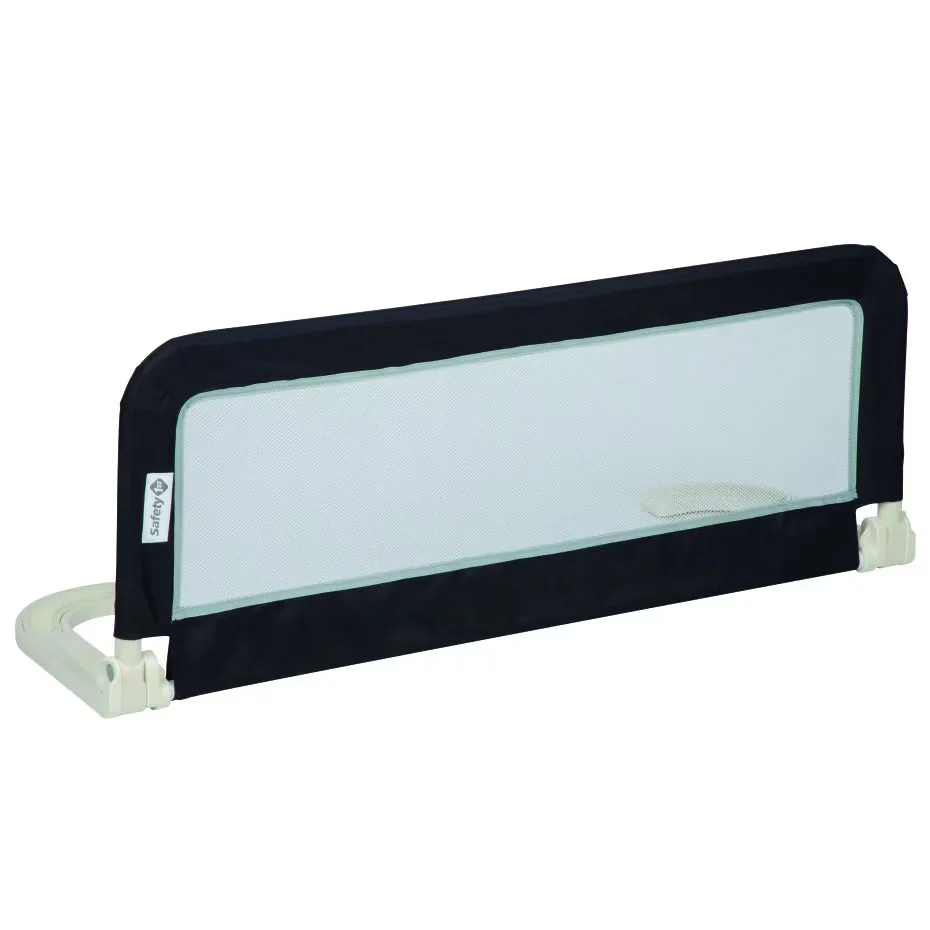
Safety 1st Portable Bed Rail - Dark Grey
-
Safety 1st Extra Large Bed Rail: The Safety 1st Extra Large Bed Rail (150 cm) locks automatically in the upright position, making it very safe and simple to use. Longer rails cover more of the bed side, reducing the chance your toddler slips past the end, but they require a bed that's long enough to accommodate them.
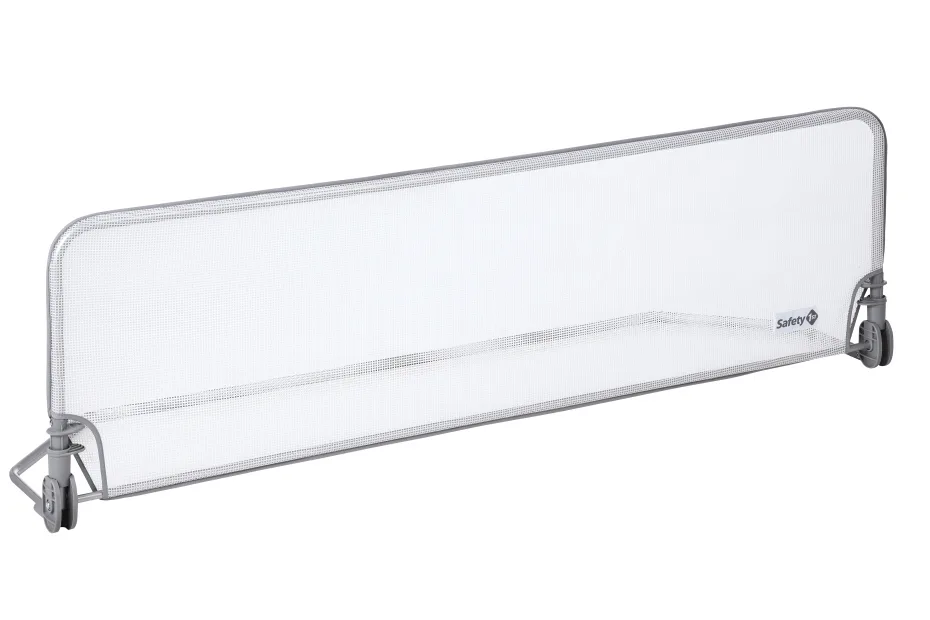
Safety 1st Extra Large Bed Rail
-
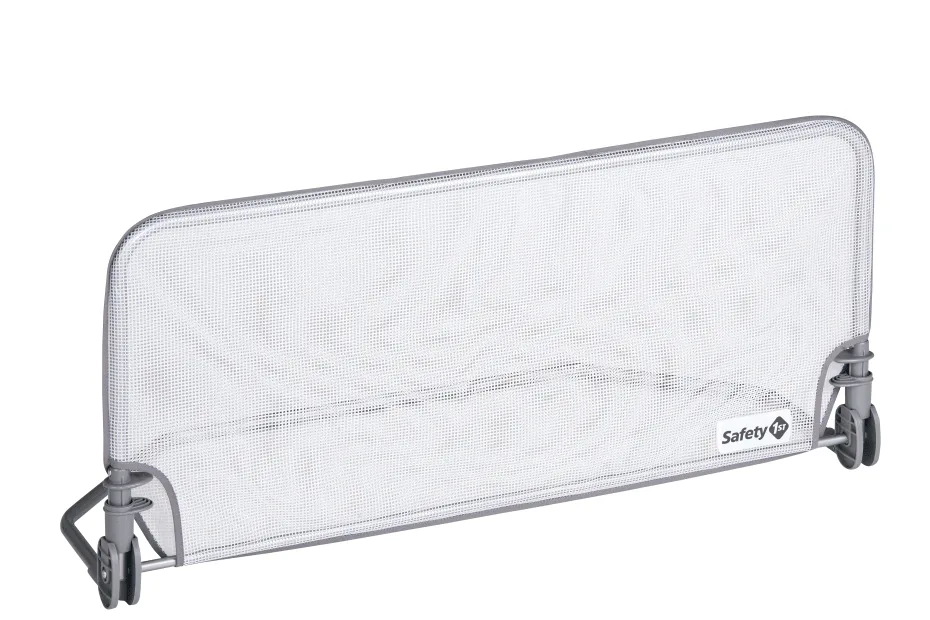
Safety 1st Standard Bed Rail: The Safety 1st Standard Bed Rail (95 cm) also locks automatically when upright and is designed for easier crib-to-bed transition. A shorter rail works well for twin beds or when you only need partial coverage, but you may need a second rail for full-length protection on a larger bed.