Quick answer
Wool sleep sacks like the Disana Wool Sleep Sack are safe, breathable, and long-lasting when you follow a simple routine: lanolize before first use, wash only when needed, and check fit by neck and arm openings.
Why wool sleep sacks need different care than cotton or synthetic
Wool is naturally temperature-regulating and moisture-wicking, which means it can keep your baby comfortable in a wider range of room temperatures. Unlike synthetic sleep sacks, wool does not need frequent washing — in fact, over-washing damages the wool fibers and reduces its breathability.
The main trade-off is that wool requires occasional lanolizing to maintain its water resistance and self-cleaning properties. This extra step is simple once you know it.
How to use a wool sleep sack
- 1. Lanolize before first use: Dissolve a pea-sized amount of lanolin in warm water, then soak the sleep sack for 15 minutes. Gently squeeze (do not wring) and lay flat to dry. This restores the wool's natural water resistance and makes it self-cleaning. Skipping this step means the sack may not repel moisture and could require washing sooner.
- 2. Check the fit every time: The neck opening should be snug enough that you cannot pull it over your baby's chin, and the arm openings should allow free movement without being loose. Wool stretches slightly with use, so a proper fit today may loosen over weeks. If the neck opening is too large, use a smaller size or add a wool shortie underneath for a safer fit.
- 3. Wash only when soiled or once a month: Wool self-cleans: air it out overnight between uses. When a wash is needed, use a wool-specific detergent on a gentle cycle with cold water, then lay flat to dry. Never use hot water or fabric softener. Over-washing strips lanolin and reduces the sack's lifespan. Spot-clean small stains instead.
- 4. Re-lanolize after every 3–5 washes or when water stops beading: When the wool no longer repels light moisture (test by sprinkling a few drops of water), it's time for a fresh lanolin soak. This keeps the sack breathable and stain-resistant. A well-lanolized sack can go weeks between washes, saving you time and preserving the fabric.
Product featured in this guide
-
Disana Wool Sleep Sack: The Disana Wool Sleep Sack has soft jersey knit wool inside (newer version) instead of cotton, which reduces wicking and the need for washing. Less washing means the sleep sack stays effective longer and requires less maintenance — ideal for busy parents.
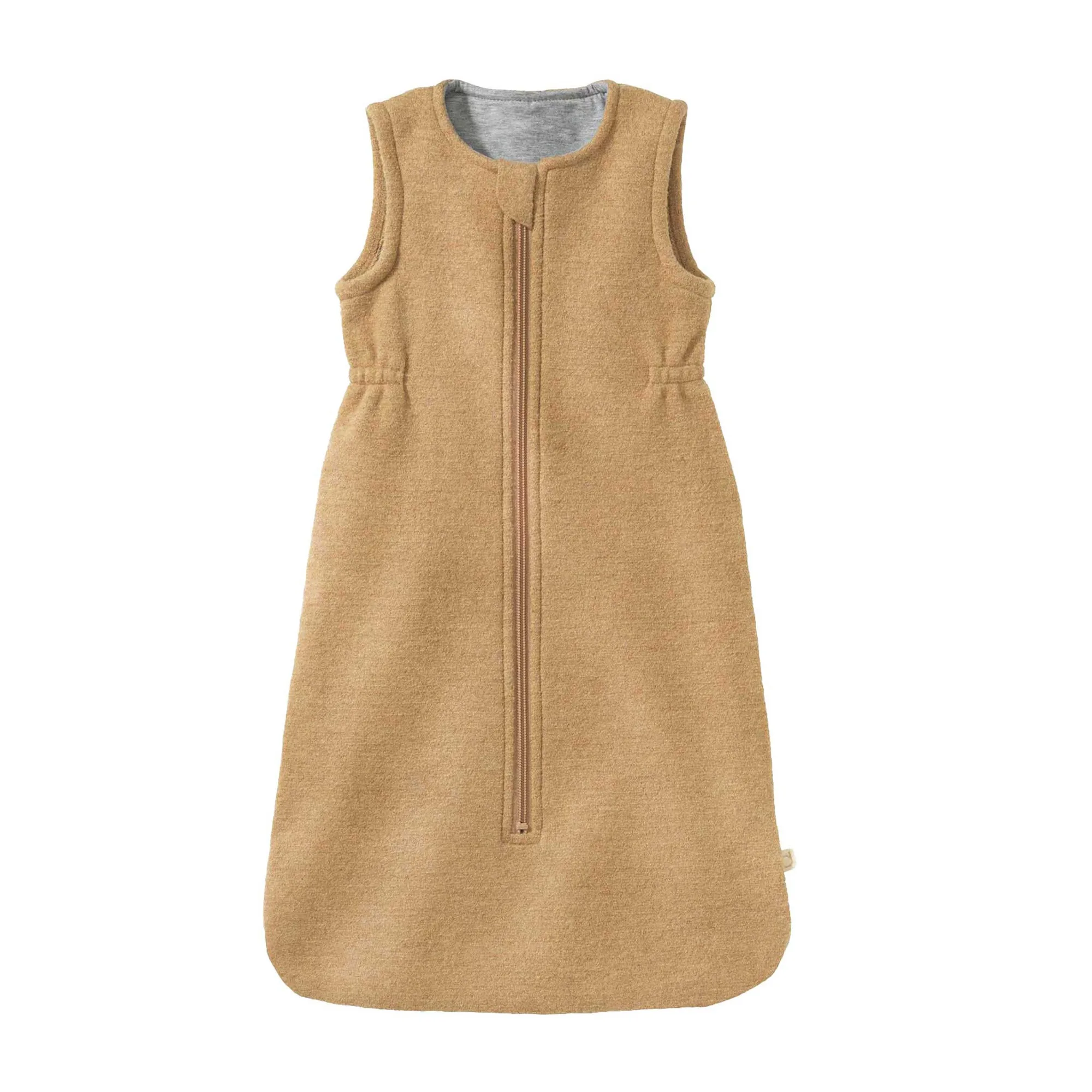
Disana Wool Sleep Sack