Quick answer
Install the lever door lock on the handle side of the door, at a height your toddler can reach but you can easily operate, and test that the lever cannot be pulled down before you rely on it.
Why lever handles need a different approach than round knobs
Lever handles are easier for small hands to pull down than round knobs, so a lock that blocks the lever's downward motion is more effective than a cover that only adds bulk. This is why a dedicated child safety door lock for lever handles is worth choosing over a generic knob cover.
The Regalo Home Safety Lever Door Lock is designed to prevent little ones from pulling down on door handles while staying simple for adults to use. Its slim design blends into the door, which matters if you are baby proofing lever handles in visible areas of the home.
When a lever lock is the right choice, and when it is not
Use a lever lock on interior doors where a toddler can reach the handle and where you want to stop access to a bathroom, closet, laundry room, or stairwell. It is not a substitute for a safety gate at the top of stairs, and it is not intended for exterior doors or doors that must open freely in an emergency.
Check your door handle style first. The Regalo lever lock is made for lever handles; if your door has a round knob, you need a different style of child safety door lock. Also confirm that the lock does not interfere with the door closing fully or with any existing deadbolt.
Step-by-step lever door lock installation
- Check the door and handle type: Confirm the door has a lever handle, not a round knob, and that the door closes squarely in its frame. Open and close the door a few times to see whether the handle or latch catches. If the door does not close cleanly, fix that first; a lock will not compensate for a misaligned door.
- Choose the mounting height: Position the lock so it blocks the lever from being pulled down but remains comfortable for an adult to release. A common mistake is mounting it too high, which leaves the lever reachable, or too low, which makes daily use awkward. Test the height with your own hand before attaching anything.
- Clean and dry the mounting surface: Wipe the door and handle area with a damp cloth and let it dry completely before applying any adhesive or tightening hardware. Dust and moisture are the most common reasons a lock shifts or fails to hold. Skip this step and you may have to redo the installation within days.
- Install the lock according to the included instructions: Follow the manufacturer's directions for your specific lever lock rather than guessing. If the lock uses adhesive, press firmly and wait the recommended time before testing; if it uses screws, tighten until snug without overtightening. Do not test the lock immediately after an adhesive install; give it the full cure time.
- Test the lock from a toddler's perspective: With the lock engaged, try to pull the lever down using only the amount of force a small child could apply. Then release the lock as an adult would and confirm the door opens smoothly. If the lever still moves enough to open the door, reposition or adjust the lock before relying on it.
- Recheck monthly and after cleaning: Add the lock to your regular baby proofing check. Look for loosening, adhesive lifting, or any change in how the door closes, and retighten or reinstall as needed. A lock that worked last month can loosen quietly; a monthly two-second test catches it.
Product facts
-
Home Safety Lever Door Lock: Model #6111 W is a lever door lock designed to stop toddlers from pulling down on door handles. It targets the exact motion toddlers use on lever handles, so it is more relevant than a knob cover for this door type.
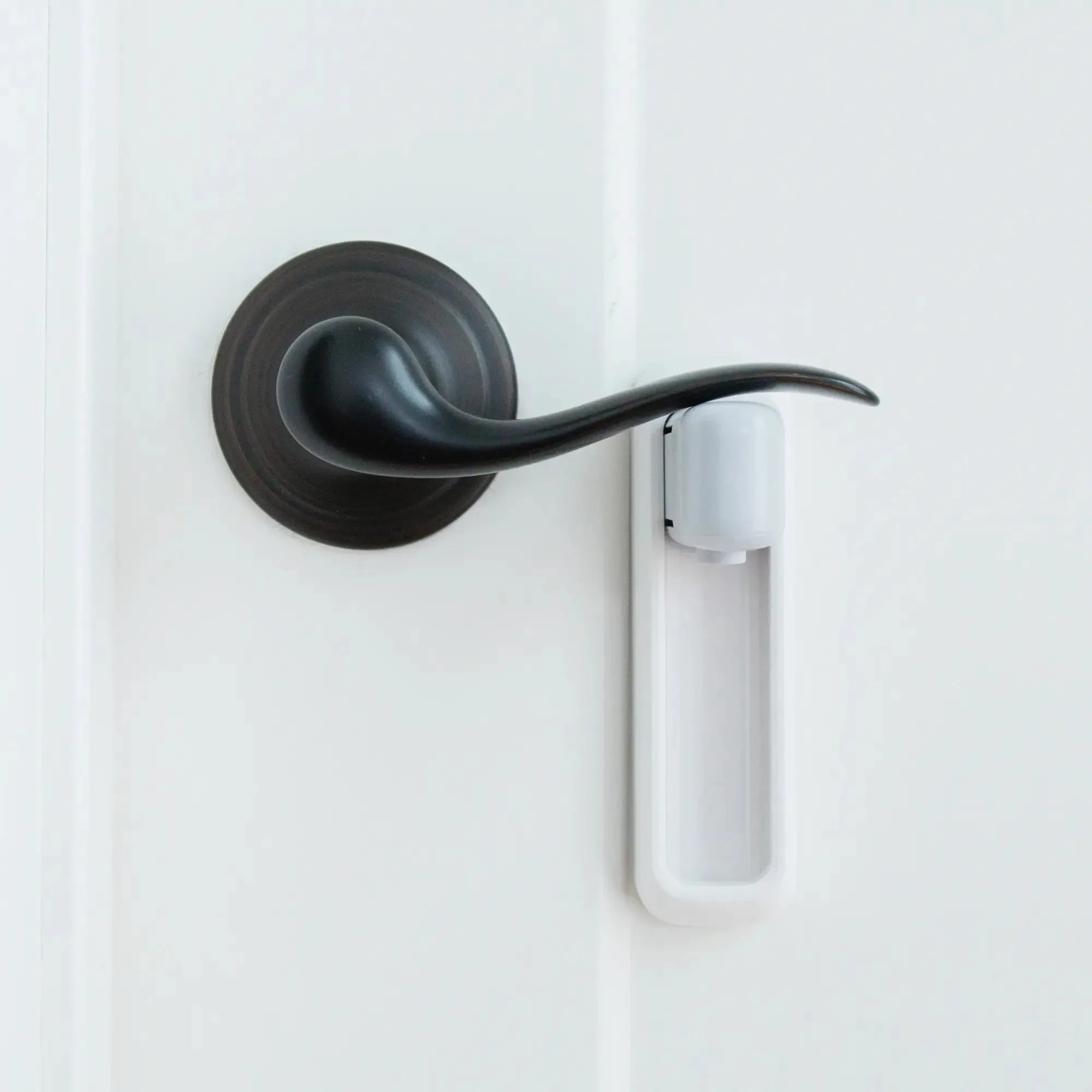
Home Safety Lever Door Lock