Quick answer
Start with a small set of large magnetic tiles, play together on the floor, and model simple flat builds before vertical ones. Keep sessions short, check tiles for damage before and after play, and always supervise. This approach builds confidence and safety from the first introduction.
Why magnetic tiles suit toddler play
Magnetic tiles snap together with a satisfying click, which gives toddlers immediate feedback and helps develop fine motor skills. They are open-ended, so a toddler can explore without a fixed goal. For safe magnetic toys, choose tiles sized for small hands and free of loose small parts. MAGNA-TILES are designed for ages 3 and up, so if your child is younger, treat them as a supervised activity and store them out of reach between sessions.
Setting up a toddler-safe play space
Pick a clear floor area with a soft rug or play mat to cushion falls and reduce noise. Remove other small toys that could distract or become choking hazards. Keep the tile set in a low bin so your toddler can help put them away, but secure the bin between playtimes. If you have older children, separate their smaller magnetic sets from the toddler tiles to avoid mixing sizes.
Choosing the right first set
For a first magnetic tiles experience, fewer pieces can be better. A set with large squares and triangles is easier for toddlers to handle and less overwhelming. The MAGNA-TILES House 28-Piece Set includes unique door and staircase pieces plus a sheet of reusable stickers with 20 home-related images, which can make pretend play more engaging for a toddler who is just starting to build. Avoid sets with very small pieces until your child is past the mouthing stage.
Step-by-step introduction plan
- Step 1: Check tiles before every play session: Inspect each tile for cracks, loose magnets, or sharp edges. Magnetic tiles are sealed, but rough play can damage them. If a tile is broken, remove it immediately. Common mistake: assuming tiles are indestructible. A quick check prevents accidents.
- Step 2: Start with free exploration, not instructions: Give your toddler two or three large tiles and let them handle, stack, and separate them. Sit nearby and narrate what they do. This builds comfort with the magnetic click. Checkpoint: if your child loses interest in a few minutes, that is normal. Try again another day.
- Step 3: Model one simple flat build: Show how to connect two squares to make a rectangle, or a square and triangle to make a house shape. Keep it flat on the floor at first. Let your toddler copy or knock it down. Common mistake: building a tall tower too soon. Flat builds are easier to manage and less frustrating.
- Step 4: Introduce vertical building with support: Once flat builds are familiar, help your toddler stack tiles upward. Hold the base steady while they add pieces. Celebrate each addition, even if it falls. Checkpoint: if your toddler gets upset when structures fall, switch back to flat play for a while.
- Step 5: Add pretend play with stickers or special pieces: Use the reusable stickers from the House 28-Piece Set to turn a square into a window or a triangle into a roof. This extends play and language development. Common mistake: expecting a toddler to follow a specific build. Let them lead the story.
- Step 6: End with a clean-up routine: Sing a clean-up song and put tiles back in the bin together. Count the pieces as you go to make it a game. Store the bin out of reach. Checkpoint: a consistent routine makes transitions easier and keeps tiles safe between sessions.
Product facts to know
- House 28 Piece Set: Includes a sheet of reusable stickers with 20 home-related images and unique door and staircase pieces. The stickers and special pieces can turn simple tile builds into a house, giving toddlers a clear pretend-play focus.
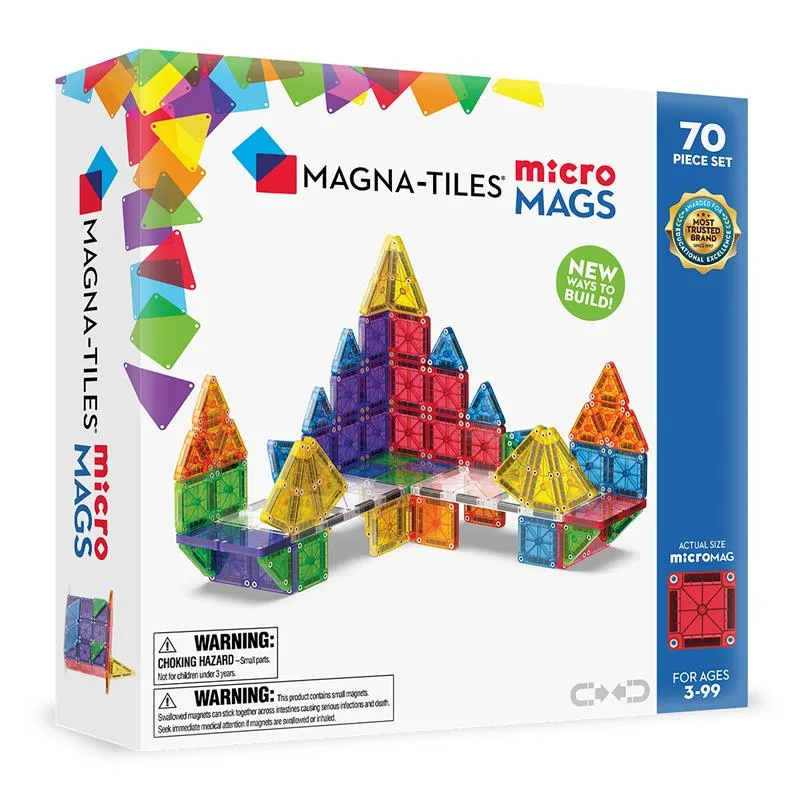
- microMAGS™ 70 Piece Set: microMAGS pieces are 75% smaller than traditional MAGNA-TILES pieces. Because they are smaller, microMAGS are not ideal as a first set for toddlers who still mouth toys; save them for older children or supervised play once past that stage.