Quick Answer
Start with a simple marble run set that matches your child's age and fine motor skills. Begin by building together, then gradually encourage independent play. Choose sets that are compatible with other building blocks for long-term value.
Marble runs are more than just toys—they teach cause and effect, spatial reasoning, and patience. If you're new to marble runs, the variety of sets and pieces can be overwhelming. This guide walks you through introducing marble runs to your child step by step, from choosing the first set to troubleshooting common challenges.
Whether you're looking for a marble run for beginners or want to expand an existing collection, these practical tips will help you and your child enjoy marble runs without frustration.
Why Marble Runs Are Great for Kids
Marble runs are a fantastic educational toy for children. They help develop hand-eye coordination, logical thinking, and creativity. As children experiment with different track configurations, they learn about gravity, momentum, and cause and effect. These skills are essential for STEM learning and problem-solving.
Moreover, marble runs offer endless possibilities for open-ended play. Unlike many electronic toys, marble runs encourage children to build, test, and rebuild, fostering resilience and a growth mindset. They can be enjoyed alone or with siblings and friends, promoting social skills and collaboration.
- Marble runs are suitable for a wide age range, but always check the manufacturer's age recommendation for safety.
Choosing the Right Marble Run for Beginners
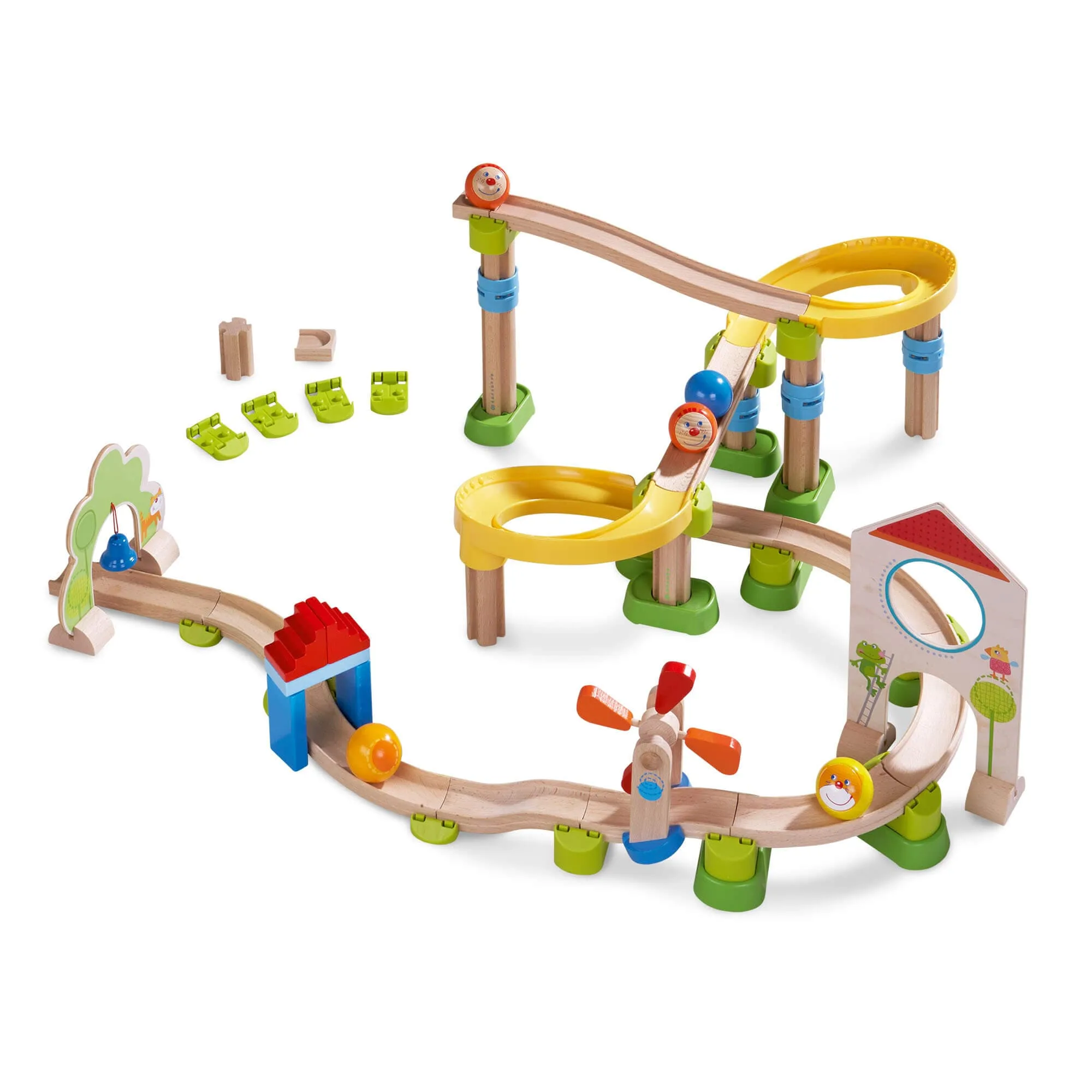
When selecting a marble run for a beginner, consider the child's age and experience. For young children (3-5 years), look for sets with large pieces that are easy to handle and assemble. For older children, more complex sets with multiple tracks and elements can be more engaging.
Compatibility is another key factor. Some marble runs, like HABA's, are designed to be compatible with other building blocks, allowing you to expand the set over time. This not only extends the toy's life but also encourages creativity as your child integrates marble runs into other block constructions.
- Check the number of pieces and the complexity of the assembly. A good beginner set should have clear instructions and not be too overwhelming.
Setting Up for Success: Preparation Tips
Before you start, find a flat, stable surface where the marble run won't be easily knocked over. A large table or a clean floor area works well. Ensure there is enough space for the marble run to spread out, especially if you plan to expand it later.
Sort the pieces by type (tracks, blocks, marbles) and lay them out. This helps your child understand what they have and makes the building process less chaotic. Also, keep spare marbles handy, as they can roll away easily.
- Use a tray or a shallow container to keep marbles contained while building.
Step-by-Step: Building Your First Marble Run Together
Start with a simple structure that you can build together. Show your child how to connect the pieces and demonstrate how a marble travels down the track. Encourage them to place a few pieces themselves, guiding their hands if needed.
Once the basic run is built, let your child test it. If the marble doesn't make it all the way, ask questions like 'Where do you think it got stuck?' and 'What can we change?' This encourages problem-solving and critical thinking.
- Celebrate small successes. If the marble completes the run, cheer and encourage your child to try modifying the track to make it even more fun.
Encouraging Independent Play and Creativity
After your child is comfortable with the basics, step back and let them experiment on their own. Provide a variety of pieces and let them decide what to build. Avoid correcting them immediately; instead, let them discover what works and what doesn't.
To spark creativity, suggest challenges like 'Can you make a run that takes the marble the longest time to reach the bottom?' or 'Can you build a run that goes under a chair?' These prompts encourage imaginative thinking and problem-solving.
- Rotate the marble run sets you have available to keep the play fresh. Adding new elements, like a musical track, can reignite interest.
Troubleshooting Common Marble Run Frustrations
It's common for marbles to jump off the track or for structures to collapse. When this happens, reassure your child that it's part of the learning process. Ask them to observe why it failed and what they can do differently.
Another common issue is that marbles get stuck. Teach your child to check for any misaligned pieces or gaps. Sometimes, simply adjusting the angle of a track can solve the problem. These troubleshooting skills are valuable beyond marble play.
- If your child gets frustrated, suggest taking a break and returning later with a fresh perspective.
Expanding the Fun: Add-Ons and Advanced Sets
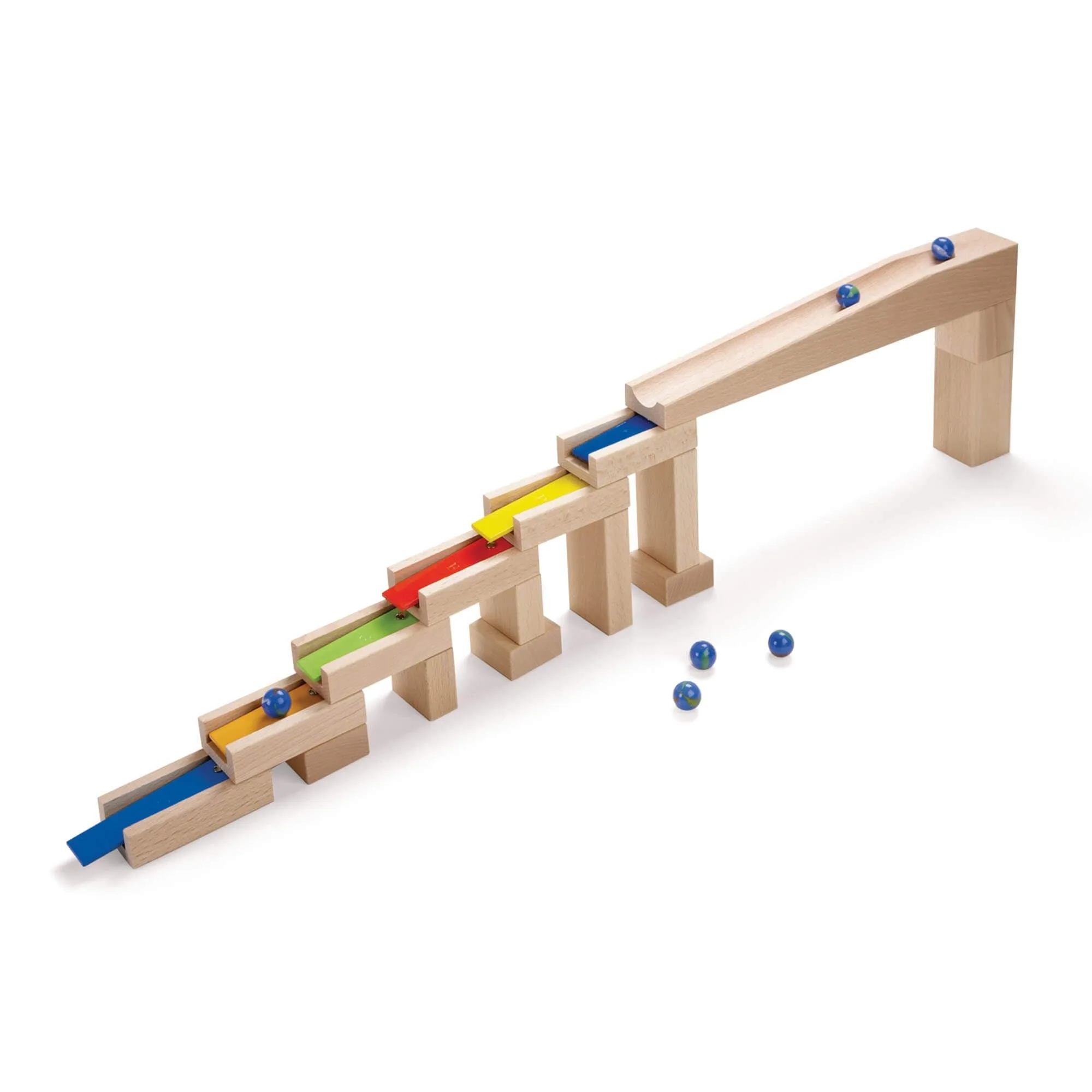
Once your child masters a basic marble run, consider expanding with add-ons or larger sets. These introduce new elements like loops, jumps, and musical components, adding variety and complexity. For example, a musical steps track can add an auditory dimension to play.
When choosing an expansion, ensure it is compatible with your existing set. Many brands offer add-ons that work with their core sets, but it's always good to double-check. This way, you can build larger, more intricate runs over time.
- Look for add-ons that offer new challenges but are still age-appropriate to avoid frustration.
Step-by-Step Introduction Plan
- Start with a simple set: Choose a marble run with a manageable number of pieces and clear instructions. For very young children, opt for sets with larger pieces that are easy to grip. Check the recommended age and ensure the set is not too complex for your child's skill level.
- Build together first: Show your child how to connect pieces and assemble a basic track. Let them place some pieces themselves, guiding as needed. This collaborative approach builds confidence and teaches the basics of construction.
- Test and troubleshoot: Run a marble through the track and observe what happens. If it fails, ask your child to identify the problem and suggest fixes. Encourage problem-solving rather than immediately fixing it for them.
- Encourage independent building: Once your child is comfortable, let them build on their own. Provide a variety of pieces and let them experiment freely. Resist the urge to correct; let them learn through trial and error.
- Introduce challenges: Suggest specific goals like making a run that takes the longest time or includes a loop. This keeps play engaging and develops creativity. Challenges help children apply their knowledge in new ways.
- Expand with add-ons: When your child masters the basic set, consider adding new elements like musical tracks or more complex run elements to extend the play value. Ensure new pieces are compatible with your existing set to avoid frustration.
Product Facts
- Marble Run Add On - Musical Steps Track: This add-on includes 1 track, 9 building blocks, 6 melodious blocks, and 6 marbles. The melodious blocks are pentatonically tuned, forming a pentatonic scale when arranged correctly. This add-on introduces musical exploration, adding a new sensory dimension to marble runs. It's ideal for children who enjoy experimenting with sounds and can be combined with other HABA building blocks.
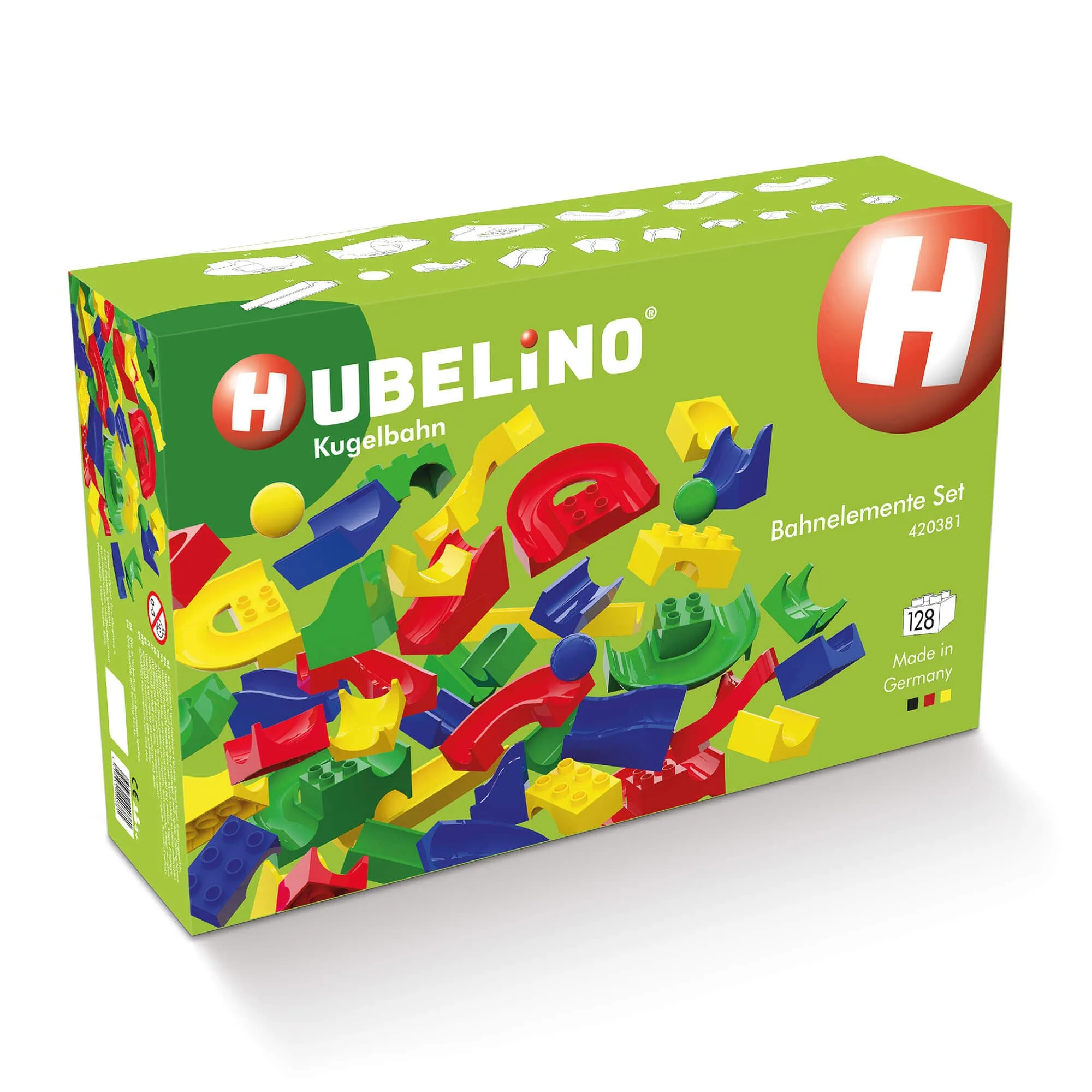
- Hubelino 128-Piece Run Elements Set: This accessory set includes 128 track segments, allowing you to create massive structures and gigantic marble runs. It includes all run elements needed to build the marble runs from the Mini Building Box and Basic Building Box. For children who have outgrown their first marble run, this set offers endless possibilities for expansion. It's a great investment for families who want to build larger, more complex runs over time.
Introducing marble runs to your child is a rewarding journey. By starting with the right set, building together, and gradually encouraging independence, you'll help your child develop valuable skills while having fun. Remember to be patient and let your child lead the way—you might be surprised at their creativity. With the right approach, marble runs can become a beloved toy that grows with your child.