Quick answer
Plan stroller walks around your baby's awake window, bring one or two sensory toys you can attach and swap, and give your baby chances to look, reach, and chew along the way. If your baby starts fussing, check comfort first — sun, straps, temperature, or a dirty diaper — before adding more entertainment. A simple rotation of stroller toys and a consistent walk routine usually solves most mid-walk meltdowns.
A stroller walk should be a break for both of you, but it can turn into a one-handed juggling act fast. The fix is not more toys — it is a repeatable routine that matches what your baby can actually do at their current stage.
This guide walks through seven steps for stroller entertainment baby parents can rely on, from picking the right time of day to choosing stroller toys that attach, stay put, and clean up easily. Each step includes the mistake that most often undermines it.
Why stroller walks get hard (and what actually helps)
Stroller walks fail for predictable reasons: your baby is tired, hungry, uncomfortable, or bored with the same view. Entertainment only solves the last one. Before you add another toy, run through the basics — is the sun in their eyes, are the straps digging in, is it too warm, is the diaper clean, have they eaten recently?
Once comfort is handled, stimulation is about matching the toy to the stage. A newborn mostly needs things to look at and listen to. A 4- to 6-month-old wants to grab, mouth, and shake. A toddler wants to feel useful and independent. Choosing one toy that fits the stage beats clipping on five that do not.
- Check comfort first: shade, straps, layers, and diaper.
- Match the toy to what your baby can do right now, not what they will do next month.
- Keep the walk short enough that you end on a good note.
Step 1: Time the walk around the awake window
The single biggest predictor of a calm stroller walk is timing. Aim for the window after a feed and a diaper change but before the next nap — usually 30 to 90 minutes of happy awake time for younger babies. If you leave too close to nap time, no toy will hold attention.
Watch for early tired cues: slowing movements, turning away, or a sudden quiet. That is your signal to head home rather than push through. A 20-minute walk that ends calmly is worth more than a 45-minute walk that ends in tears.
- Common mistake: starting the walk right after a feed without burping, which can make the stroller ride uncomfortable.
Step 2: Build a small, rotating toy kit
You do not need a full toy bag. Three to four small items that attach to the stroller or clip to a strap are enough, and rotating them every few days keeps them feeling new. Look for toys that are lightweight, easy to wipe, and safe to mouth, since everything ends up in your baby's hands and then their mouth.
A clip-on sensory toy, a rattle teether, and one soft or crinkly item cover most stages. Keep the kit in the stroller basket so you are not hunting for it at the door.
- Common mistake: bringing toys with long cords or detachable small parts that can fall on the sidewalk and disappear.
Step 3: Attach toys where your baby can actually reach them
Placement matters more than the toy itself. For younger babies, hang toys on the canopy or a bar in their line of sight. For babies who are grabbing, attach toys to the side of the seat or the tray so their hands can find them without twisting. For toddlers, keep one toy within reach and let them choose when to pick it up.
Test the position before you leave: sit or stand where your baby sits, and check whether the toy is reachable without straining against the harness.
- Common mistake: clipping toys behind the baby's head, where they cannot see or reach them.
Step 4: Use the walk itself as entertainment
You are the best toy in the stroller. Narrate what you pass, point out dogs, trees, and trucks, and pause at interesting spots. This is on-the-go baby play that costs nothing and builds language. For toddlers, give them a job: spot three red cars, find a bird, or hold the snack cup.
Changing your route occasionally also resets attention. A new street with different sounds and sights buys you another stretch of calm.
- Common mistake: walking the same silent loop every day and expecting a toddler to stay content.
Step 5: Handle teething and mouthing on the move
If your baby is chewing their hands, the stroller strap, or their shirt, they may be teething rather than bored. A textured teether clipped within reach gives them something safer to gnaw on. Silicone teethers are easy to wipe down after the walk, which matters when they have been on the sidewalk-adjacent end of a strap.
Keep a small wet bag or wipe pouch in the stroller so you can clean a dropped teether instead of ending the walk early.
- Common mistake: assuming fussiness is boredom when it is actually gum pain.
Step 6: Plan a mid-walk reset
Most babies need one reset on a longer walk. Stop, unclip, and hold them for a minute, or let a toddler out to walk a short, safe stretch. This breaks the monotony and gives them a change of position. If you are in a safe, enclosed spot, a brief stretch of independent movement can reset mood for the rest of the walk.
A reset is not a failure. It is a scheduled part of the routine that prevents a bigger meltdown later.
- Common mistake: waiting until the crying is full-volume before stopping, which makes it harder to recover.
Step 7: End on a good note and reset the kit
When you get home, wipe down anything that was mouthed, restock the stroller kit, and note what worked. Over a week or two, you will see a pattern: which toy gets the most reach, which time of day is easiest, and how long your baby lasts before needing a reset.
That pattern is your real stroller walk plan. Adjust the route, the timing, and the toy rotation based on what you actually observed rather than what worked for someone else's baby.
- Common mistake: leaving the same toy clipped on for weeks, which makes it invisible to your baby.
Your 7-step stroller walk routine
- Time the walk to the awake window: Leave after a feed and diaper change, before tired cues start, and keep the first walks short. Checkpoint: if your baby is already rubbing eyes or turning away, shorten the route.
- Pack a three-item toy kit: One clip-on sensory toy, one rattle teether, and one soft or crinkly item, kept in the stroller basket. Checkpoint: everything should be wipeable and safe to mouth.
- Attach toys within reach: Hang toys in the line of sight for younger babies and on the side or tray for grabbers. Checkpoint: test reach from your baby's position before you leave.
- Narrate and point things out: Treat the walk as on-the-go baby play: name what you see and give toddlers a spotting job. Checkpoint: change the route when attention starts to fade.
- Offer a teether for mouthing: If your baby is chewing hands or straps, clip a textured silicone teether within reach. Checkpoint: keep a wipe or wet bag for dropped teethers.
- Schedule one mid-walk reset: Stop, unclip, and hold your baby, or let a toddler walk a safe stretch before fussing escalates. Checkpoint: reset early rather than waiting for full-volume crying.
- Reset the kit when you get home: Wipe mouthed items, restock the stroller, and note which toy and time worked best. Checkpoint: rotate the toy every few days so it stays interesting.
Stroller-friendly picks from the Nuby range
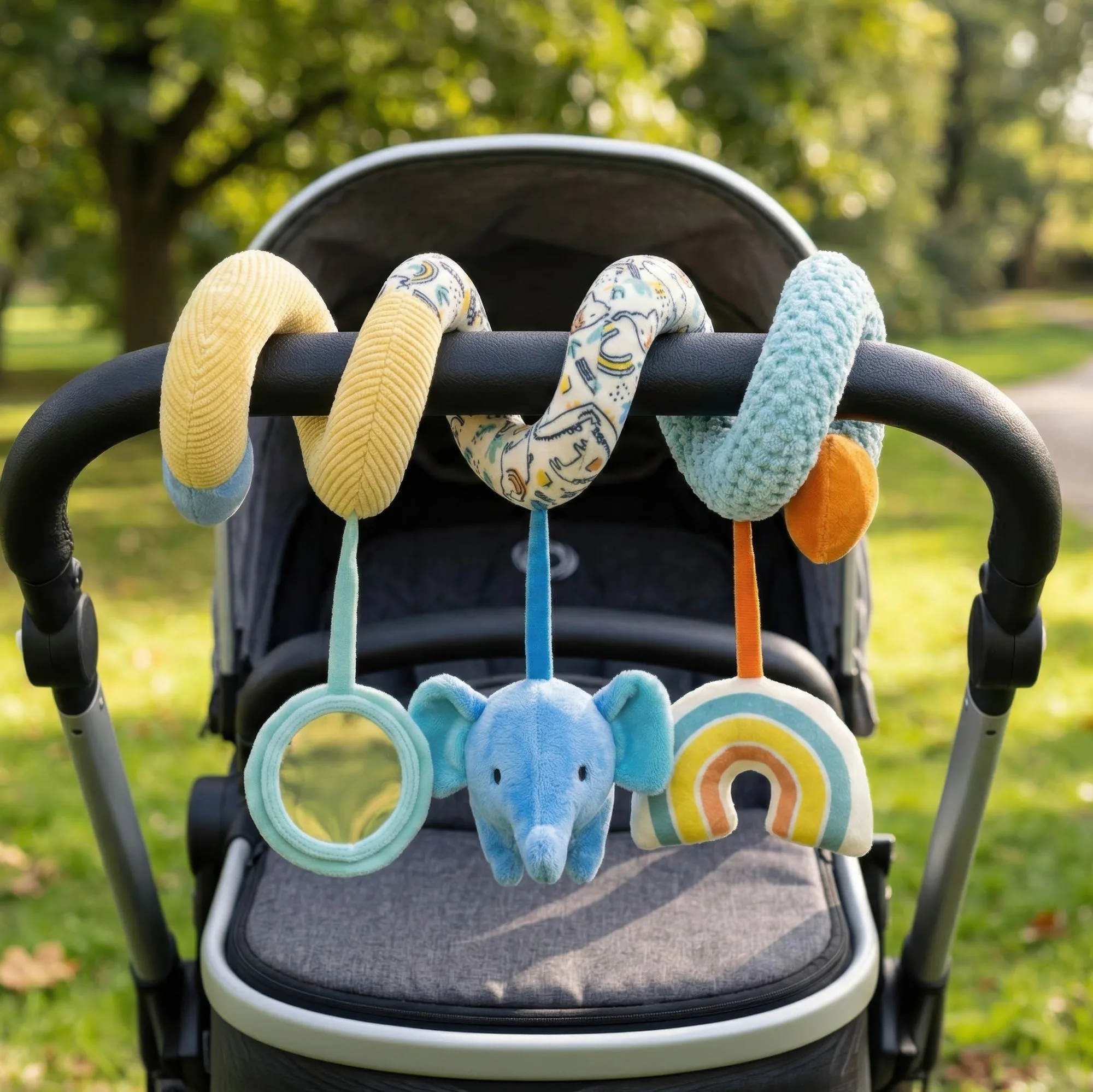
- Animal Adventures Spiral Activity Toy | Elephant: Attaches easily to any stroller or car seat handle, with three hanging sensory toys, soft plush characters, squeaks, crinkles, and rattles for 0+ months. It is a clip-and-go option that gives younger babies something to look at, listen to, and eventually grab, so you are not holding a toy while pushing.
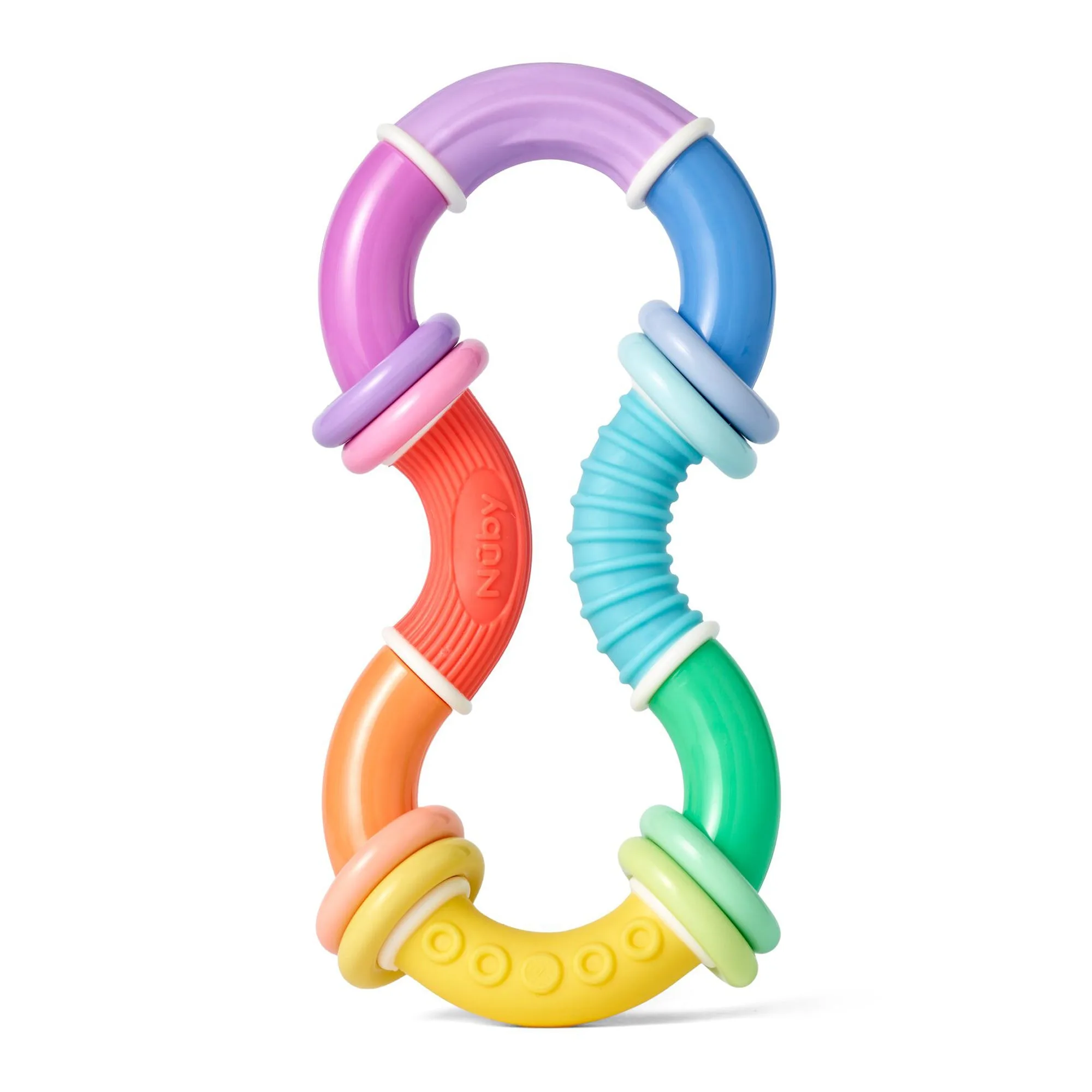
- Twista Rattle Teether Toy | Colorful Rings: Combines rattle sounds with textured surfaces that provide teething relief, and is designed to engage fine motor skills and hand-eye coordination. It covers both entertainment and teething in one small item, which is useful when your baby starts mouthing the stroller strap mid-walk.
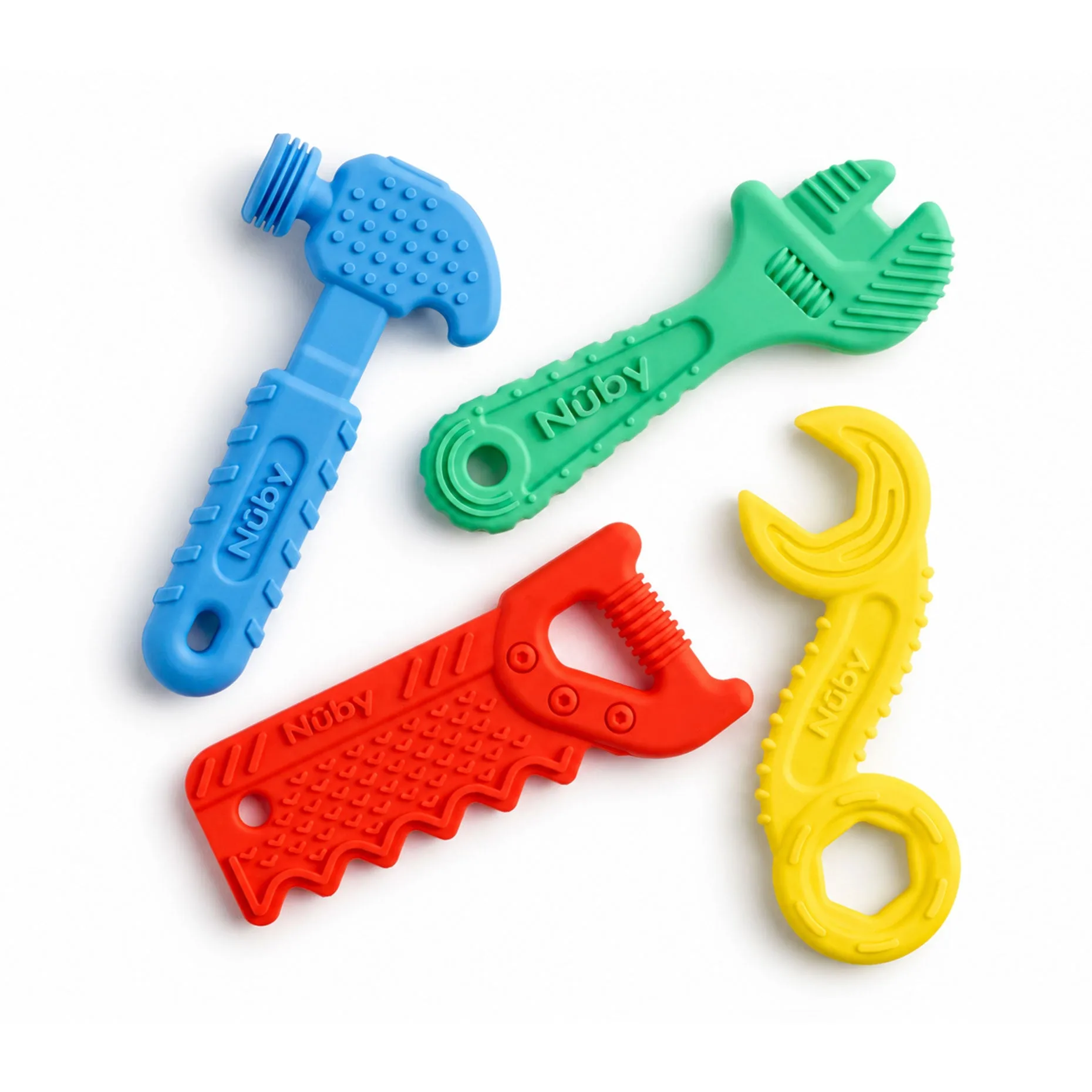
- Tool Teethers (4 Pack): Four tool-shaped silicone teethers with multiple textured surfaces, sized for little hands to grasp, chew, and pretend with. The multi-pack lets you keep one clipped to the stroller, one in the diaper bag, and spares clean and ready, so a dropped teether does not end the walk.
Stroller entertainment baby routines work best when they are simple and repeatable. Time the walk well, bring a small rotating kit, keep toys within reach, and reset before fussing escalates. After a week, you will know exactly what your baby needs for a calm walk — and you can leave the rest of the toy bin at home.