Quick answer
Set up a two-zone station: a dirty drop tray for used tools and a clean landing area for disinfected ones. Between every dog, wipe or spray tools, let them sit for the contact time on the label, then dry them before reuse. A repeatable grooming tool cleaning routine keeps busy groomer hygiene steady even when appointments stack up.
A packed appointment day is exactly when cleaning shortcuts creep in. You finish one dog, reach for the next, and the blade you just used goes straight back on the clipper. That habit is how dander, oil, and potential pathogens travel from pet to pet, and it is also how tools wear out faster.
The fix is not a deep clean between every dog. It is a repeatable routine that takes under two minutes per pet and keeps clean and dirty tools physically separated. This guide walks through an ordered process you can run on your busiest days, with checkpoints so nothing gets skipped when you are running behind.
Why between-dog cleaning matters more than a big end-of-day clean
End-of-day deep cleaning is necessary, but it does not protect the dogs you groom in between. Cross-contamination happens in the gap between appointments, on clipper blades, shears, nooses, and your own hands. A consistent between-dog routine closes that gap without adding a full sanitation cycle to every pet.
The practical goal is to reduce organic debris first, then disinfect. Hair, dander, and coat oils can shield microbes from a disinfectant, so a quick brush-off or rinse before applying product makes the disinfectant work better. This is also why letting a wet tool air-dry on a crowded table is a weak finish; moisture left in a hinge or blade can shorten tool life.
- Keep a labeled dirty bin and a clean tray at every station so tools never touch the same surface.
- Check product labels for the required contact time; a quick spray-and-wipe is not the same as disinfecting.
Set up your station before the first dog arrives
Pre-load the day. Fill a spray bottle with your chosen cleaner or disinfectant, lay out a spare clipper blade, and place a small brush for removing hair from blades and shears. Having a second blade ready means you can swap instead of rushing a cleaning step mid-groom.
A flexible steel cable noose such as the Proguard Pet Flexible Steel Cable Grooming Noose-18" is easy to wipe down between dogs because the cable surface has fewer crevices than a fabric loop. The 18-inch size fits all sizes of pets, so one noose can serve multiple appointments on your table without switching hardware.
- Stage one clean tool for every dirty tool you expect to use.
- Keep a dedicated cloth for drying tools separate from towels used on dogs.
Clean as you go instead of saving it all for the end
Wipe clipper blades and shears as soon as you set them down, while debris is still soft. Waiting until the end of the day lets hair and coat oils harden in the teeth, which makes cleaning slower and can dull the cutting edge over time.
If you use a concentrate such as Envirogroom Gentle Clean-Gallon, dilute it according to the label and keep it in a labeled spray bottle for quick cleanup of surfaces and tools. It is a high-concentrate, tearless, hypoallergenic shampoo that is safe for puppies, kittens, and horses, and it works well with bathing systems, so it earns its place in a busy salon's cleaning setup.
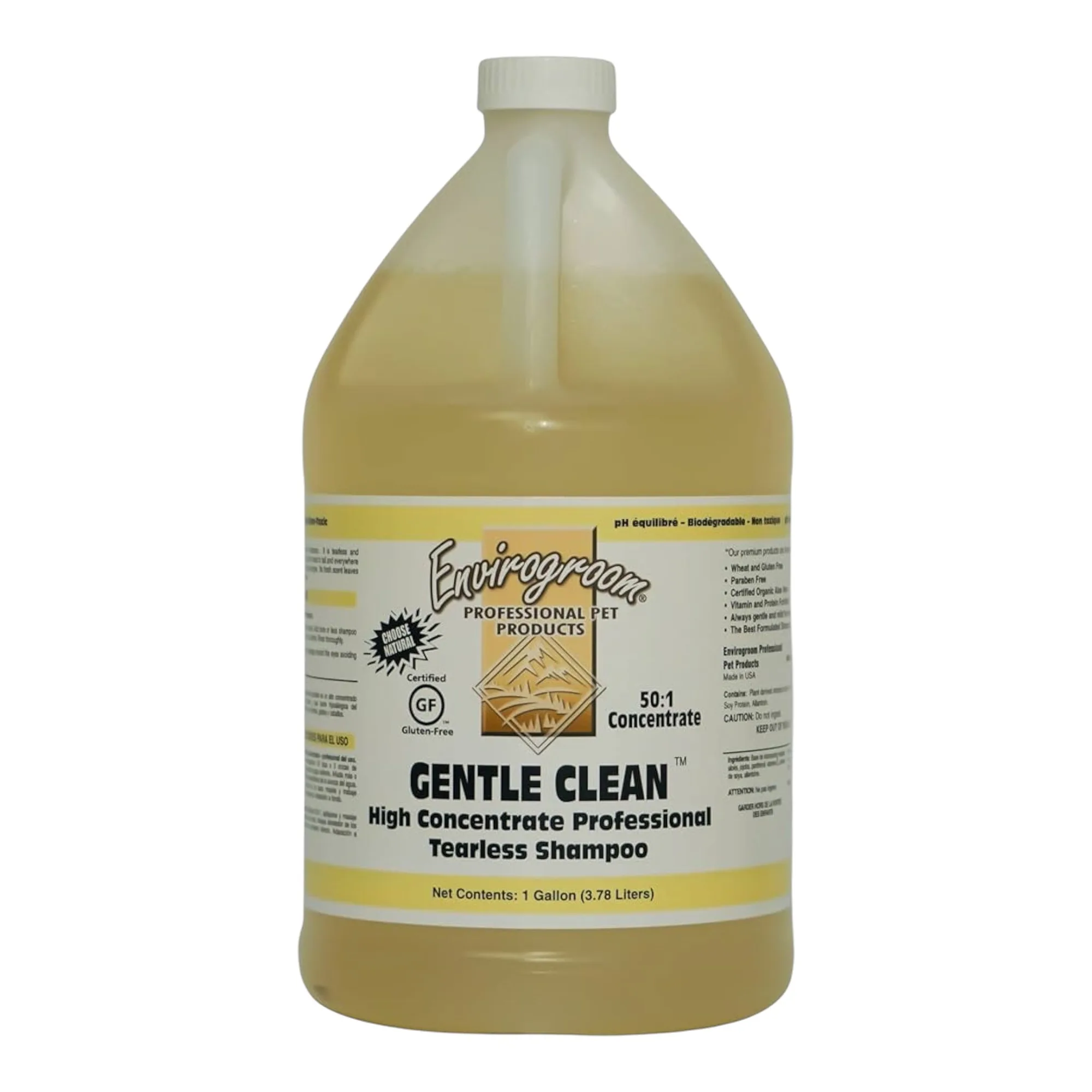
Envirogroom Gentle Clean-Gallon
- Do not submerge clippers or electrical equipment in water; wipe the housing only.
- Rinse or wipe shampoo residue from tools before applying disinfectant.
Match the cleaning method to the tool
Not every tool tolerates the same treatment. Metal blades and shears can handle a spray-and-wipe with a suitable cleaner, while clipper housings, cords, and anything with a motor should stay away from running water. Fabric items like aprons, smocks, and tote bags need laundering on a schedule rather than a spray-down.
For blades, brush out hair from the teeth, wipe the flat surfaces, then apply a drop of blade oil after cleaning to protect the metal. A professional blade such as the Groomer's Warehouse #3-3/4F Clipper Blade is built for medium to thick coats and designed for maximum durability, but even a durable blade benefits from having hair removed before it hardens.
- Read the manufacturer's cleaning guidance for each tool before choosing a method.
- Never mix cleaning chemicals unless the label specifically allows it.
Your between-dog cleaning steps
- Clear the tool: As soon as you finish a dog, brush hair and dander off blades, shears, and combs into a waste bin. Do not tap tools against the table edge; it can knock blades out of alignment. Checkpoint: no visible hair left in the teeth before the tool leaves your hand.
- Wipe or rinse: Wipe metal tools with a damp cloth or spray them with your diluted cleaner. Keep electrical equipment and cords away from running water and wipe the housing only. Checkpoint: residue and coat oils are gone before disinfectant goes on.
- Disinfect and respect contact time: Apply your cleaner or disinfectant according to the label and leave it wet for the full contact time. A quick spray-and-wipe does not achieve the same result as letting the product sit. Checkpoint: set a timer or count while you prep the next dog so you do not wipe too early.
- Dry and store on the clean side: Dry tools fully before placing them on the clean tray. Moisture left in hinges, blades, or cable fittings can lead to rust and dull edges. Checkpoint: the clean tray holds only dry, ready-to-use tools.
- Reset the station for the next pet: Replace the towel, wipe the table surface, and swap in a fresh noose or wipe the cable one more time. Restock your spray bottle so it is ready for the next appointment. Checkpoint: the dirty bin is closed or set aside, and the clean zone is untouched by used items.
- Log the deep clean for end of day: At the end of the day, launder fabric items like aprons and smocks, deep clean clipper blades, and disinfect the table and bins. A written checklist keeps this step from slipping on the days you are most tired. Checkpoint: fabric and hard surfaces both get attention, not just the tools you can see.
Tools that support a faster cleaning routine
- Groomer's Warehouse #3-3/4F Clipper Blade: Professional-quality dog grooming blade for medium to thick coats, offering a smooth, reliable cut and designed for maximum durability. A durable blade handles frequent between-dog brushing and wiping better, so you can clean it quickly without worrying about wear.
- Envirogroom Gentle Clean-Gallon: High-concentrate, tearless, hypoallergenic shampoo that is vitamin and protein enriched for all coat types and safe for puppies, kittens, and horses. Diluting a gallon concentrate gives you a ready supply for tool and surface cleanup, which keeps the cleaning station stocked through a full appointment day.
- Proguard Pet Flexible Steel Cable Grooming Noose-18".: Flexible steel cable noose that securely fits around your pet, with an 18-inch size suited to all sizes of pets. A smooth cable surface is quicker to wipe between dogs than a fabric loop, which helps you keep the table area clean without slowing down turnover.
- Envirogroom Plum Blossom Cologne-8oz.: Natural cologne with no alcohol, containing ingredients to deodorize, eliminate static, soothe skin, and soften coat; never drying. An alcohol-free finishing spray is gentler on freshly cleaned coats and hands, so it fits into a hygiene-focused routine without adding drying residue to tools or skin.
A grooming tool cleaning routine does not have to be elaborate to work. Separate clean and dirty zones, clean as you go, respect contact times, and dry tools before they go back into service. Those habits protect every dog on your schedule and keep your equipment ready for the next appointment, even on the busiest days.