Quick answer
Most needlepoint thread tangles and knots come from working strands that are too long. Cut your thread to about 18 inches, let the needle hang and untwist every few stitches, and strip single-ply silks like Pepperpot Silk apart before threading. If a strand knots twice in one length, stop fighting it and cut a fresh one.
You sit down for a calm stitching session, pull your thread through the canvas, and suddenly there is a knot the size of a pea. It happens to every needlepointer, and it is almost never caused by bad thread. It is caused by thread management that does not match the material you are using.
The fix is not complicated, but it does require you to notice the difference between a snag, a twist, and a true knot. This guide separates the symptom from the likely cause, gives you a corrective action, and tells you when to stop and choose another approach.
Symptom: The thread twists back on itself before it reaches the canvas
If your strand coils, doubles over, or forms a loop just above the eye of the needle, the problem is usually twist buildup, not a knot. Silk and metallic threads show this fastest because they are smooth and have little natural grip. The more you stitch in one direction, the more the strand rotates around itself.
Let the needle dangle from the canvas every five or six stitches so the thread can unwind. You can also run the strand between your thumb and forefinger to feel the twist and smooth it out. If you are using a single-ply silk, separate the plies gently before threading rather than pulling them apart in one tug.
- Dangle the needle every few stitches to release stored twist.
- Separate single-ply threads one strand at a time before threading.
- Work with 18-inch lengths until the twisting stops.
Symptom: A knot forms in the middle of a stitch you just pulled
A mid-stitch knot almost always means the strand was too long or already had a small tangle you did not see. Long threads rub against the canvas edge, the needle eye, and themselves, which creates friction loops. Once a loop tightens, pulling harder only makes it worse.
Stop immediately and slide the needle out of the loop rather than tugging. If the knot is tight, use a spare needle to tease it open. Then cut the thread at the knot, rethread, and continue with a shorter length. Do not stitch over the knot to hide it; that creates a lump under the canvas.
- Never pull a knot tighter; back the needle out instead.
- Cut and restart rather than stitching over a knot.
- Keep strands to 18 inches or less for smoother stitching.
Symptom: The thread catches on the canvas and shreds
If your thread frays or snags on the canvas rather than knotting, the cause is usually the canvas itself. A rough edge, a bent needle, or a burr in the needle eye will catch the strand with every pass. This is common when you use a needle that is too small for the thread or when the canvas edge is not taped.
Run your finger along the canvas edge and the needle eye to check for roughness. Replace any needle that feels gritty or bent. If the canvas edge is raw, tape it before you continue. A smooth needle and a taped edge do more for thread management than any technique.
- Tape raw canvas edges before stitching.
- Replace bent or gritty needles immediately.
- Match needle size to thread weight and canvas mesh.
When to stop and choose a different thread or project
If you have shortened your strand, checked your needle, taped your canvas, and the thread still knots every few stitches, the material may be wrong for the project. Some metallic threads and very fine silks are simply more tangle-prone on certain canvas counts. That is a decision limitation, not a failure on your part.
At that point, switch to a different thread in your stash or choose a project with a more forgiving thread palette. Kits that include Pepperpot Silk or a single-ply silk blend tend to behave better for stitchers who are still building tension control. If a thread fights you for more than a few minutes, it is not the right thread for that canvas.
- Try a different thread before blaming your technique.
- Choose kits with single-ply silk for easier tension control.
- Stop stitching when frustration rises; tangles get worse, not better.
Tangle diagnosis: match the symptom to the fix
- Twisting above the needle: The strand coils or loops before entering the canvas. Let the needle dangle every five to six stitches and separate single-ply threads before threading. If twisting continues, cut the strand to 18 inches and try again.
- Knot in the middle of a pulled stitch: The strand was too long or already tangled. Back the needle out, tease the knot open with a spare needle, or cut and restart. Two knots in one strand means it is time to cut a fresh length.
- Thread shredding or catching: Check the canvas edge and needle eye for roughness. Tape raw edges and replace bent or gritty needles. If shredding continues, switch to a larger needle or a smoother thread.
- Tangles despite every fix: The thread may be wrong for the canvas count. Try a single-ply silk or a kit with a more forgiving thread palette. Stop stitching that thread on that canvas; choose another project or thread.
Kits that make thread management easier
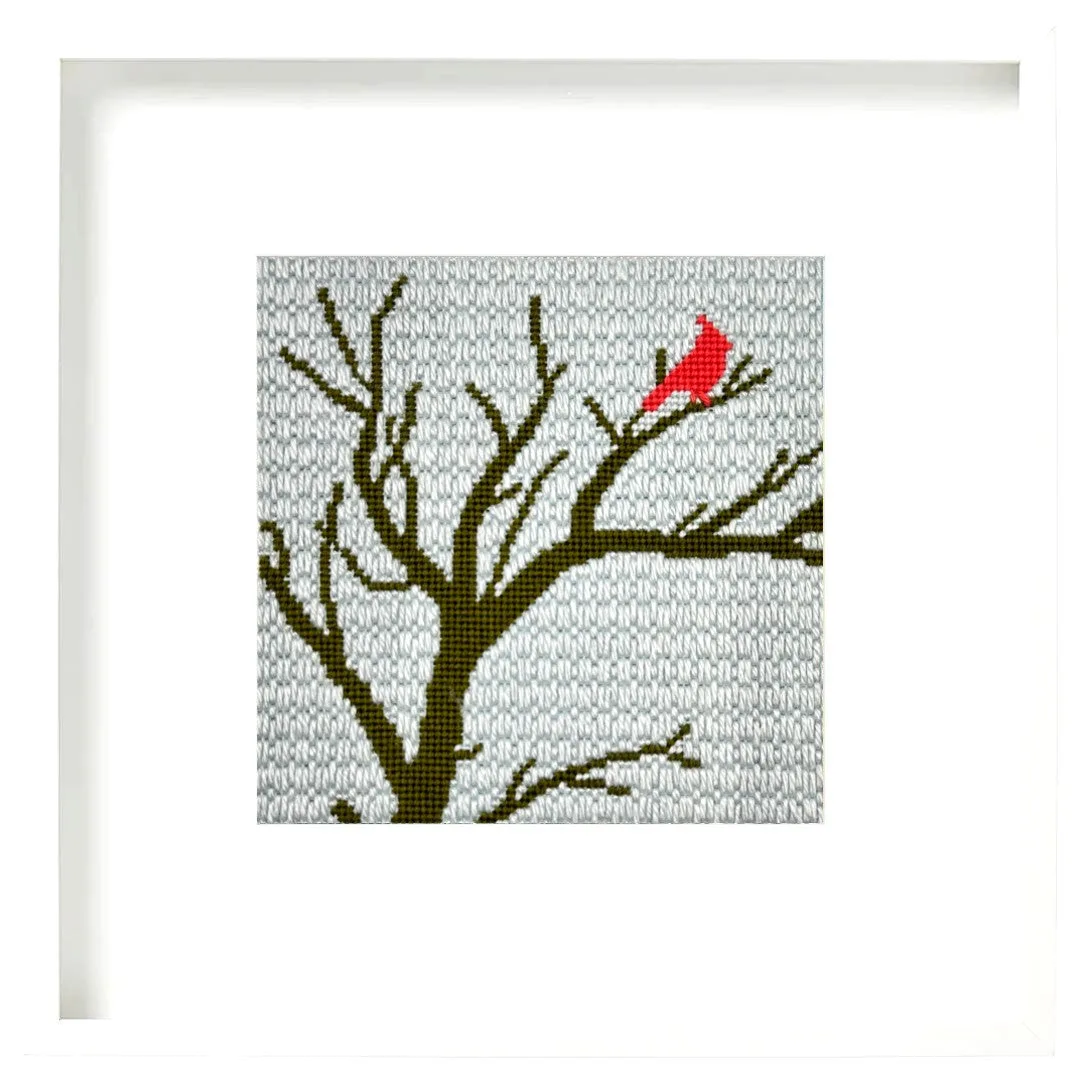
- Winter Cardinal Needlepoint Kit: Includes a hand-picked selection of single-ply Pepperpot Silk threads and two stainless steel size 22 needles on a 5" x 5" design printed on 18 holes-to-the-inch canvas. Single-ply silk separates cleanly and shows twist early, so you can correct tangles before they become knots. The 18-count canvas and size 22 needles are a balanced match that reduces friction.
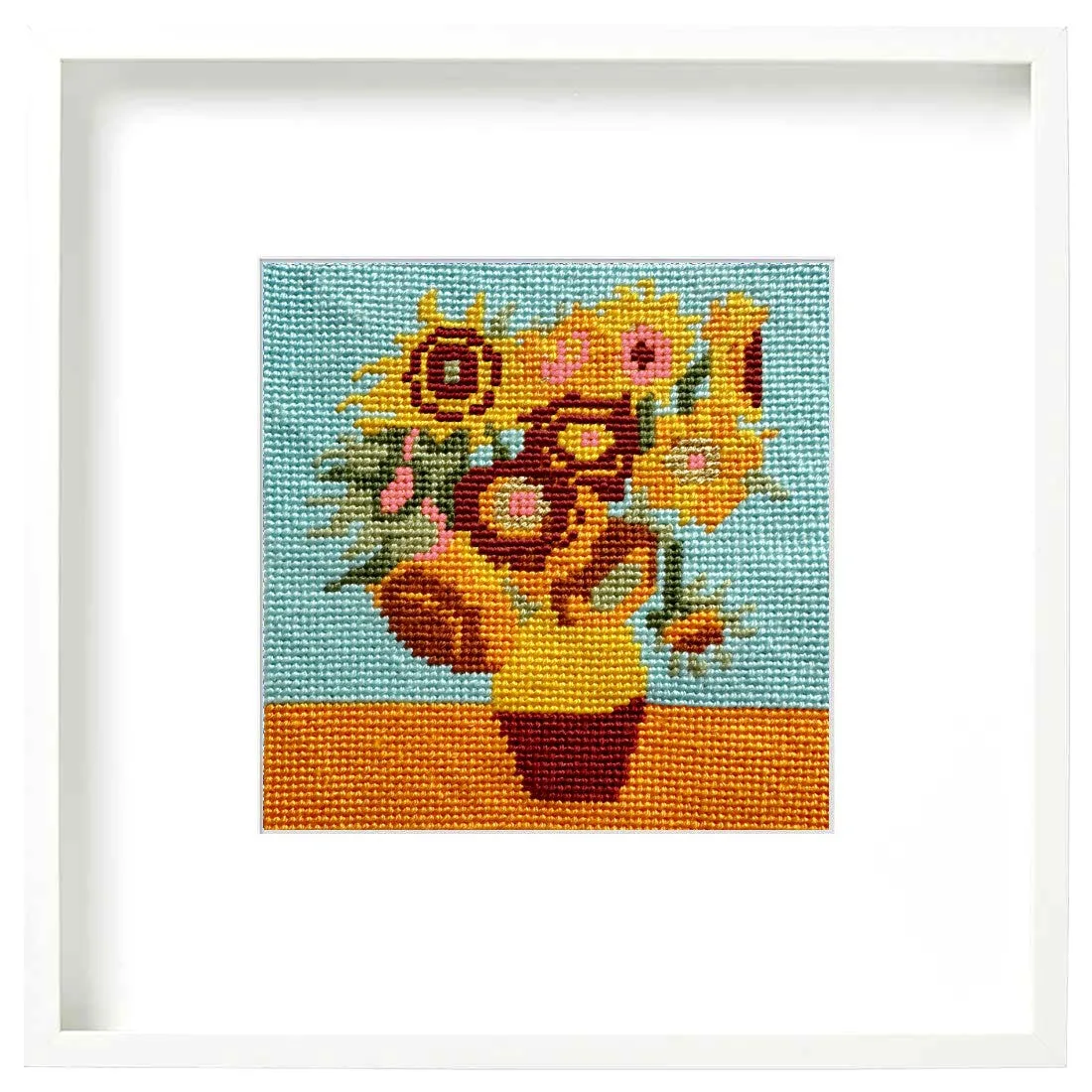
- Van Gogh Sunflowers Mini Needlepoint Kit: A color-printed 4" x 4" needlepoint design on 18-count mono canvas with edges taped, silk and metallic threads, size 22 needles, and a stitch chart with a color card. Taped edges prevent thread from catching on raw canvas, and the small 4" x 4" size means shorter stitching sessions where twist has less time to build up.
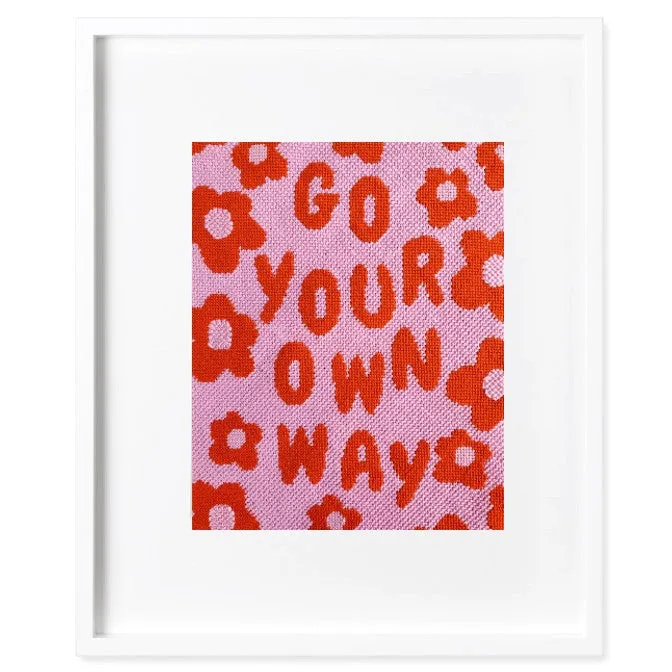
- Go Your Own Way Needlepoint Kit: An 8" x 10" design on 14-count mono needlepoint canvas with edge-taped canvas, a generous selection of premium Planet Earth Silk threads in cotton candy pink and candy apple red, and two high-quality Bohin stainless steel needles. The 14-count canvas has larger holes, which is more forgiving for thicker thread and less likely to shred a strand. The larger thread palette lets you swap colors if one strand keeps tangling.
Thread tangles are a signal, not a setback. Shorten your strand, let the needle dangle, and check your needle and canvas edge before you blame your technique. When a thread keeps knotting, switch to a kit with single-ply silk or a more forgiving canvas count, and get back to smooth stitching.