Quick answer
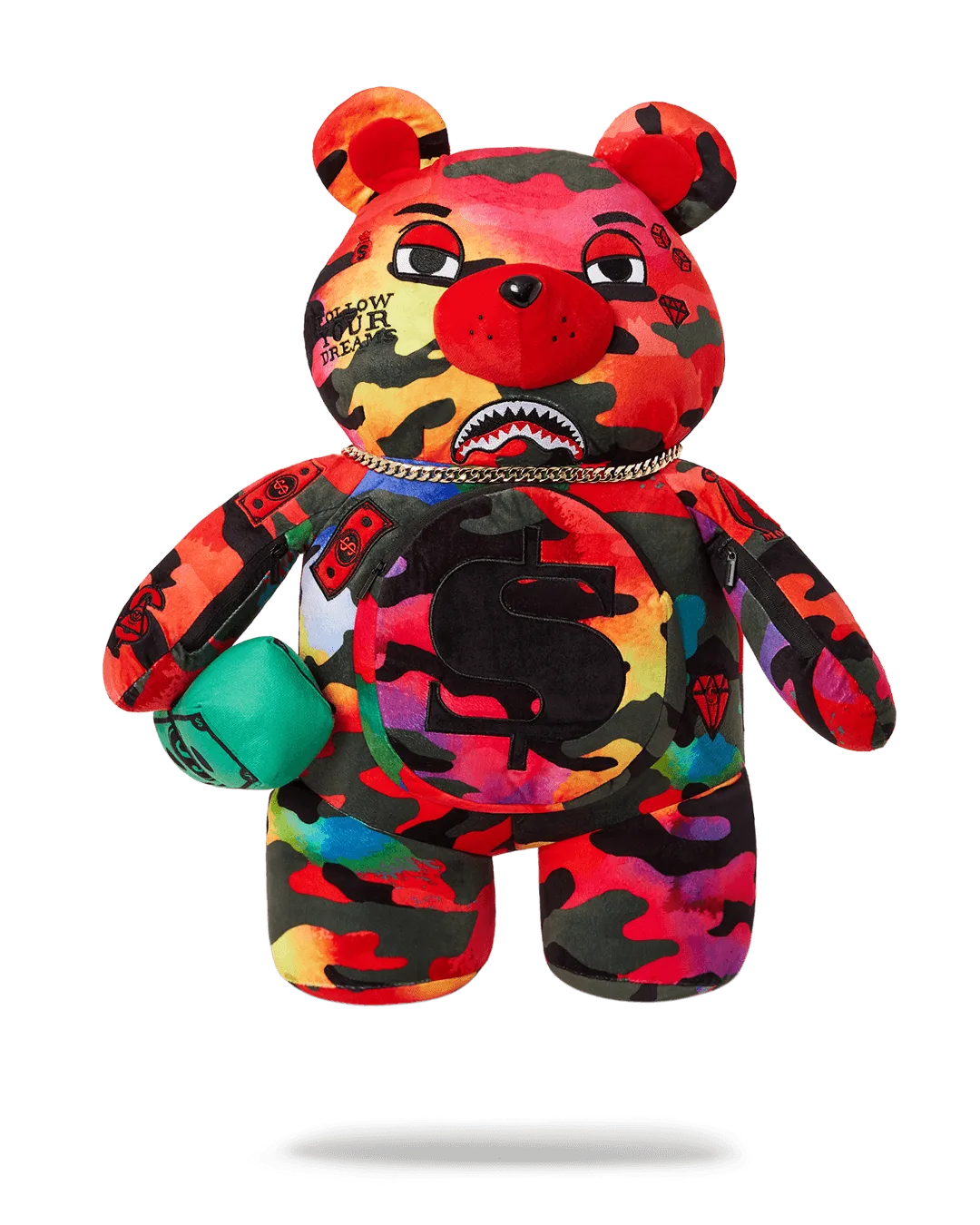
Treat the CAMOBURST MONEYBEAR TEDDYBEAR BACKPACK like a textile, not a toy: vacuum or brush the plush weekly, spot-clean stains with a damp cloth and mild soap, and never soak the whole bag. Store it stuffed and upright so the velour doesn't flatten, and keep it away from direct sun and heat.
Start with a weekly dry-clean pass
Most MoneyBear backpack care is preventive. Before any stain happens, spend two minutes a week removing dust and grit from the plush surface. Dust is what makes velour and plush look dull, and grit works its way into the fabric where it abrades the fibers every time you set the bag down.
Use a soft brush or the upholstery attachment on a vacuum on the lowest suction setting. Work in the direction the plush naturally lies, not against it. Pay attention to the belly pocket, the arm pockets, and the back panel, since those are the areas that rub against clothing and surfaces most often.
Spot-clean instead of washing the whole bag
The CAMOBURST MONEYBEAR TEDDYBEAR BACKPACK is made from water-resistant polyester velour, which means it resists a splash but is not designed to be submerged. A full wash can break down the water-resistant finish, distort the plush pile, and weaken the zippers and straps.
For teddy bear backpack cleaning, mix a few drops of mild liquid soap with cool water. Dampen a microfiber cloth, not the bag itself, and blot the stain from the outside in. Rinse by blotting with a clean damp cloth, then blot dry with a towel. Let the bag air-dry away from radiators, hair dryers, and direct sun, because heat is what sets stains and mats the fur.
Handle stains by type, not by habit
Teddy bear bag stain removal goes better when you match the method to the mess. For food or grease, blot first, then use a tiny amount of dish soap on the cloth and work gently. For ink, dab with isopropyl alcohol on a cotton swab, testing a hidden area first. For mud, let it dry completely, brush off the solids, then spot-clean what remains.
The common mistake is rubbing. Rubbing spreads the stain and roughs up the plush, and on velour the damage shows permanently. Always blot, and always test any product on the back panel or the bottom of the bag before you touch the front.
Store it so the shape and plush survive
How to store a plush backpack matters as much as how you clean it. Stuff the main compartment lightly with clean tissue paper or a soft towel so the bag holds its shape, then stand it upright on a shelf. Laying it flat under other bags crushes the plush and leaves creases that are hard to lift.
Keep the bag out of direct sunlight and away from hot cars or storage closets next to heaters. UV fades printed panels, and heat can make the water-resistant coating tacky. If you use the bag only seasonally, a breathable cotton dust bag is better than a sealed plastic bin, which can trap moisture and cause odors.
Protect the fabric before problems start
Backpack fabric protection is optional, but it helps on a light-colored plush bag. A fabric protector spray designed for upholstery can add a layer that buys you time to blot a spill before it soaks in. Test it on a hidden area first, apply in a ventilated space, and let it cure fully before you carry the bag.
Skip silicone-heavy sprays on plush if you want to keep the soft hand-feel. And never spray the zippers, because the coating can gum them up. If you would rather not treat the bag at all, the weekly dry-clean pass and prompt blotting will still keep it looking new for most of the year.
Your MoneyBear care routine, step by step
- Step 1: Brush the plush weekly: Use a soft brush or low-suction vacuum attachment and work in the direction the plush lies. Common mistake: scrubbing back and forth, which roughs up the velour and makes it look worn. Checkpoint: if the surface still looks dull after brushing, the issue is usually product buildup, not dirt.
- Step 2: Blot stains immediately: Dampen a microfiber cloth with cool water and a drop of mild soap, then blot from the outside of the stain inward. Common mistake: rubbing, which spreads the stain and mats the fur. Checkpoint: test any cleaner on the back panel before using it on the front.
- Step 3: Air-dry away from heat: Blot dry with a towel and let the bag sit in a shaded, ventilated spot. Common mistake: using a hair dryer or radiator, which can set stains and stiffen the plush. Checkpoint: the bag should be fully dry before you store it or carry it again.
- Step 4: Stuff and stand it upright: Fill the main compartment lightly with tissue paper or a soft towel and stand the bag on a shelf. Common mistake: storing it flat under other bags, which crushes the plush and leaves creases. Checkpoint: a breathable dust bag beats sealed plastic for seasonal storage.
- Step 5: Re-check straps and zippers: While the bag is clean, inspect the adjustable straps and zippers for grit or loose threads. Common mistake: ignoring a stiff zipper until it jams. Checkpoint: a quick wipe of the zipper teeth with a dry cloth keeps them gliding.
Product facts that shape your care routine
- CAMOBURST MONEYBEAR TEDDYBEAR BACKPACK: Exterior dimensions: 25" x 7" x 12"; durable polyester velour water-resistant fabric; zippered pocket on belly, zippered pockets on each arm, large zippered pocket on back panel, adjustable straps. The 25-inch height and multiple zippered pockets mean more plush surface to dust and more seams to check for trapped grit. The water-resistant velour is why spot-cleaning beats soaking, and the belly and arm pockets are the spots that collect the most handling grime.