Quick answer
Most leaks on the Stanley Quick Flip Go Bottle are caused by a misaligned or dirty lid seal, a blocked trigger valve, or improper lid closure. Follow the diagnosis steps below to pinpoint and fix the issue.
Why the Quick Flip Go Bottle can leak
The Quick Flip Go Bottle is designed to be spill-proof with a trigger action lid that opens with a push button. However, the seal relies on several components working together: the silicone gasket inside the lid, the small valve that controls liquid flow, and the threads that screw the lid onto the bottle. If any of these are compromised, you may experience leaks.
Common causes include a gasket that has shifted out of its groove, debris stuck in the valve, or the lid not being screwed on tightly enough. The good news is that most of these issues are easy to fix at home.
When to consider replacement
If you have cleaned all components, reassembled the lid carefully, and the bottle still leaks, the silicone gasket may be worn out or the lid itself may have a crack. In such cases, contact Stanley customer support for a replacement lid or gasket. The bottle itself is durable, but the lid is a wear item over time.
Diagnosis and fix steps
- Symptom: Leak from the mouthpiece area: If water drips from the mouthpiece when the lid is closed, the trigger valve may be stuck open or the mouthpiece seal is dirty. Rinse the mouthpiece under warm water and press the trigger button several times to clear debris. If the leak persists, check that the small silicone seal inside the mouthpiece is present and not damaged.
- Symptom: Leak from the lid threads or base: Water seeping around the threads where the lid screws onto the bottle usually means the lid is not fully tightened or the main gasket is out of place. Unscrew the lid, remove the large silicone gasket, rinse it and the lid groove, then re-seat the gasket evenly. Screw the lid back on firmly until it stops. If the gasket appears warped or cracked, replace it before using the bottle again.
- Symptom: Leak only when bottle is tipped over: A leak that only occurs when the bottle is on its side suggests the trigger valve is not sealing completely. This can happen if the valve spring is weak or if there is debris inside the valve mechanism. Flush the lid with warm water while pressing the trigger repeatedly. If the problem continues, the lid may need replacement. Stop using the bottle if the valve does not seal after cleaning – contact Stanley support for a replacement lid.
Product fact
-
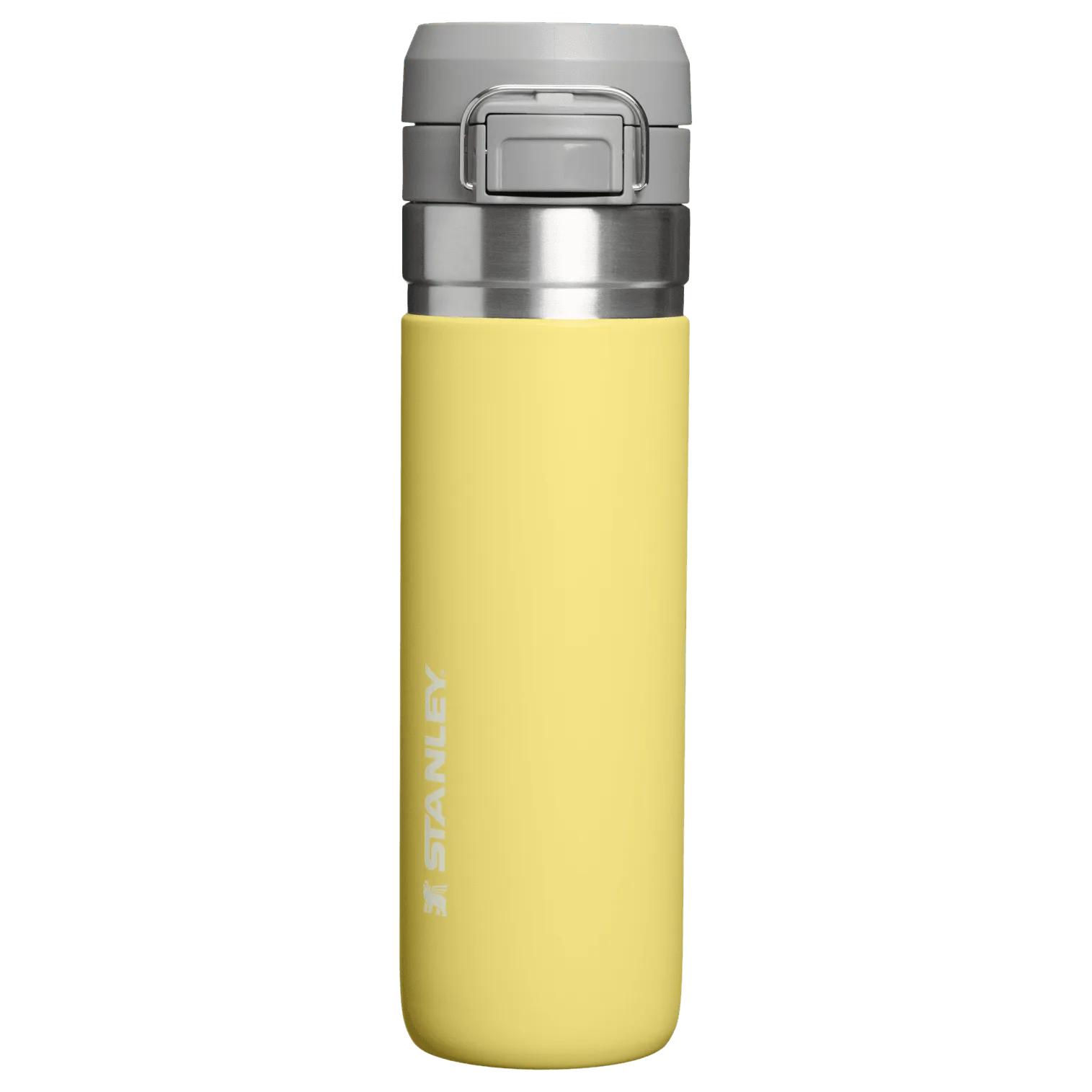
The Quick Flip Go Bottle | 24 OZ: The Quick Flip GO Bottle features a trigger action lid that is spill-proof and easy for one-handed use. The lid is designed with a push button that opens the mouthpiece on top. Understanding the lid mechanism helps you identify where leaks may occur: the mouthpiece seal, the trigger valve, or the lid gasket.
The Quick Flip Go Bottle | 24 OZ