Quick answer
Use the Korean translation of If an Octopus Could Palm as a practical guide to learn card palming, with steps tailored for the book's unique illustrations and card deck.
Why the Korean Edition Helps
The Korean translation includes original illustrations that visually demonstrate the palming motion, making it easier to follow than text-only instructions. The limited edition also comes with a matching deck of signed playing cards, so you can practice with the exact cards shown in the book.
Trade-Offs to Consider
Because this edition is hardbound and includes a separate card deck, it's bulkier than a standard tutorial. The cards may have minor dings from shipping, which could affect handling but not the learning process.
Step-by-Step Palming Guide Using the Korean Translation
- Step 1: Position the Card: Hold the card from the deck between your thumb and middle finger, with the card face parallel to the ground. The Korean book's illustrations show the card at a 45-degree angle to your palm. Common mistake: gripping too tightly. Let the card rest on your fingertips.
- Step 2: Practice the Rotation: Using the illustrated sequence in the book, rotate your wrist inward so the card slides into your palm. The motion should be smooth and continuous. Checkpoint: The card should end hidden behind your hand, not sticking out.
- Step 3: Add the Retraction: Reverse the wrist motion to bring the card back to your fingertips. The Korean translation notes that this retraction is the trickiest part; practice it slowly. Common mistake: rushing the retraction. Slow down until the card is fully back.
Product Facts
-
If an Octopus Could Palm, Korean Translation: Released in Korea in fall 2024, this limited edition of 1,000 copies quickly sold out. Includes a matching deck of playing cards, both signed by Dan and Dave. You get a complete practice set with the book and cards, both authenticated by the creators.
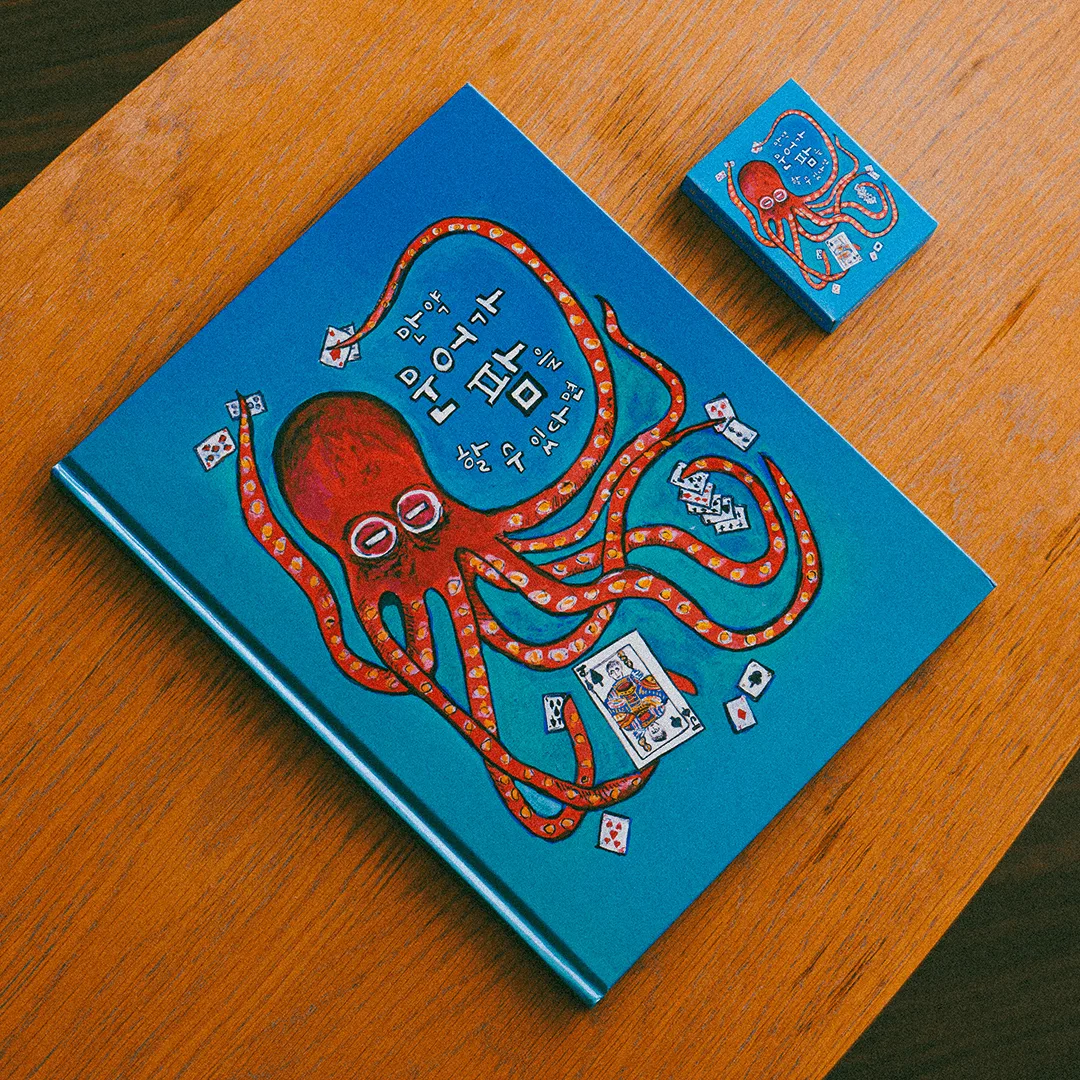
If an Octopus Could Palm, Korean Translation