Quick answer
Start with a warm base layer like the Trail Quest fleece overall, add an insulating layer for rest stops, and top with a weatherproof shell only when wind, rain, or snow demands it.
Why layering matters for trail runs
Trail running generates a lot of body heat, so your dog may overheat in a heavy jacket during the workout. But when you stop for water or to navigate a tricky section, that same dog can get cold quickly. Layering lets you adjust insulation to match activity level and weather without carrying a bulky jacket in your pack.
A common mistake is dressing your dog for the coldest part of the run rather than the starting temperature. A dog that starts shivering after a break needs a different setup than one that's already warm from moving.
Choosing the right layers for your dog
The key is to think in layers: a base layer for warmth, an insulation layer for cold, and a shell for protection. The Trail Quest fleece overall works well as a base or standalone mid-layer because it's full-body and made of Polartec® and gridded stretchy fleece, allowing full freedom of movement.
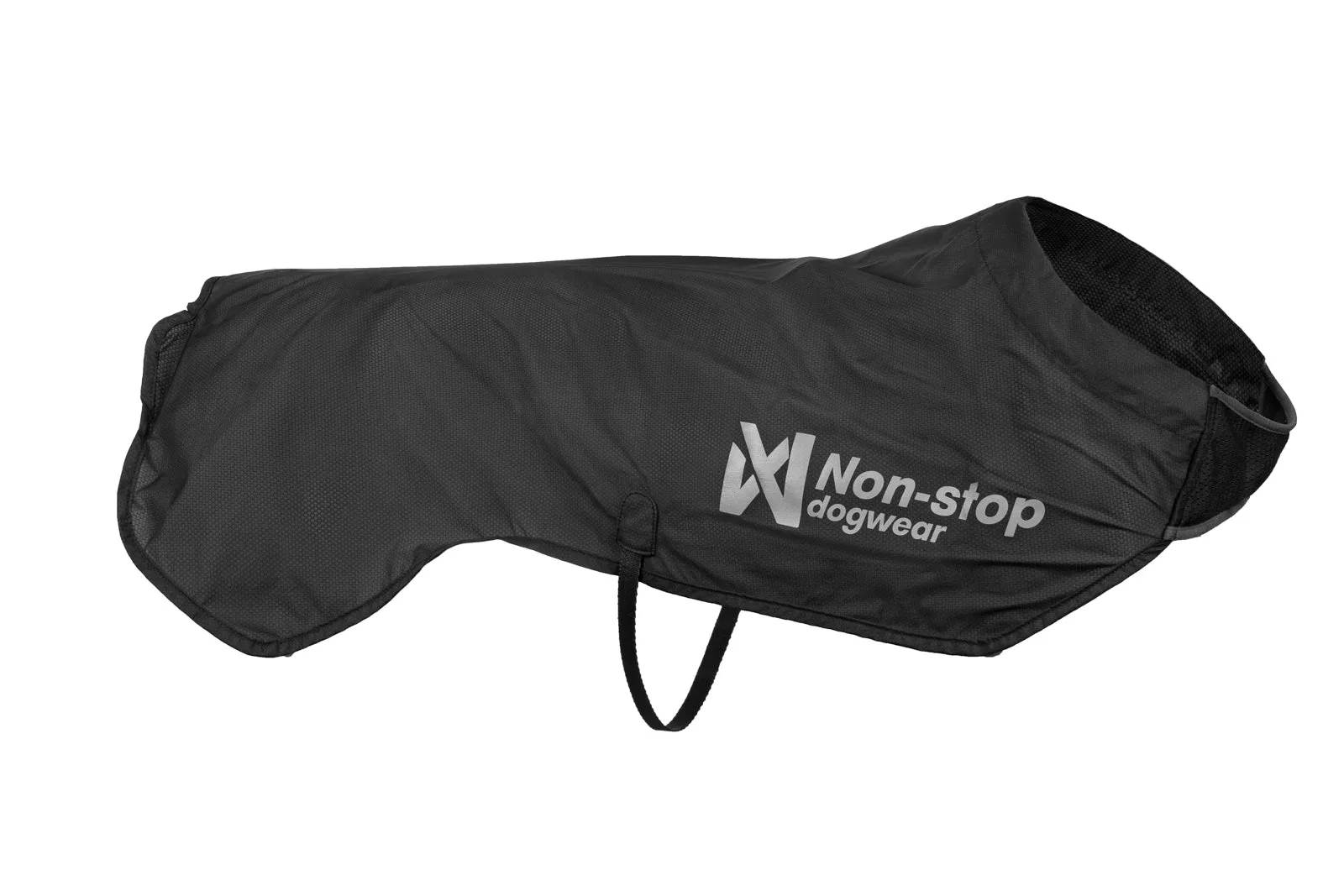
For rest stops or very cold days, the Trekking insulated dog jacket provides warmth when active or resting. If you're facing wind, rain, or snow, the Trail Light dog jacket is an ultralight emergency shell that packs into itself, so you can carry it easily and pull it out when the weather turns.
Step-by-step layering guide
- Assess the weather and run intensity: Check the temperature, wind, precipitation, and how hard you'll be running. If it's above freezing and you're moving fast, your dog may only need a light layer. If it's cold or you'll have frequent stops, plan for more insulation. A dog that starts warm may overheat quickly; adjust layers to the starting temperature, not the coldest moment.
- Start with a base layer: For cold or mid-season runs, put on a full-body fleece like the Trail Quest fleece overall. It provides warmth and freedom of movement, so your dog can run naturally without chafing. Check that the overall fits snugly but doesn't restrict your dog's stride.
- Add insulation for cold or rest: If the temperature is below freezing or you'll be stopping for more than a few minutes, add the Trekking insulated dog jacket over the base layer. It keeps your dog warm during rest, and you can remove it once you start moving again. If your dog is panting heavily or seems sluggish, remove the insulation layer to prevent overheating.
- Top with a weatherproof shell when needed: If wind, rain, or snow is expected, carry the Trail Light dog jacket. It packs into itself, so you can stash it in your pack and pull it out only when the weather turns. Put it on over the other layers to block moisture and wind. The shell is for weather protection, not warmth; don't rely on it as a primary insulation layer.
- Monitor your dog and adjust: During the run, watch for signs of overheating (excessive panting, slowing down) or cold (shivering, curling up). Stop and add or remove layers as needed. Remember, a dog that's moving is warmer than one that's standing still. Always carry an extra layer or remove one based on your dog's behavior, not just the thermometer.
Products that help with layering
-
Trail quest fleece overall: Full-body warm dog overall made of Polartec® and gridded stretchy fleece for full freedom of movement. This works as a base layer or standalone mid-layer, keeping your dog warm without restricting stride on the trail.
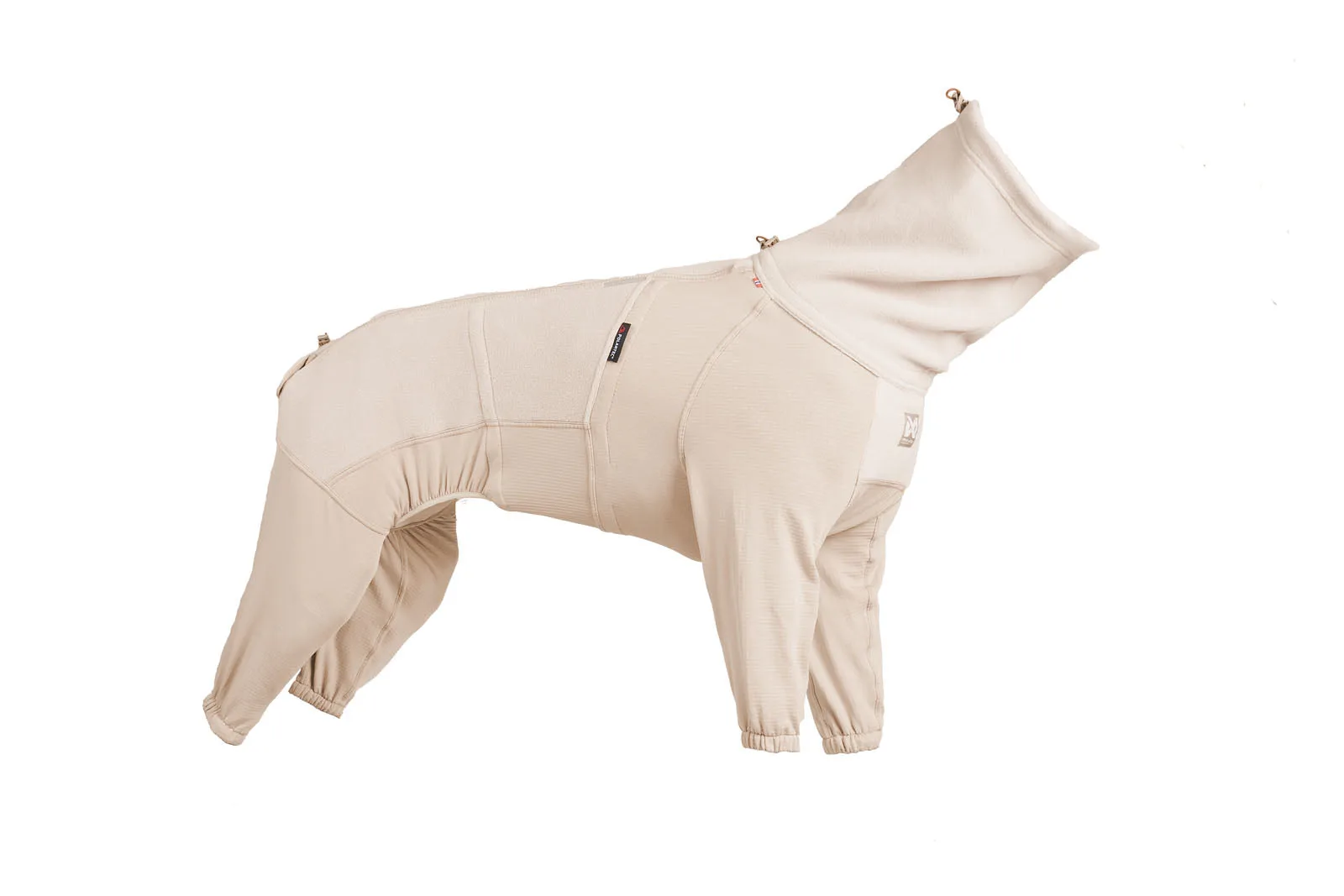
Trail quest fleece overall
-
Trekking insulated dog jacket: A dog jacket that keeps your dog warm and comfortable when being active or resting. Use this as an insulation layer for cold days or breaks, when your dog needs extra warmth without bulk.
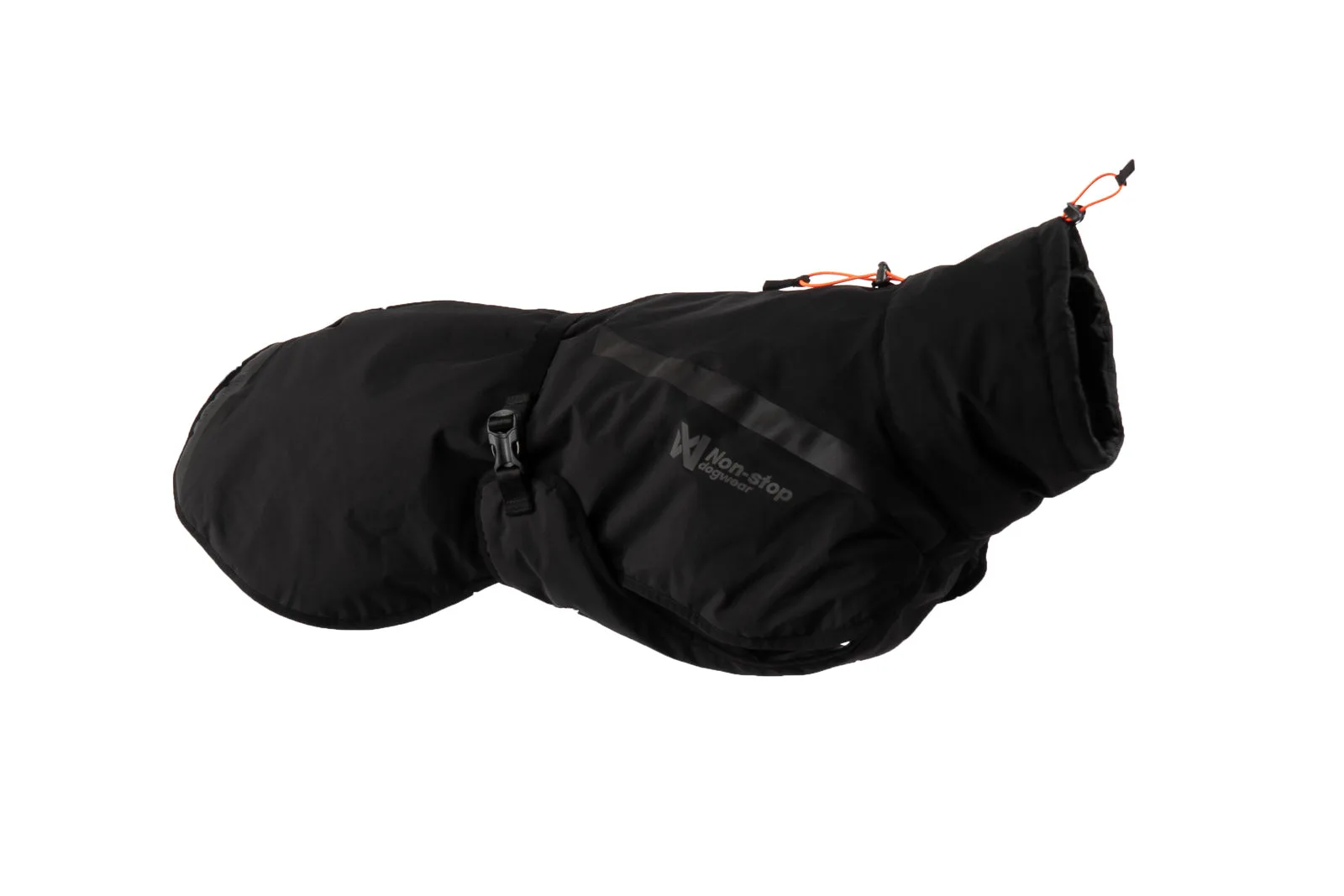
Trekking insulated dog jacket
-
Trail light dog jacket: An ultralight emergency jacket that packs into itself, providing protection against wind, rain, and snow. Carry this shell in your pack and put it on only when the weather turns, so your dog stays dry without overheating during the run.