Quick Answer
For cold weather rides, layer a breathable base layer under your cycling jersey, add a thermal mid-layer if needed, and finish with a windproof outer layer. Adjust the layers based on temperature and intensity.
Why Layering Beats a Single Thick Jersey
A single heavy jersey traps heat but also traps sweat, leaving you damp and chilled when you stop. Layering lets you shed or add insulation as your effort and the weather change, keeping you comfortable from the first mile to the last.
The key is to choose layers that work together: a moisture-wicking base layer against your skin, an insulating mid-layer, and a windproof outer layer. Each has a specific job, and the right combination prevents overheating on climbs and freezing on descents.
Material Matters: What to Look For in Each Layer
Your base layer should be synthetic or merino wool, not cotton, because cotton holds moisture and loses insulation when wet. The mid-layer should trap warm air while still allowing moisture to escape, so look for fleece-backed or brushed fabrics. The outer layer must block wind without trapping too much heat, so a lightweight windproof jacket or gilet works better than a heavy waterproof shell.
The Women’s Hors Categorie Jersey is a good choice for a mid-layer when temperatures are cool but not freezing, thanks to its soft, four-way stretch fabric and quick-drying technology. For milder days or high-intensity efforts, the Women’s Sport Lightweight Jersey offers a relaxed fit and breathable fabric that prevents overheating.
Step-by-Step Layering for Cold Rides
- Start with a moisture-wicking base layer: Put on a long-sleeve or short-sleeve base layer made of merino or synthetic fabric. It should fit snugly but not restrict movement. Avoid cotton, which traps sweat and makes you cold. Check that the base layer is fully dry before you start; a damp base layer will chill you quickly.
- Add your cycling jersey as the mid-layer: Wear your jersey over the base layer. For cold conditions, choose a jersey with a soft, insulating fabric like the Women’s Hors Categorie Jersey. For milder days, a lightweight jersey with mesh panels, like the Women’s Sport Lightweight Jersey, allows better airflow. Make sure the jersey isn’t too tight; you need room for air to act as insulation.
- Finish with a windproof outer layer: Add a windproof gilet or jacket as the outermost layer. This blocks cold wind while letting heat escape from your core. If it’s wet, choose a waterproof shell instead. If you start to sweat heavily, unzip the outer layer to release heat before you overheat.
- Adjust for temperature and effort: On climbs or high-intensity efforts, you may need to shed the outer layer or even the mid-layer. On descents, put them back on to keep warm. Plan to carry a lightweight packable layer for these adjustments. Check the forecast and your ride profile; if there’s a long descent, keep an extra layer accessible.
Products That Help With Layering
-
Womens Hors Categorie Jersey: Designed for luxurious comfort that lasts all day, the Women’s Hors Categorie Jersey is supremely soft, lightweight and supportive, with UPF 50 protection and quick-drying technology. Its quick-drying fabric makes it an excellent insulating mid-layer that won’t stay damp when you work up a sweat.
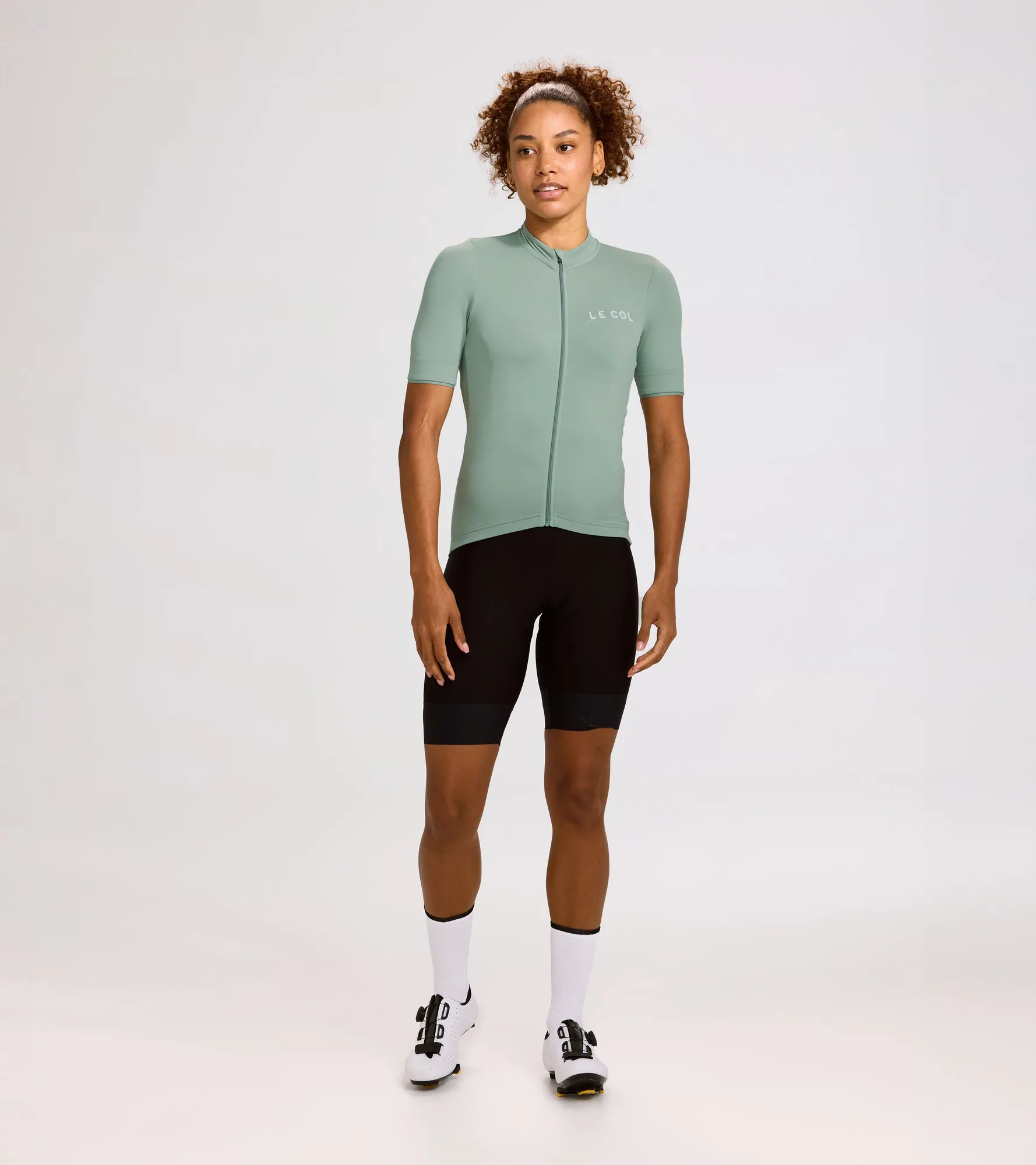
Womens Hors Categorie Jersey
-
Womens Sport Lightweight Jersey: The Women’s Sport Lightweight Jersey features a relaxed fit and breathable fabric, with mesh panels on the sides and cuffs to manage moisture and enhance airflow. When the temperature climbs, this jersey’s breathability prevents overheating, making it a great outer layer on milder cold days.
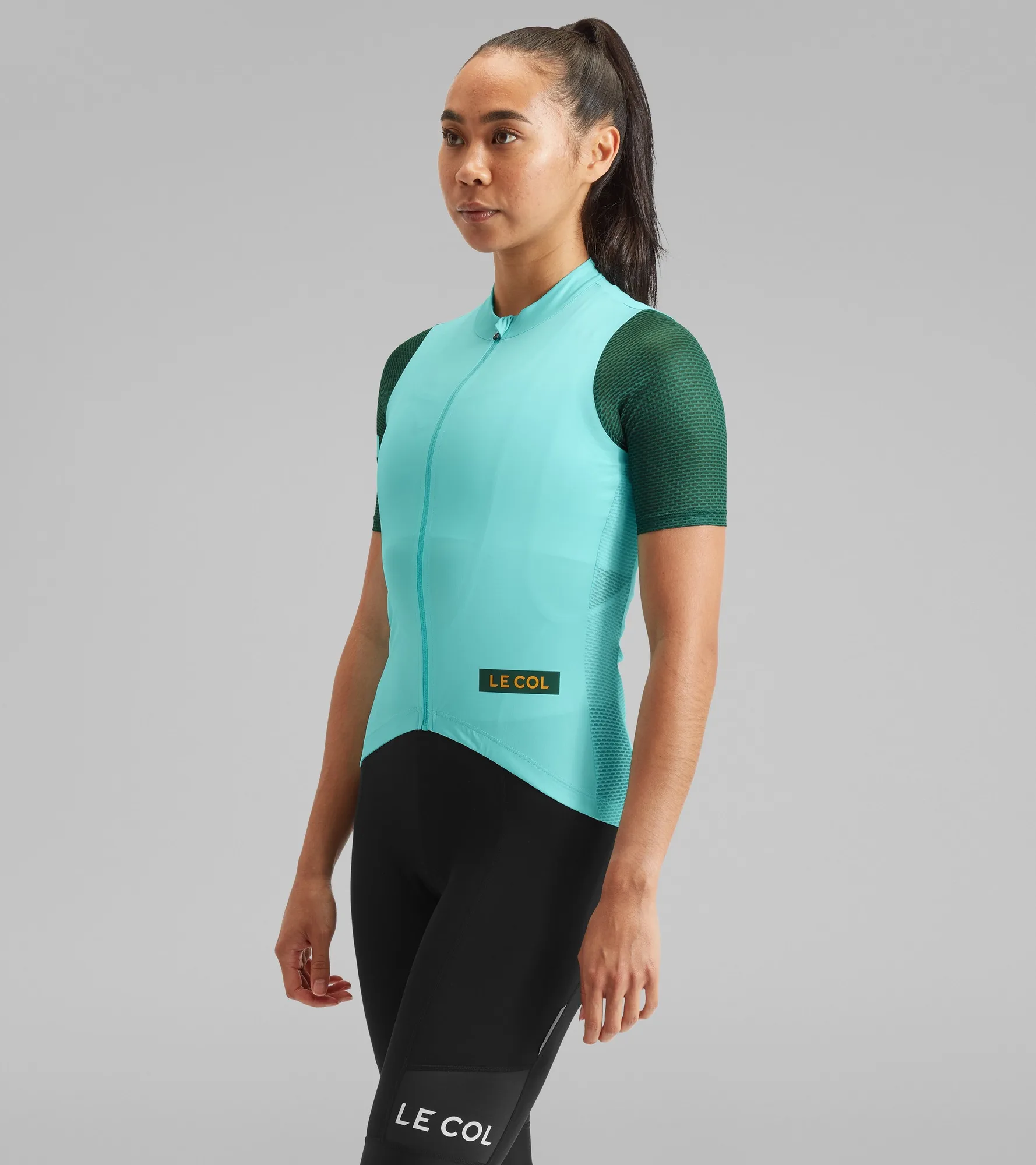
Womens Sport Lightweight Jersey