Quick answer
Start with a snug cotton or merino base layer, add a fleece or thin sweater mid layer, then finish with the puffer parka. Avoid bulky layers that restrict movement or trap sweat.
Why layering matters for toddlers
Toddlers regulate body temperature differently than adults. They generate heat through activity but cool down quickly when still. A single thick coat can overheat them during play or leave them cold if wet. Layering lets you add or remove insulation as needed throughout the day.
What to avoid when layering under a parka
Bulky sweaters or multiple thick layers under a fitted puffer parka can compress the insulation, reducing its warmth. They also make it hard for your child to move their arms freely. Stick to thin, breathable fabrics for the base and mid layers, and ensure the parka still fits comfortably over them.
How to layer a puffer parka in 4 steps
- 1. Start with a thin base layer: Choose a long-sleeve cotton or merino wool top and leggings or tights. This layer sits against the skin and wicks moisture away, keeping your child dry and comfortable. Common mistake: Using a thick cotton sweater as a base layer. Cotton holds sweat and can make your child cold once they stop moving.
- 2. Add a mid layer for insulation: A fleece jacket, thin sweater, or a lightweight puffer vest works well. This layer traps warm air close to the body without adding bulk. Checkpoint: The mid layer should not be so thick that the parka feels tight when zipped. You should be able to slide two fingers between the mid layer and the parka.
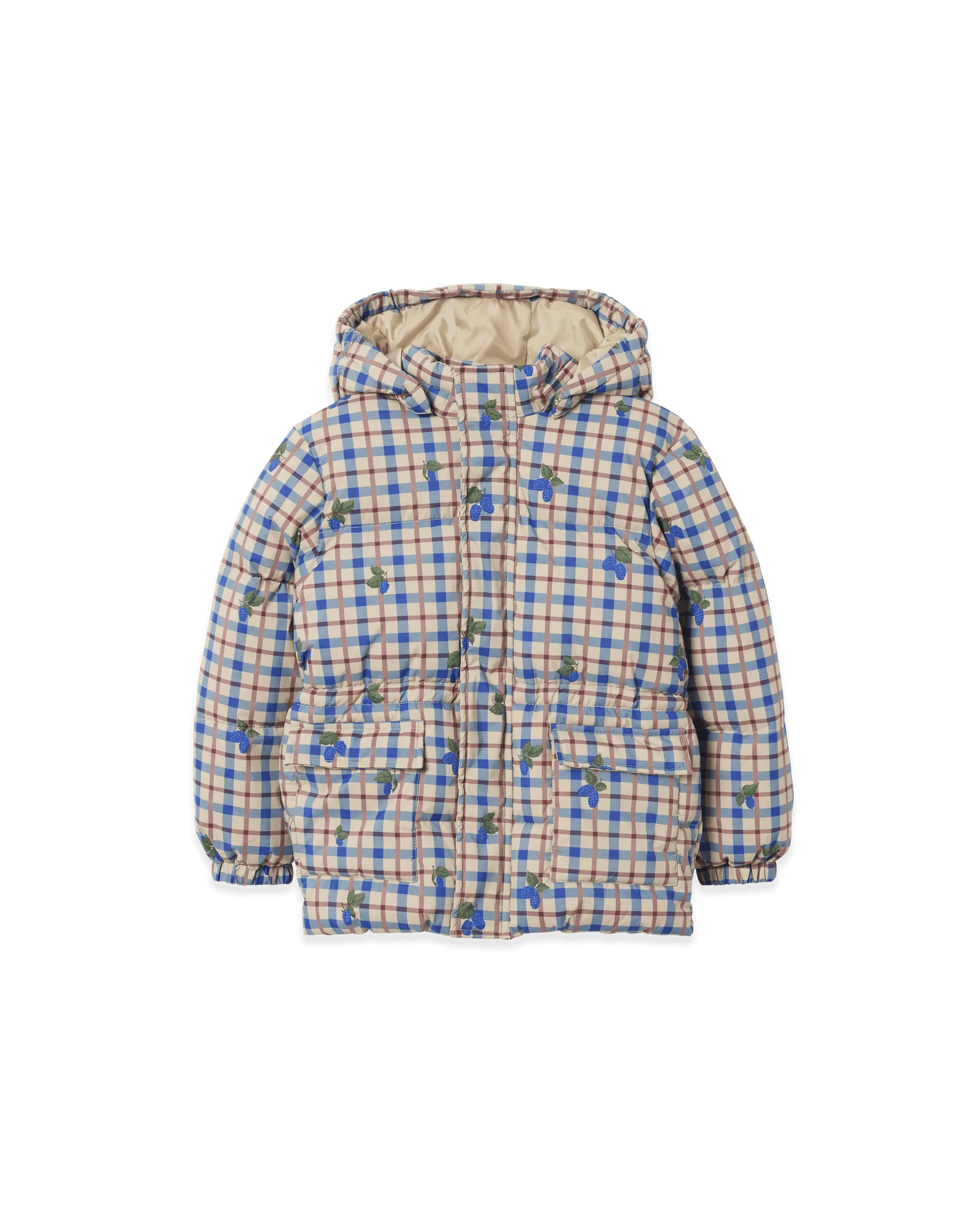
- 3. Put on the puffer parka as the outer shell: Zip up the Puffer Parka and adjust the waist (if adjustable) for a snug but not restrictive fit. The removable hood and placket over the zipper add extra protection against wind and moisture. Common mistake: Forgetting to zip the parka fully or leaving the hood down in windy weather. The placket and hood are designed to block drafts.
- 4. Finish with accessories for exposed areas: Add a warm hat, mittens, and a scarf or neck gaiter. The parka's two front pockets can hold small hands or a tissue, but they are not insulated. Checkpoint: Avoid scarves that are too long or loose; they can become a safety hazard. A neck gaiter is a safer choice for toddlers.
Product facts
-
Puffer Parka: The Puffer Parka is made of 100% GRS-certified recycled polyester, water resistant with 3000 mm water column, and treated with non-toxic BIONIC-FINISH® ECO impregnation. This means the outer layer repels light rain and snow, so your child stays dry even during wet winter play, and the eco-friendly treatment is safe for sensitive skin.
Puffer Parka