Why Layering Matters for Multichrome Nail Polish
Multichrome nail polish gets its dramatic color shift from tiny pigment particles that reflect light at different angles. Unlike a standard shimmer, the shift only becomes visible when enough pigment is present on the nail. A single thin coat often leaves the color flat because the particles are too spread out. Layering builds up the concentration of those particles, allowing the green, gold, orange, blue, purple, and red shifts to appear clearly.
The key is to apply thin, even coats and let each one dry before adding the next. This prevents the polish from becoming thick or uneven, which can muddy the shift.
Step-by-Step Layering for Maximum Shift
For the best results, follow these steps with any multichrome polish. The recommended coat count applies to most formulas, including the Not Moody polish.
- Start with a Smooth Base: Apply a base coat to protect your nails and create an even surface. A ridge-filling or sticky base coat helps the multichrome adhere evenly.
- Apply the First Thin Coat: Use a light hand and wipe one side of the brush on the bottle rim. Apply a thin layer of multichrome polish, covering the entire nail. This coat will look sheer and uneven—that's normal.
- Let the First Coat Dry Completely: Wait until the polish is tack-free, following the product instructions. Rushing the next coat can cause dragging and bald spots.
- Apply the Second Thin Coat: Repeat the same thin application. The color will become more opaque, and you'll start to see hints of the shift. For many multichromes, two coats are enough for a visible effect.
- Add a Third Coat for Full Intensity: If the shift still looks subtle, apply a third thin coat. This is recommended for the Not Moody formula. The extra layer maximizes the pigment concentration so the green, gold, orange, and red shifts really pop.
- Seal with a Glossy Top Coat: Finish with a clear top coat. A glossy top coat smooths the surface and enhances the light reflection, making the color shift more dramatic. Avoid matte top coats, which can dull the effect.
What Not Moody Multichrome Offers
-
Not Moody - Green/Gold/Orange/Red Multichrome Nail Polish: Ultra shifty multichrome with shifts of green, gold, orange, blue, purple, and red. This wide spectrum of shifts is only revealed with proper layering. Each coat adds depth and brings out more of the color range.
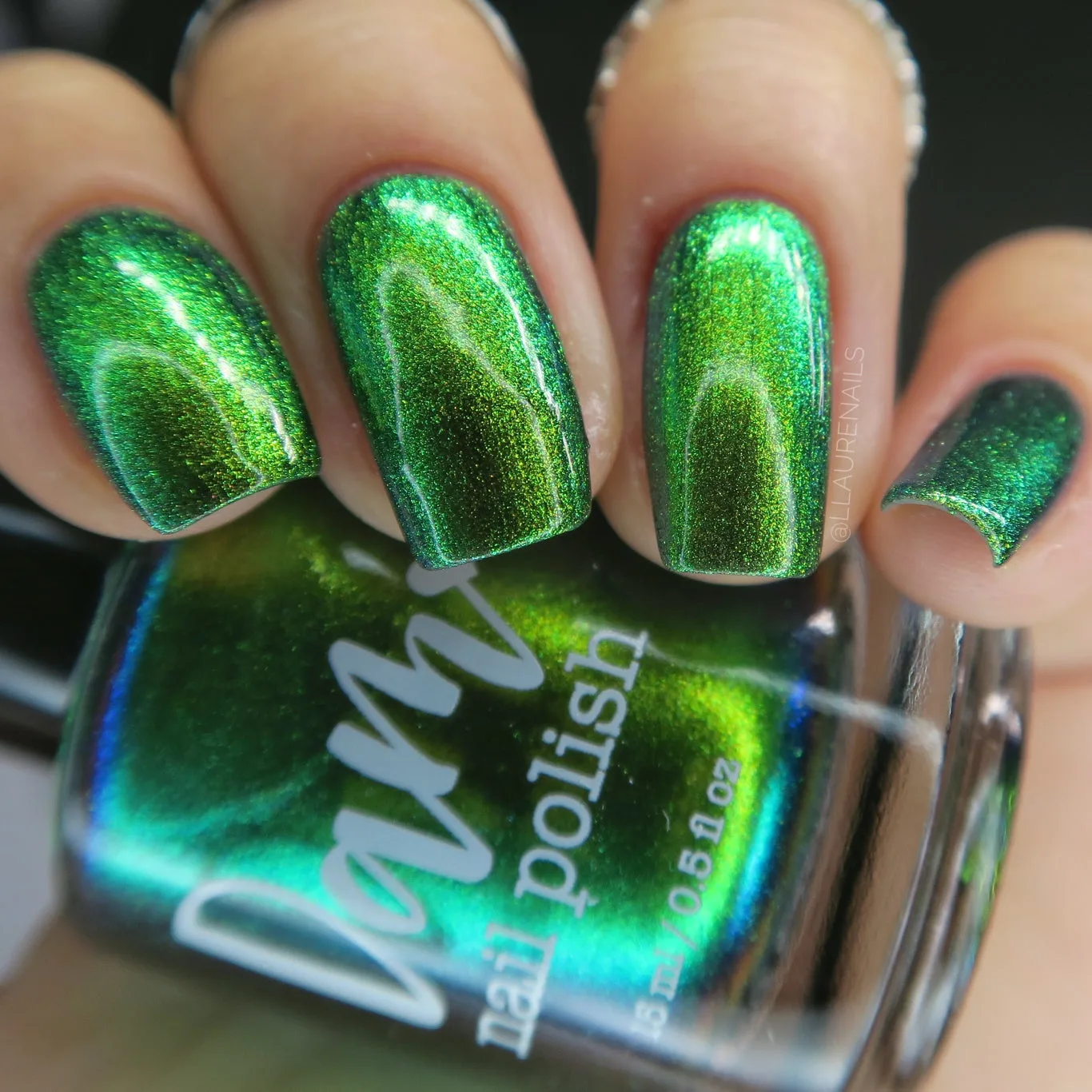
Not Moody - Green/Gold/Orange/Red Multichrome Nail Polish
-
Not Moody - Green/Gold/Orange/Red Multichrome Nail Polish: Recommended Coats: 2-3 This confirms that three thin coats give the fullest shift without risking thickness or bubbling.
-
Not Moody - Green/Gold/Orange/Red Multichrome Nail Polish: Size: 15ml A standard bottle size that provides enough product for multiple manicures, even with three-coat applications.
Tips for Making the Shift Pop
Lighting is everything with multichrome. The shift is most visible in direct sunlight or under bright indoor lights. Move your hand in different angles to see the full color transition. A glossy top coat is essential—it creates a smooth, reflective surface that lets the pigment particles catch light evenly.
Avoid applying thick coats. Thick layers dry slowly and can wrinkle or trap bubbles, which scatter light and reduce the shift. Thin coats dry faster and let you build up the pigment gradually. If you notice the polish dragging or becoming tacky, let it dry longer between coats.
For the most dramatic effect, wear multichrome polish on all nails. Accent nails can work, but the shift is more impressive when seen across multiple fingers.