Quick Answer
Choose a robe that is lighter or more sheer than the piece underneath, and keep the robe open or loosely belted so the teddy, bodystocking, or babydoll stays visible. Match the robe length to the hem of the inner piece, and test the combination by sitting, walking, and raising your arms before you commit to it.
Start With the Inner Piece, Then Build the Robe Around It
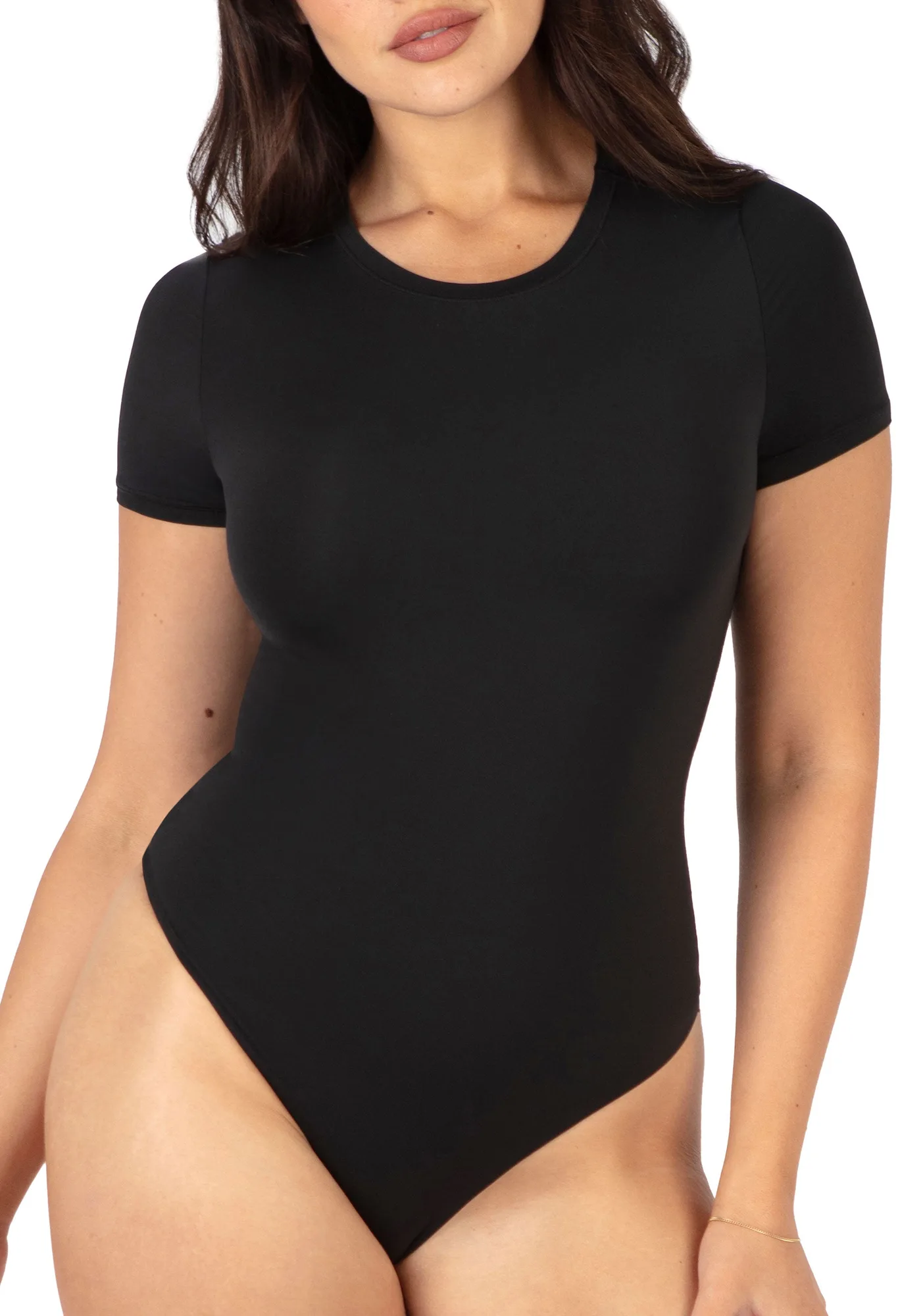
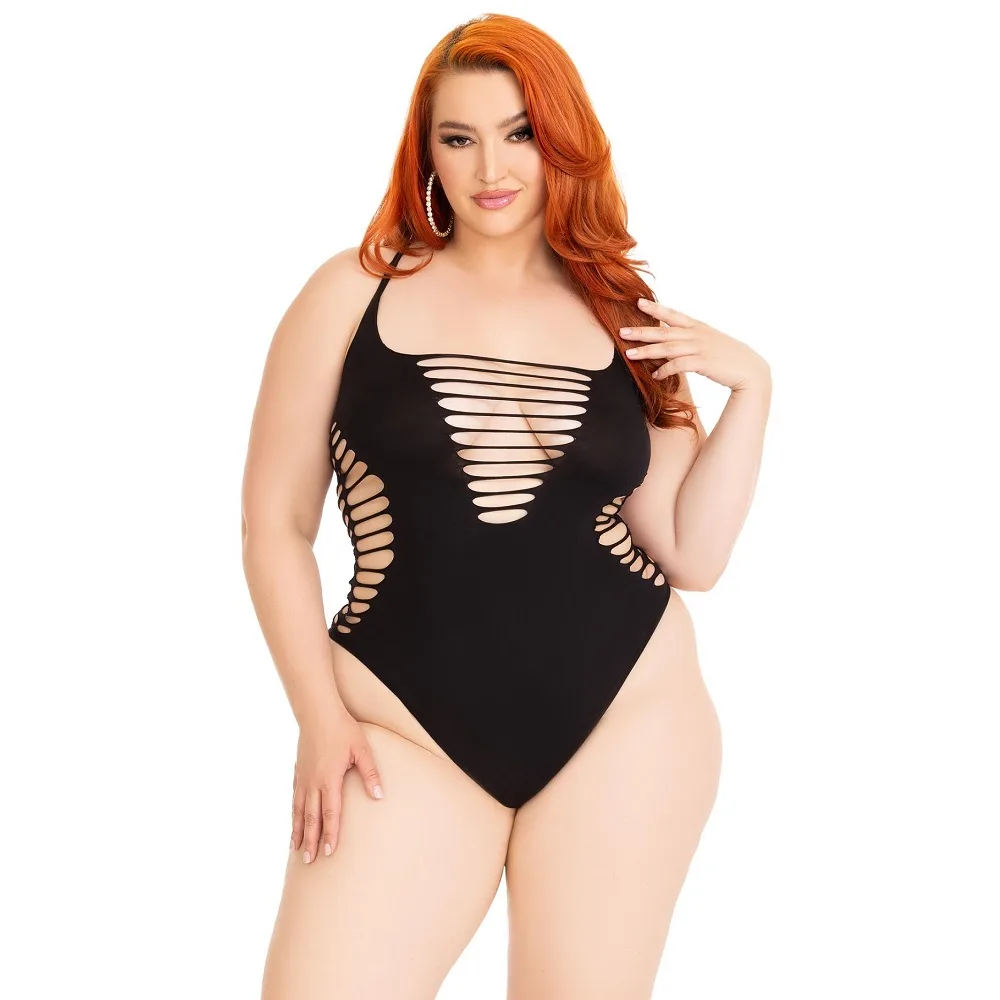
The layer closest to your body sets the rules for everything on top. A teddy is usually fitted and opaque, so it can carry a heavier robe. A bodystocking is thin and often sheer, so it needs a robe that will not compress or snag it. A babydoll already has its own drape and ruffled hem, so the robe should frame it rather than fight it.
Before you try robes, put on the teddy, bodystocking, or babydoll with the underwear you plan to wear. Check the strap tension and the hem position in a mirror. If the inner piece shifts or digs in on its own, no robe will fix that. Once the base layer feels secure, you can judge whether a robe adds to the look or just adds bulk.
Match Robe Weight to the Fabric Underneath
A heavy fleece or thick satin robe over a sheer lace teddy will flatten the lace and hide the detail you chose the teddy for. A lightweight sheer robe over a structured bodystocking can look unbalanced in the other direction, because the robe disappears and the bodystocking does all the work. The goal is contrast in weight, not a match.
Use this rule: if the inner piece is sheer, choose a robe that is also light but has a different texture, such as sheer mesh with lace trim over smooth mesh. If the inner piece is opaque, you can go slightly heavier with a satin or chiffon robe. The Curvy Alessia Sheer Lace Babydoll Set is a good example of a sheer inner layer that works best under a robe with a similar airy weight, because both pieces use galloon lace and sheer mesh.
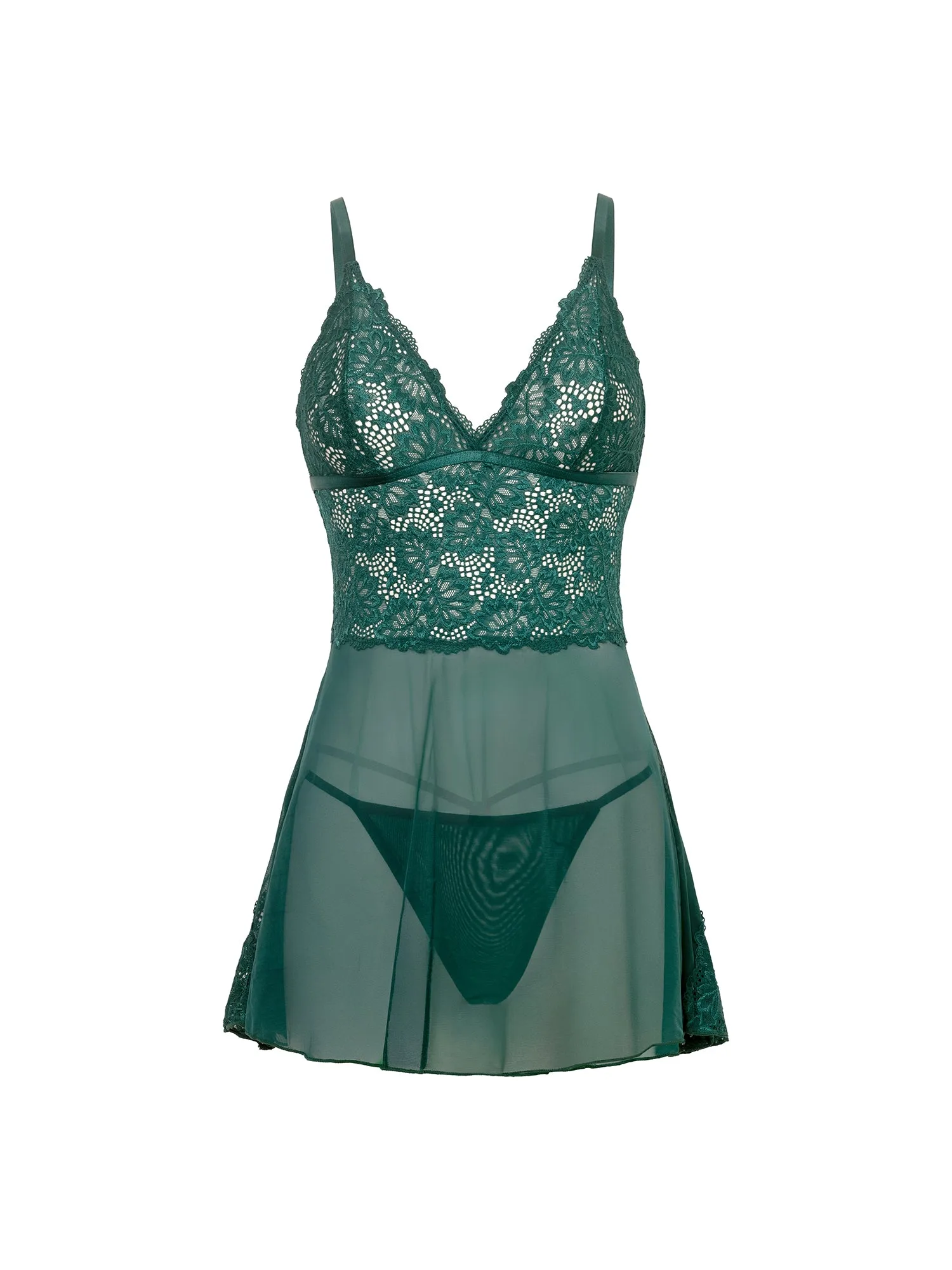
Alessia Sheer Lace Babydoll Set
Choose a Robe Length That Reveals the Hem
Robe length changes the whole silhouette. A robe that ends above the teddy hem creates a short, layered line. A robe that ends below the hem creates a longer, more dramatic line. Both work, but they send different messages. For a babydoll with a ruffled hem, a robe that ends at or just above the ruffle keeps that detail visible. For a bodystocking, a robe that ends at mid-thigh or knee gives the legs room to show through.
If you are between lengths, go with the shorter robe. It is easier to move in, less likely to tangle with the inner piece, and it keeps the focus on the teddy or bodystocking. A long robe can work, but it needs a belt or a strong open front so the inner piece is not swallowed.
Use Color and Sheerness to Control the Reveal
The robe is the frame. A black sheer robe over a black lace teddy reads as one continuous look. A contrasting robe, such as ivory over black, turns the robe into a separate visual element. Neither is better, but the choice should be deliberate. If you want the teddy to be the main event, pick a robe in a close color family or a sheer neutral. If you want the robe to be part of the outfit, contrast is your tool.
Sheerness does the same job as color. A fully sheer robe shows everything underneath, so the teddy or bodystocking stays visible even when the robe is closed. A semi-sheer robe gives a softer reveal. An opaque robe hides the inner piece when closed, which means you need to keep it open or belted loosely to show the layer underneath.
Test Movement Before You Settle on the Combination
Layering fails most often in motion, not in the mirror. Sit down, cross your legs, reach overhead, and walk across the room. Check whether the robe pulls at the shoulders, whether the teddy rides up, and whether the bodystocking twists. Adjustable straps help here, because you can tighten or loosen the inner piece without changing the robe.
If the robe slides off your shoulders, try a different closure or a lighter fabric. If the inner piece bunches under the robe, the robe is too heavy or too fitted. If the hem of the robe catches on the hem of the babydoll, shorten the robe or choose a style with a slit. A two-minute movement test saves an evening of tugging.
5 Steps to Layer a Robe Over a Teddy or Bodystocking
- Put on the inner piece first and check the fit: Wear the teddy, bodystocking, or babydoll with your planned underwear. Adjust straps and hems until the piece sits smoothly on its own. Mistake to avoid: fixing the robe before the base layer fits. If the inner piece digs or shifts alone, the robe will not solve it.
- Pick a robe weight that contrasts with the inner fabric: Choose a lighter, sheerer robe for a sheer teddy or babydoll. Choose a slightly heavier robe for an opaque teddy. The contrast keeps both layers readable. Checkpoint: if the robe flattens the lace or hides the drape, it is too heavy.
- Set the robe length against the inner hem: For a babydoll with a ruffled hem, end the robe at or above the ruffle. For a bodystocking, a mid-thigh or knee-length robe keeps the legs visible. Mistake to avoid: a long robe over a short babydoll, which hides the hem detail you chose the piece for.
- Decide how much you want the robe to reveal: Use color and sheerness deliberately. A matching or sheer robe keeps the teddy as the focus. A contrasting or opaque robe makes the robe part of the look, so keep it open or loosely belted. Checkpoint: if you want the inner piece visible when the robe is closed, choose a sheer robe.
- Test the full outfit in motion: Sit, cross your legs, reach overhead, and walk. Adjust straps or swap the robe if anything pulls, twists, or bunches. Next step: if the robe slides or the inner piece bunches, go lighter on the robe or tighten the inner straps.
Product Facts That Help With Layering
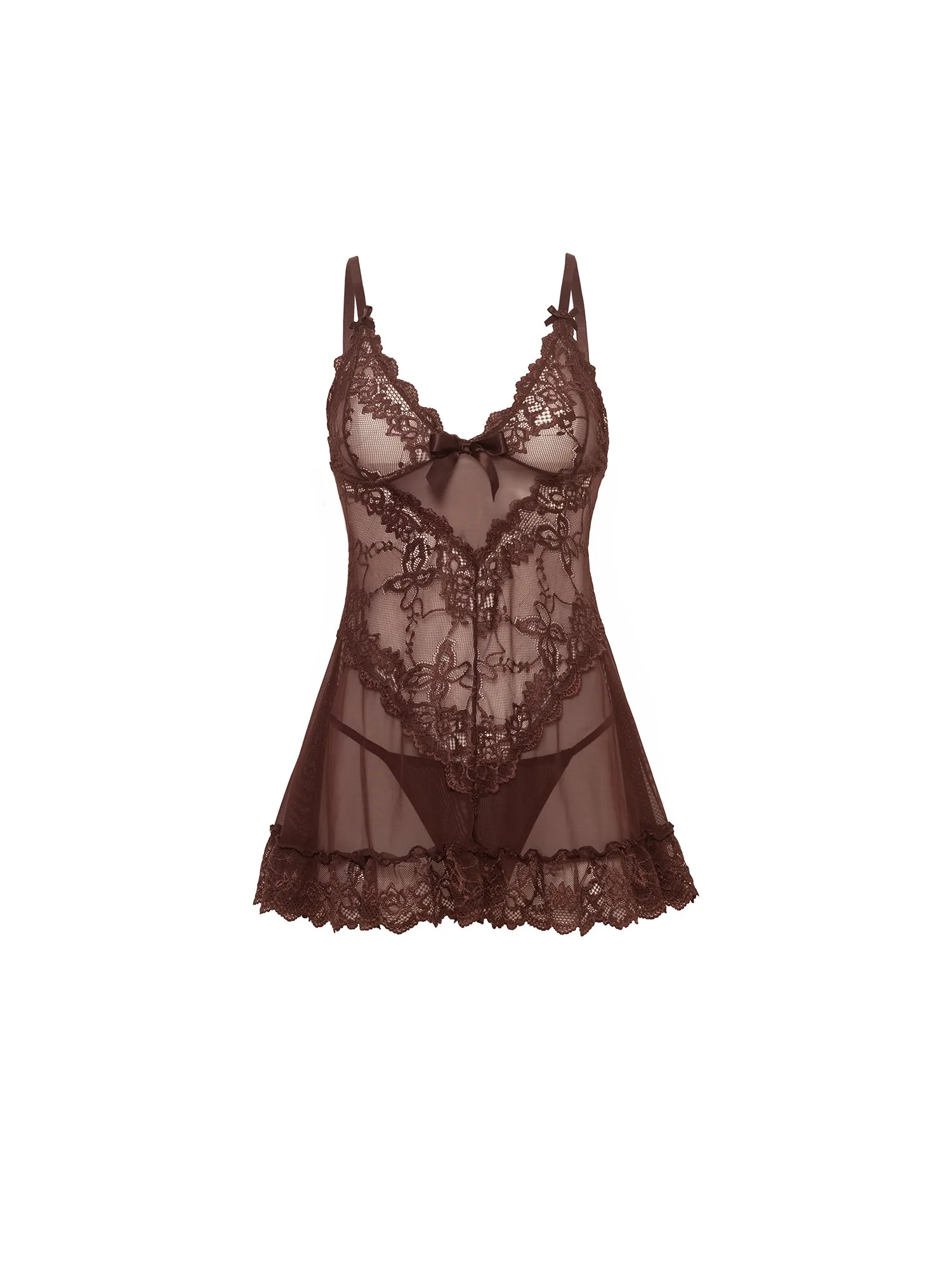
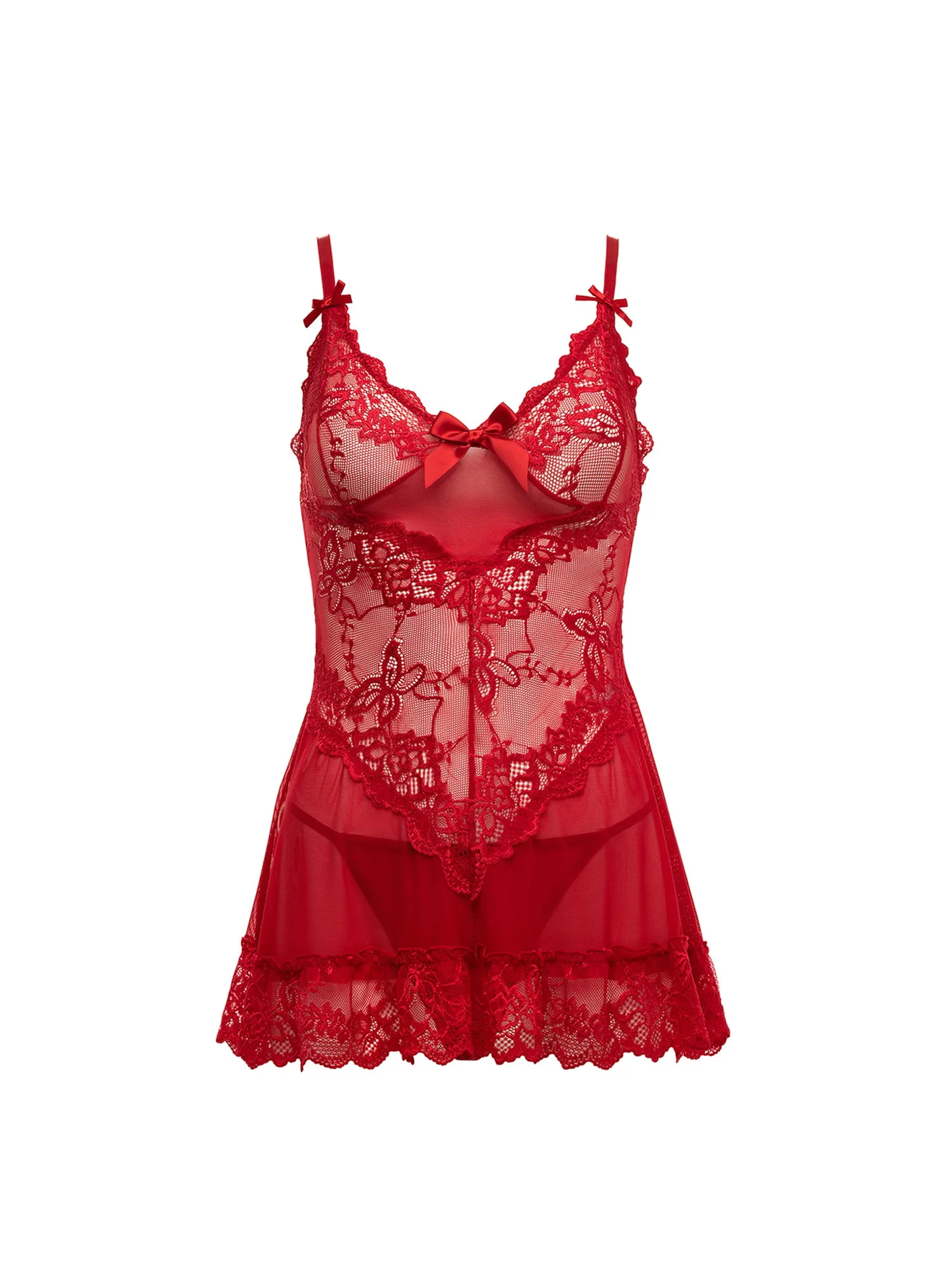
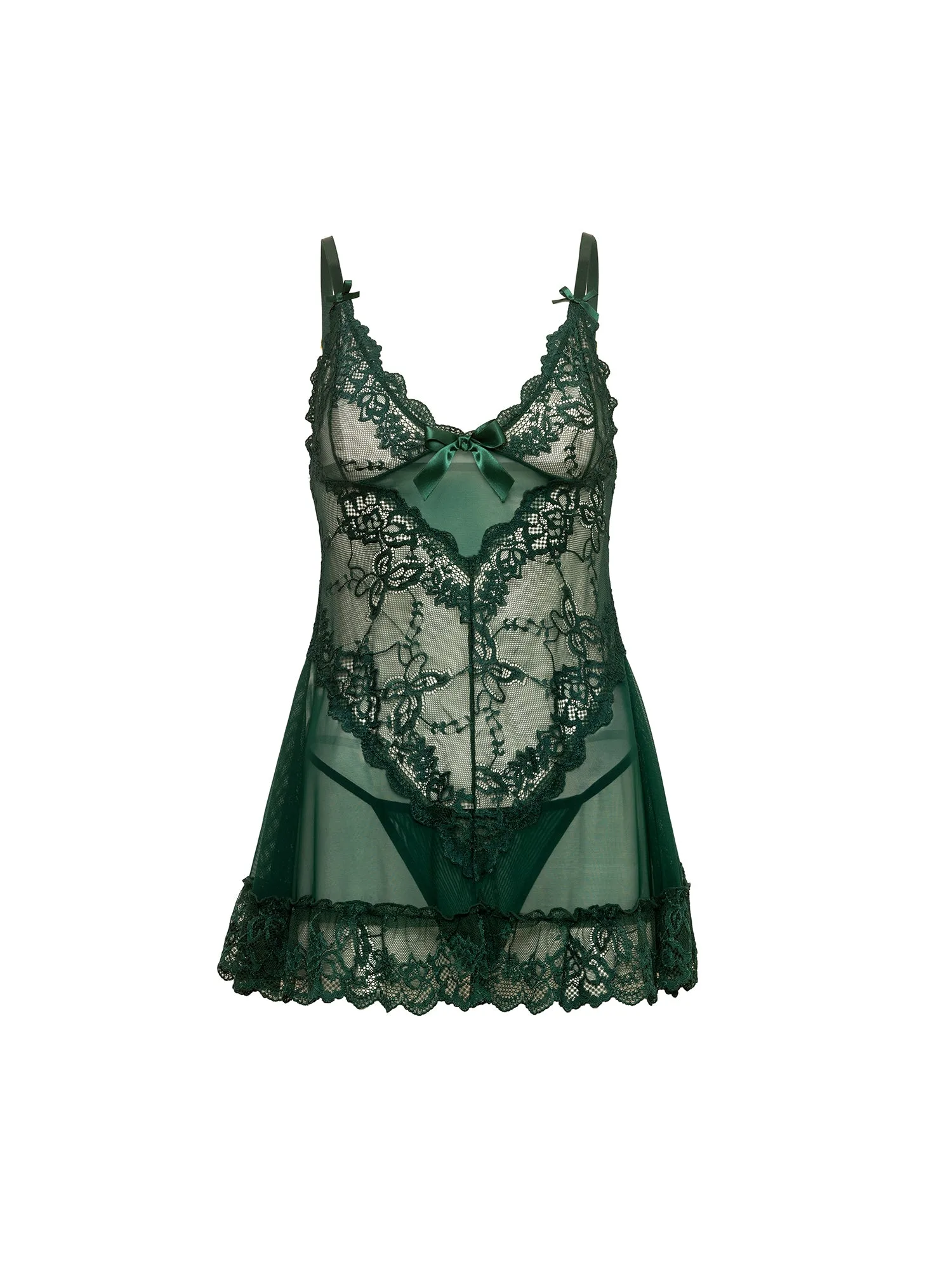
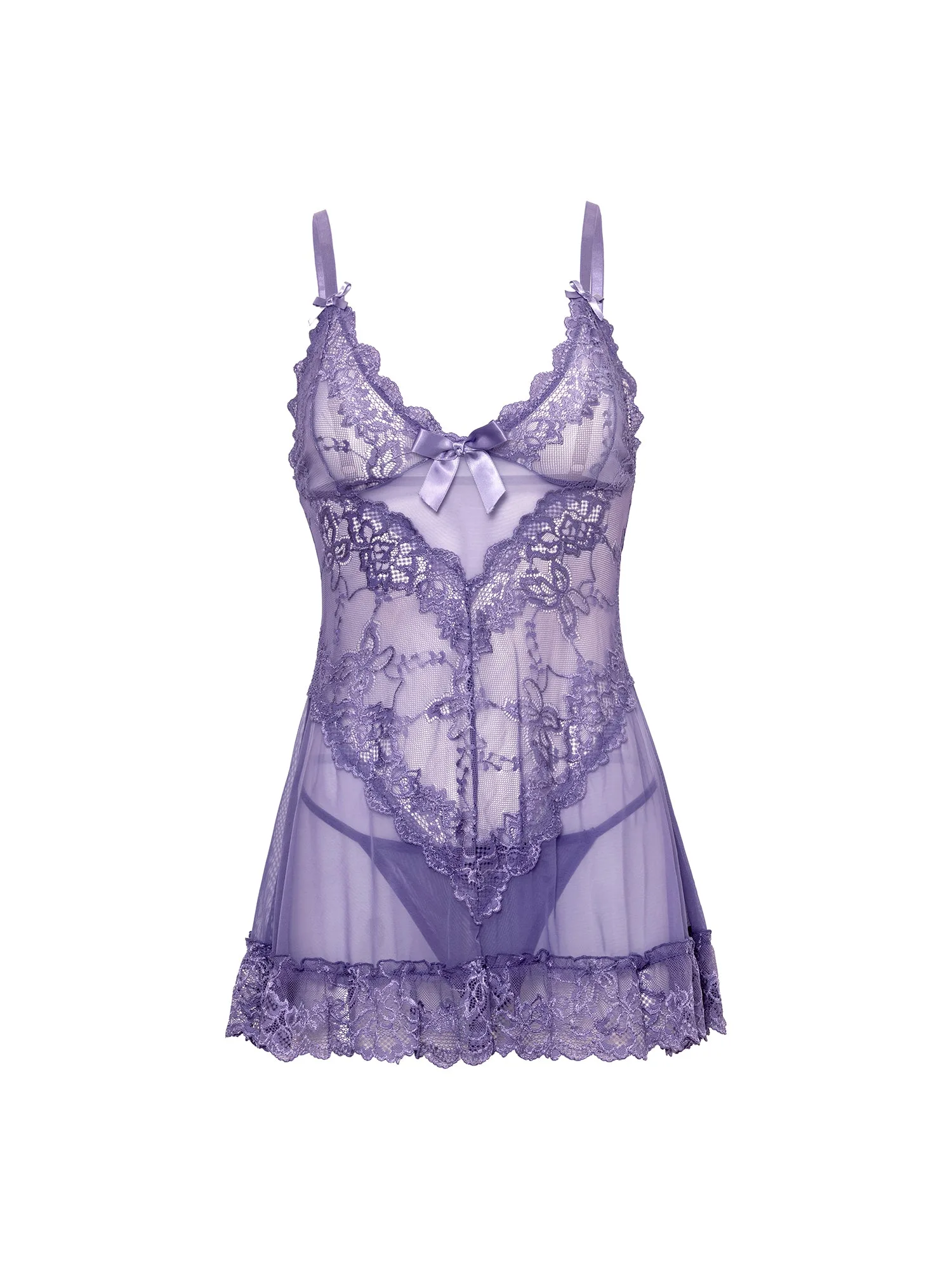
- Curvy Valentine Lacey Babydoll Set: https://ohlalacheriehg.com/products/oh-la-la-cheri-curvy-valentine-lacey-babydoll-puce-0c52ecacf39e8ce19ce90cbf-1421537https://ohlalacheriehg.com/products/oh-la-la-cheri-valentine-soft-cup-lacey-plus-size-babyd-f7b1707f82b72b43c3bcf913-1421545https://ohlalacheriehg.com/products/oh-la-la-cheri-bridal-curvy-valentine-lacey-babydoll-br-fd6cb81a4ea0b87f1480a9e5-1421559Curvy Valentine Lacey Babydoll Set: A-line lacy babydoll with a triangle cup bodice, ultra-soft fabrics, adjustable elastic shoulder straps, sheer mesh body with lace inserts, and a flirty ruffled hem. The adjustable straps let you fine-tune the fit under a robe, and the ruffled hem is a detail worth keeping visible, so choose a robe that ends at or above the ruffle.
- Curvy Alessia Sheer Lace Babydoll Set: Curvy Alessia Sheer Lace Babydoll Set: Sheer galloon lace and mesh soft cup babydoll dress with a matching G-string. Because the fabric is already sheer, a lightweight sheer robe will layer cleanly without flattening the lace or hiding the drape.
- Curvy Valentine Lacey Babydoll Set: Curvy Valentine Lacey Babydoll Set: A-line lacy babydoll with a triangle cup bodice, ultra-soft fabrics, adjustable elastic shoulder straps, sheer mesh body with lace inserts, and a flirty ruffled hem. This version offers the same adjustable fit and ruffled hem, so the same robe-length rule applies: keep the robe hem at or above the ruffle to preserve the silhouette.